My work asks people to share who they are.
To honour that trust, it feels only fair to share who I am, too.
I am not a woman of few words. If you’re a person of few minutes, I respect that. Here’s the short version.
The short version- A thousand photographs of clouds
- Story first, shutter after
- Photographs mattered because people matter
- The messy, collective business of being human
Hello
Hold your phone up to one of my portraits and it might start talking.
Or just press play: me, in the studio, on From Still to Seen.
In the press
On BBC Look North
The BBC came to HAIR: Identity in the Afroworld at Ferens Art Gallery, Hull.
The long version
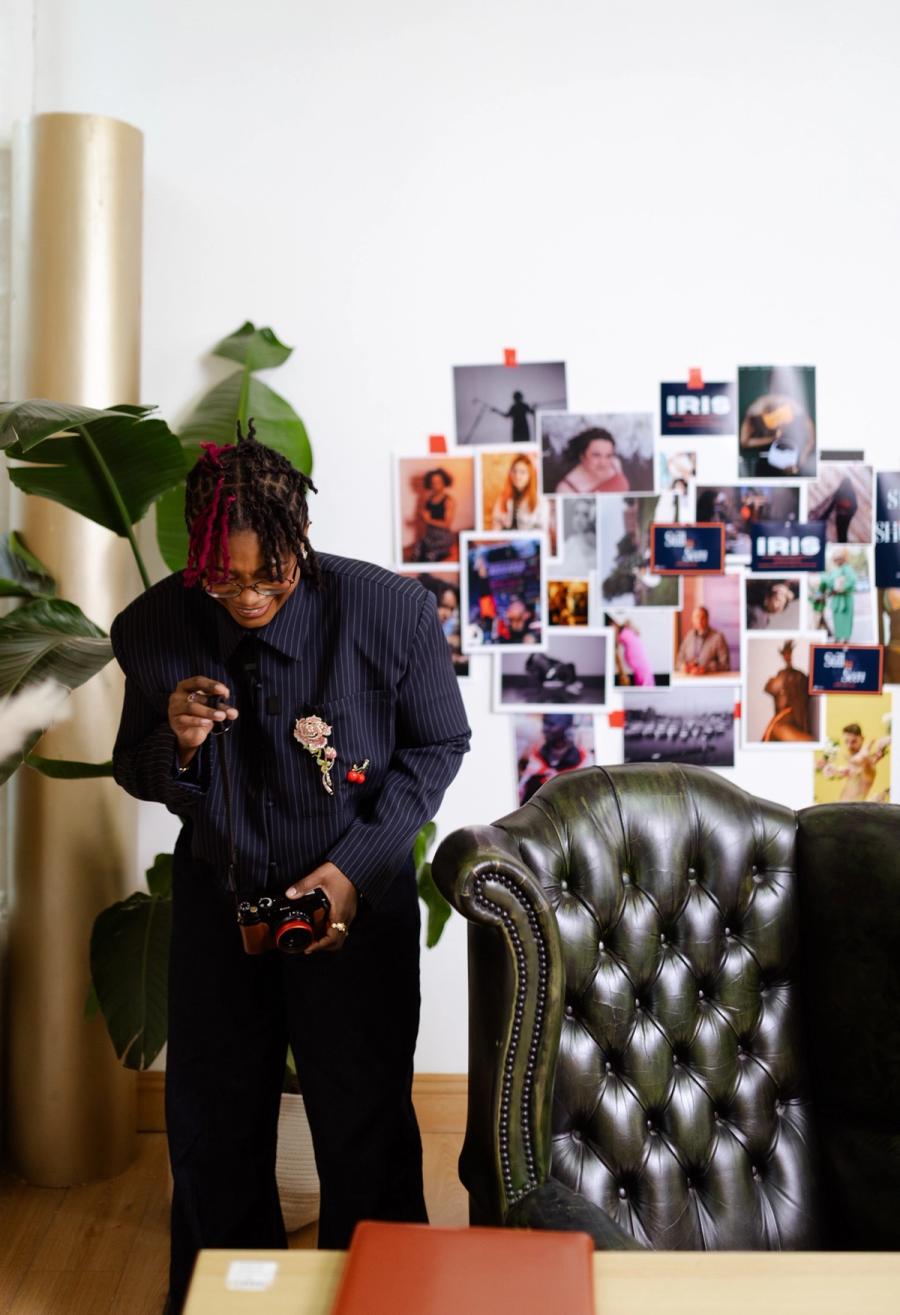
Hold your phone up to one of my portraits and it might start talking. A photograph moves, a voice comes out of the frame, and the person in the picture tells you, in their own words, who they are. That’s the bit people remember, but it’s the last step. The first is always a conversation.
I’m Raheena Mohammed, Rayh to most people. I’m a photographer, artist and creative technologist in Hull, UK, and the founder of IRIS Art Tech.
Photographs mattered because people matter.
I’m Nigerian and British. I’m queer, an immigrant and chronically ill, and my partner is punished (errr, blessed) with hearing almost every idea before it becomes a project. I’ve lived in Nigeria, Scotland, Wales and England. Moving between places has made me curious about what people carry with them, and what they build when the idea of home isn’t simple. I’m interested in what happens when you give people room to be complicated, and in everything a photograph can suggest but can’t possibly contain.
My mother made our living room walls a family gallery. My first encounter with a camera came through my late dad, who, I’m told, was as obsessed with camera gear as I am. Long before I understood aperture or light, I understood that photographs mattered because people matter.
Clearly I take that seriously. My phone holds more than 200,000 photos and videos: people I love mid-laugh, badly framed evidence of very good nights, and a thousand photographs of clouds that look identical to everyone but me. Call it a lifelong artistic instinct or an unreasonable relationship with storage. Either way, I was documenting these things years before I called myself an artist.
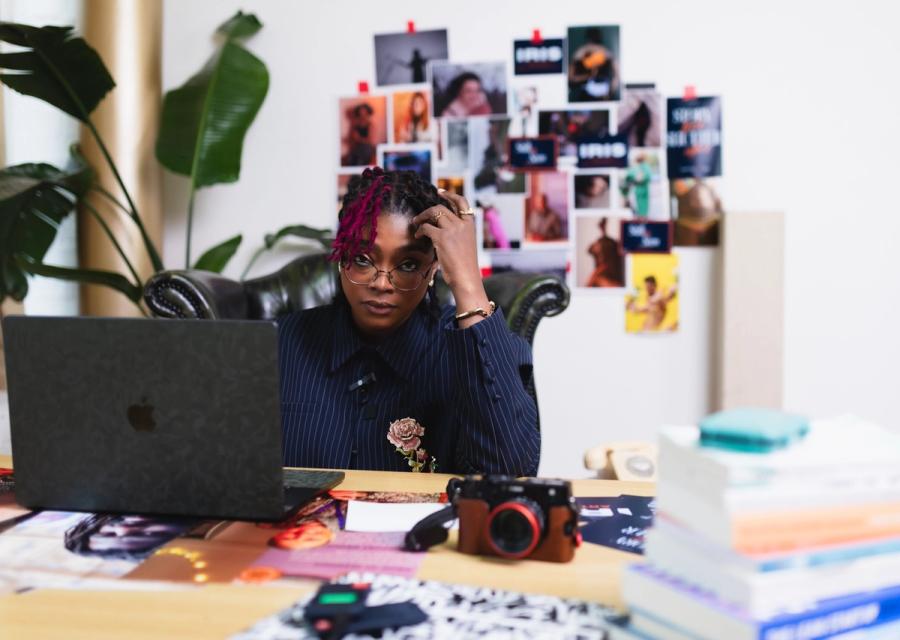
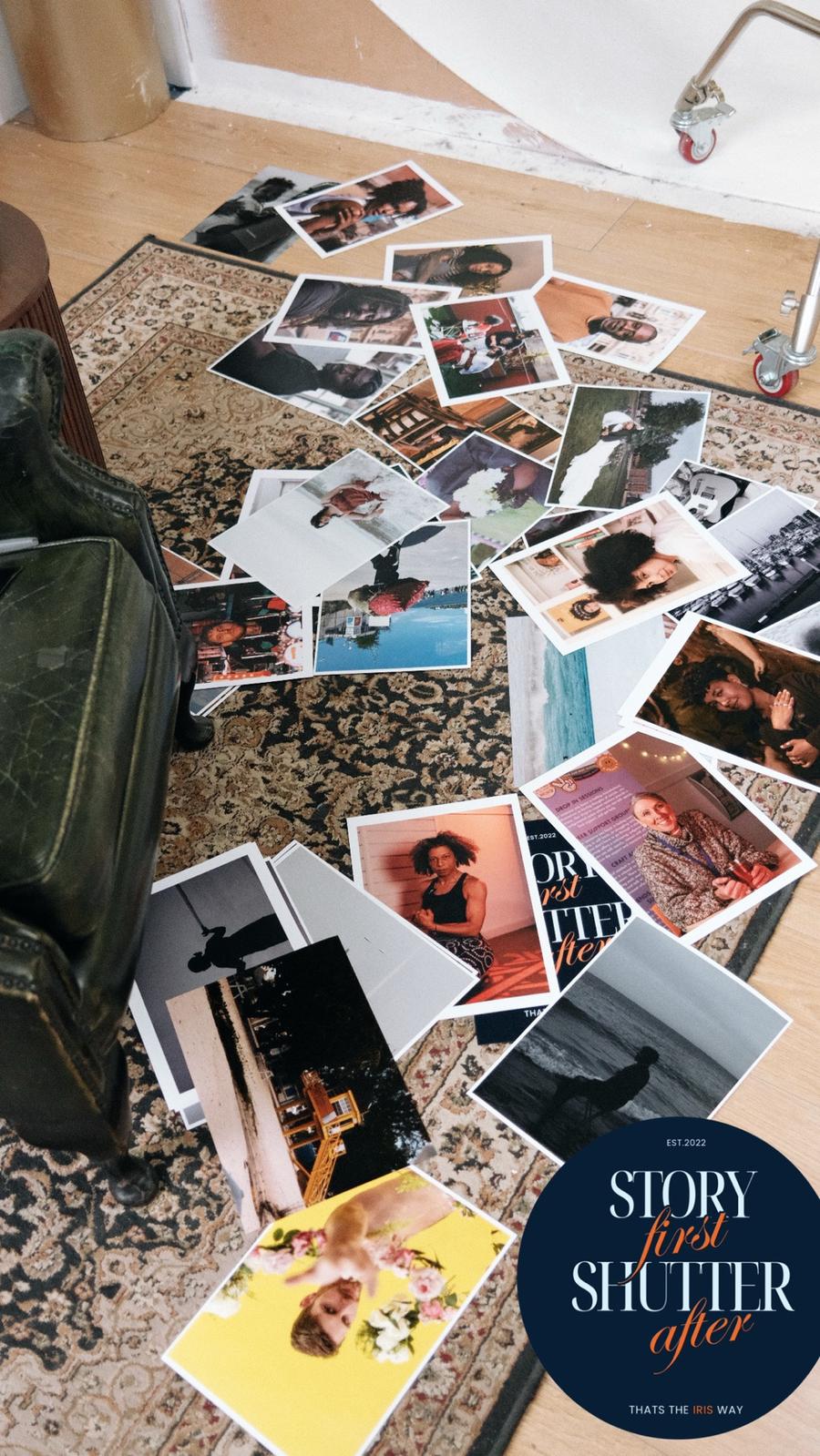
Calling myself an artist has been a journey in itself. Even now, some days the word feels borrowed. Recently I told my partner how stuck I felt. I was empty, unable to picture a future, and desperate to make work that honoured the people and stories we carry, but convinced I was making none. Cue the violins. “I don’t know how I’ve tricked people into thinking I’m an artist,” I said. “I have all this time and I’m not making anything.” She was wiping away her own tears. She looked at me and said, “This. This is you being an artist.”
I have a master’s in pharmacy, and I’ve always been the one with the camera. For years I did both. As a pharmacist, I loved the people, less so the monotony. Then, after the pandemic, I was admitted to hospital and nearly didn’t make it. When I got out, I stopped splitting myself in two. I kept the listening and swapped the prescriptions for a camera for good.
Arts Council England’s Developing Your Creative Practice programme then gave me time to test what happens when photography meets technology and storytelling. It also helped me call myself an artist without feeling I’d wandered into a room I wasn’t supposed to be in. I also completed the Creative Growth course at Hull Business School and a project management course with Prime Careers, so the bigger ideas have an actual plan behind them.
I kept the listening and swapped the prescriptions for a camera for good.
On game nights with my chosen family, I’m the unofficial cocktail maker. That’s partly out of generosity and, if I’m honest, mainly because I’m a sore loser and another round gives me something useful to do. Away from the table, my weaknesses include Sally Rooney’s work, cameras old and new, and oddly shaped clouds.
I’m also constantly filming everyone. When I think about how much we experience and how quickly those experiences become a hazy memory, I feel an overwhelming urge to capture as much as I can. One line from my favourite Omar Khayyám quote stays with me: “Be happy for this moment. This moment is your life.”
The art and the technology
Technology can do plenty of clever things. I’m mostly interested in what it can help us feel.
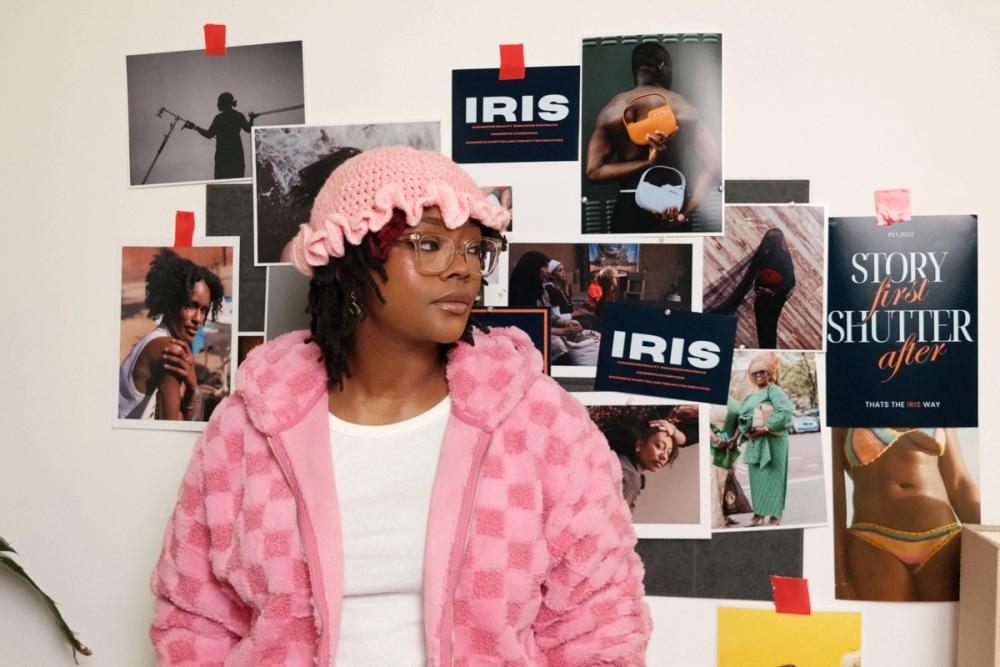
I work by one rule: story first, shutter after. Before I lift the camera, we talk. I want to know who you are, what you’re carrying and how you’d like to be seen. The person behind the camera is always making choices, but I’d rather make them with you than about you. So, you help shape the portrait instead of becoming somebody else’s interpretation of it.
Story first, shutter after.
Then we make the portrait. Sometimes that’s where the work ends. Sometimes there’s more to say, and a phone held over the portrait reveals a voice, a memory, a piece of music or a short film. The photograph becomes a doorway.
Building the rooms I wanted to see
I seem to oscillate between boundless fascination and deep disappointment with people, including, and perhaps especially, myself. I’m interested in the messy, collective business of being human.
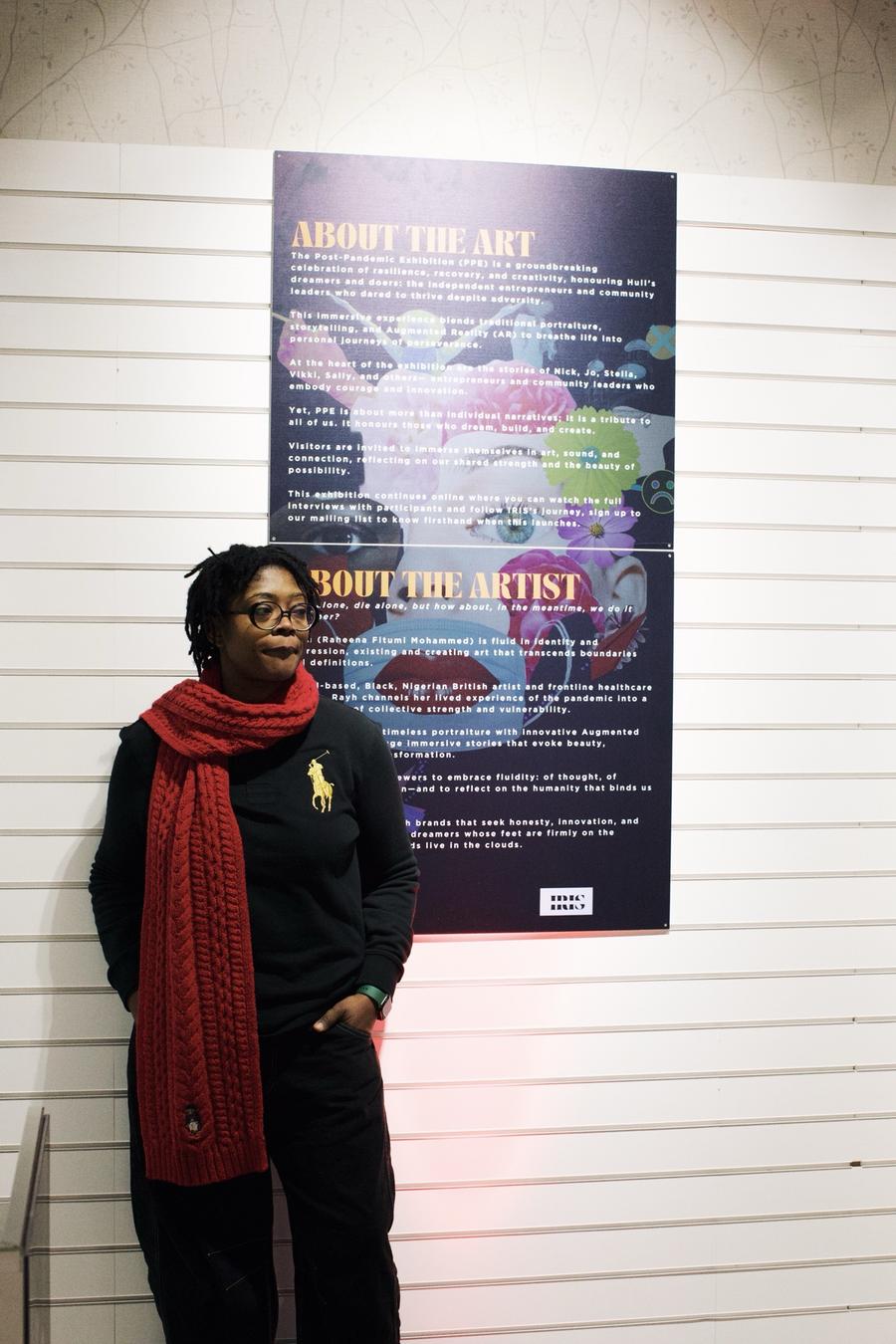
When the usual gallery routes didn’t open for my Post-Pandemic Exhibition, I put it in a shopping centre in Hull instead. Five local business owners and community leaders told me what the pandemic took from them and what they built in its place. I made ten AR portraits, and in Princes Quay you could hold your phone up to one and hear them tell it themselves. I wanted the stories which were left out of the statistics to reach people who don’t usually go to galleries, in a place they already walked through every day.
For HAIR: Identity in the Afroworld at Ferens Art Gallery, I photographed ten people from Hull’s Black and mixed heritage communities. We talked about Sunday hair rituals, relaxers that burned, hands reaching out without asking, and the freedom of deciding for yourself. Each portrait opened into the sitter telling their hair story in their own words. Beyond the stories and the technology, I wanted them to see their own beauty hanging on a gallery wall in the city they loved and called home, that did not always love them back.
From Still to Seen is a photobook of fourteen artists and creatives from Hull and East Yorkshire, and it asks what of us stays in the things we make. Each person has photographs from our session and an essay drawn from our conversation, and one portrait of each moves when you scan it.
Each project has pushed me further into the same question: how can a portrait carry more of a person, and give that person more say in how they’re seen?
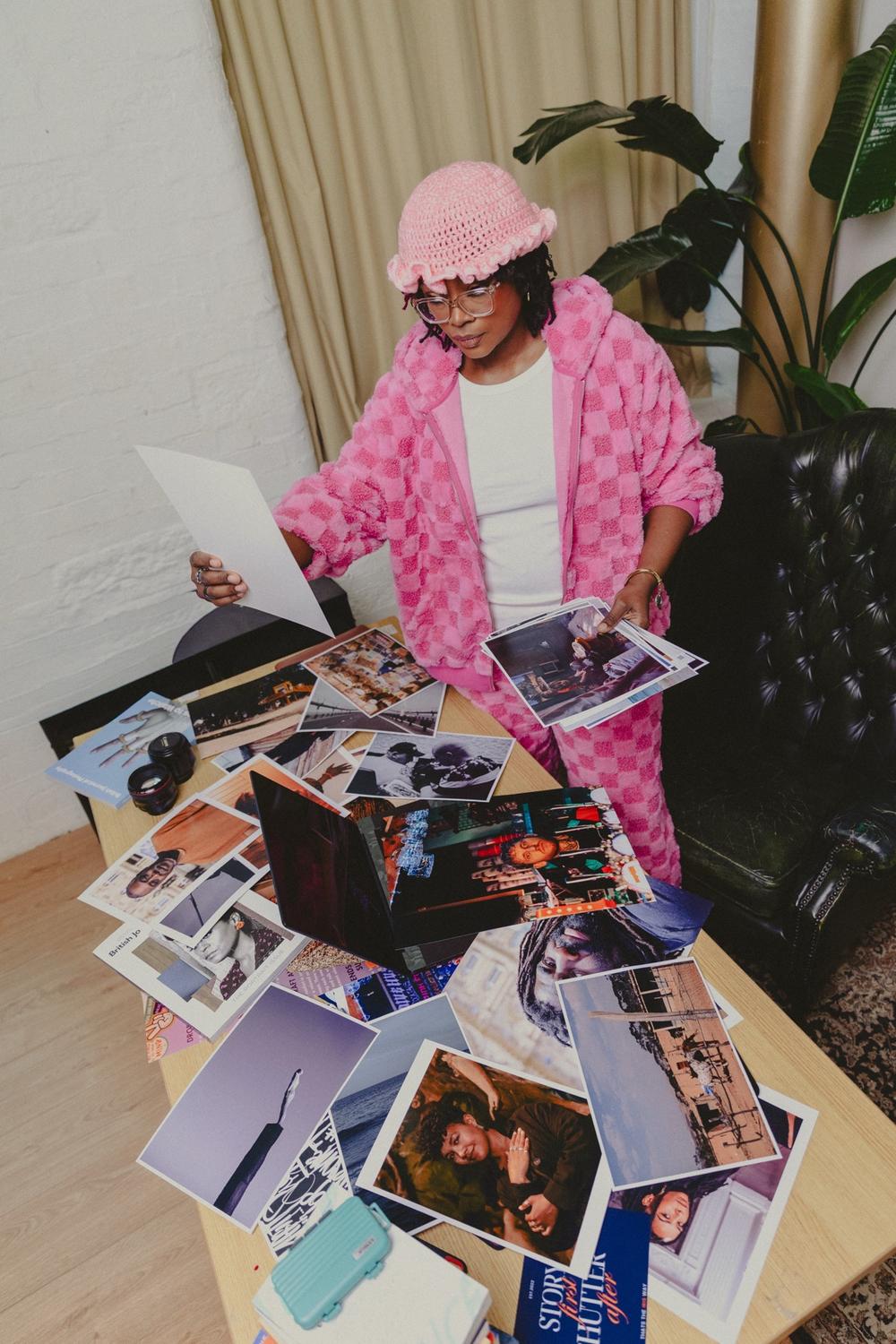
Serious work doesn’t have to be solemn
I’m drawn to work that can hold difficult things without reducing people to difficulty. I want to leave room for the humour, pleasure and contradictions that are part of a life too.
Why IRIS exists
IRIS Art Tech is the studio growing around this practice. In four words: humanising technology through art.
Through IRIS I make portraits, commissions, photobooks, exhibitions and participatory projects. I work with individuals and families who want to keep more than what somebody looked like, with creatives and communities telling their stories on their own terms, and with galleries and institutions looking for more human ways to use immersive technology and draw people in.
I’m also building tools that let artists make work with photography, sound and AR without having to become technologists first. Through my Innovate UK Create Growth projects, I turned years of trial and error into a structured prototype. The IRIS storytelling toolkit, a way to build layered digital work without starting from scratch every time. I made it because the future of storytelling belongs to the people with something to say, whether or not they understand software.
IRIS is, above everything, my love letter to humanness.
speak soon, xx rayh
The short version
- Home
- Hull, UK
- Lived in
- Nigeria, Scotland, Wales and England
- Trained in
- Pharmacy (MPharm), creative technology and project management
- Makes
- Portraits, augmented reality experiences, photobooks, exhibitions, participatory projects and writing
- Favourite quote
- “Drink wine. This is life eternal. This is all that youth will give you. It is the season for wine, roses and drunken friends. Be happy for this moment. This moment is your life.”Omar Khayyám
- Known weaknesses
- Excellent cocktails, Sally Rooney’s work, a ridiculous obsession with cameras old and new, and oddly shaped clouds
- Creative development
- Arts Council England, Developing Your Creative Practice · Hull Business School, Creative Growth Cohort 6 · Tech Educators · Prime Careers
- Business support
- Innovate UK and DCMS Create Growth Programme, twice
- Recent work
- From Still to Seen (2026) · HAIR: Identity in the Afroworld, Ferens Art Gallery (2025) · The Post-Pandemic Exhibition, Princes Quay (2024)
- Founder of
- IRIS Art Tech
if found, please return toIRIS, Hullhello@irisarttech.co.ukInstagram @irisxfitumi
a thousand photographs of clouds