From Still to Seen
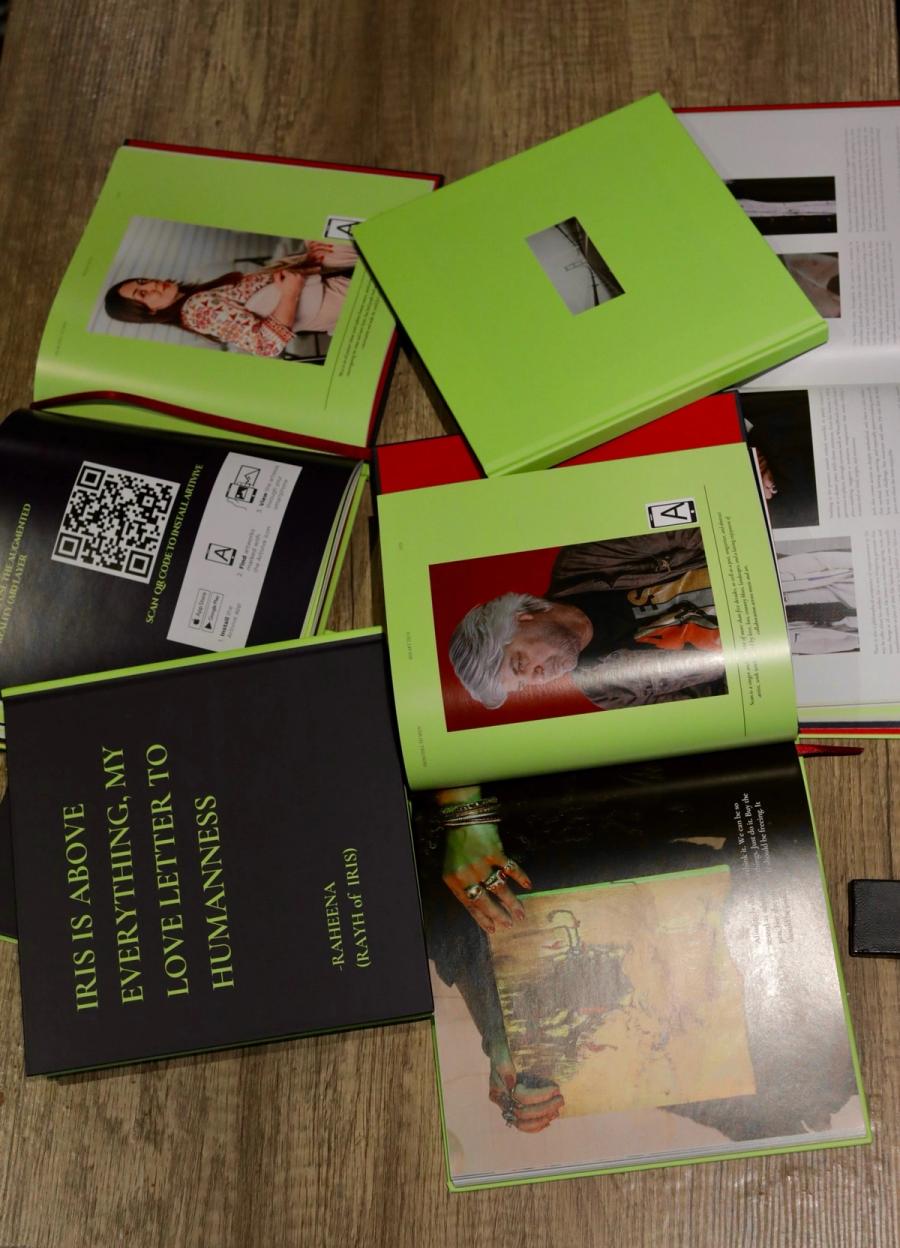
Fourteen creatives from Hull and East Yorkshire. A portrait and a conversation with each. One photograph of every person moves when you hold your phone over it.
“I feel like I’m still now, and then I’m going to be seen very, very, very soon.”
The book
Arrange a studio encounter
Experience the book and its AR elements in person at the IRIS studio.
Host a book residency
Bring the book to a gallery, library or community space for hosted viewings and conversations.
Commission a photobook
Enquire about creating a bespoke photobook with IRIS.
Listen
Voices from From Still to Seen, one after another. The waveform beside the pageat the bottom of the screen fills as you scroll: clicktap it anywhere to listen.
About From Still to Seen
For as long as I can remember, I have loved photographs, community, and the stories that make us human. Images have always lived around me. From the living room in Abuja, where my mother made our home feel like a gallery, to our small flat in Hull where I now find myself surrounded by photographs once again, I have understood pictures as more than decoration. They are memory, offering, evidence, inheritance. They remind us that we were here, that we loved, that we made something of our lives. I have always felt a deep longing to hold what I can, and to help others hold what matters to them too.
I believe, too, in the human impulse to create. There is something extraordinary in it. To create is to shape meaning from experience, to make something from thought, grief, desire, memory, and hope. It is one of the ways we reach beyond survival. I am endlessly moved by the creative mind, by what it carries, and by what it leaves behind. To me, it is the closest a human can exist as a god.
This book grew from time spent with fourteen creatives, each with their own way of being. Through portraits and fragments of story, it asks simple but expansive questions: who are they, how are they, what is their practice, what do they make, what influences them, and what traces of themselves will remain in the work they leave behind?
It is hard to standardise such a wide and varied set of conversations, but I attempted to and that can be seen in the structure in which they are written. Even before I met them, I was carrying questions. Others only revealed themselves in the room, as we spoke. As the project developed, I found myself listening for the threads that connected these artists across difference: what they return to, what they resist, what sustains them, what memory asks of them, and what making allows them to say that ordinary language cannot.
What emerged was not a single story about creativity, but a gathering of intimacies. I noticed how often creative practice was tied to survival, self-definition, care, longing, and return. I noticed the ways people protect what matters to them, and the courage it takes to keep offering an inner world to the world outside it.
These pages do not attempt to contain a whole person. How could they? They hold encounters instead: glimpses of presence from my perspective derived during short conversations. Moments where something interior meets the surface and becomes shareable, if only briefly.
Immersive tech such as augmented reality is part of this work because I do not believe portraiture must end at the printed surface. I use AR not for novelty, but to deepen presence and extend what a portrait can carry. What began as curiosity, as an experiment in making still images move, became a way of holding more voice, gesture, and story than the frame alone might allow.
Written reflections drawn from each interview are included throughout, ensuring the work remains meaningful and accessible even without the digital layer.
From earlier explorations such as the 2024 Post-Pandemic Exhibition (PPE), which reflected on how people and communities endured, adapted, and rebuilt after the COVID-19 pandemic, to my contribution to ‘HAIR’, an exhibition at the Ferens Art Gallery Hull exploring Black hair as identity, memory, culture, and creative expression through portraiture, film, and community story, one thing has remained central to my practice: finding ways for image, technology, and storytelling to bring us closer to the fullness of what is being shared.
There is always more beyond the frame. Some of that continues elsewhere. But this book is a beginning. A conversation opener. A way of honouring these beautiful minds with care, attention, and visibility. My hope is that, in its own way, it helps move them from still to seen and that their stories inspire someone else to consume less and create more.
My full conversation with the sitters will be available at www.irisarttech.co.uk, and glimpses on our Instagram @irisxfitumi.
This work forms part of From Still to Seen, a wider project supported by Innovate UK, focused on prototyping immersive storytelling tools through photography, sound and augmented reality.
Speak Soon
xx Raheena
Inside cover
- What it is
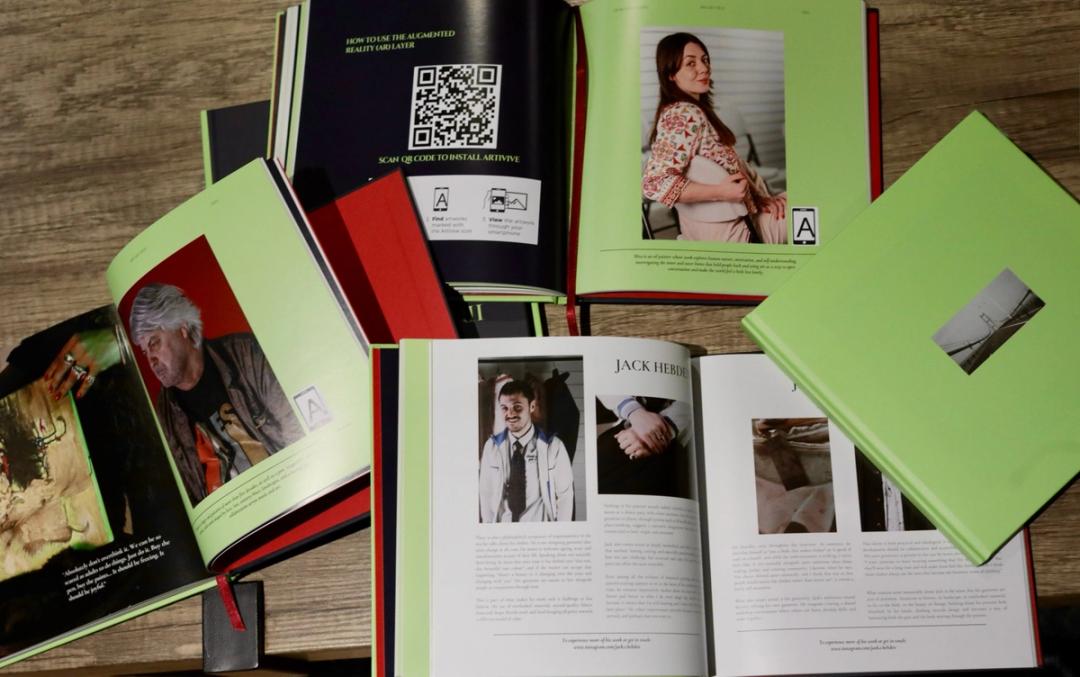
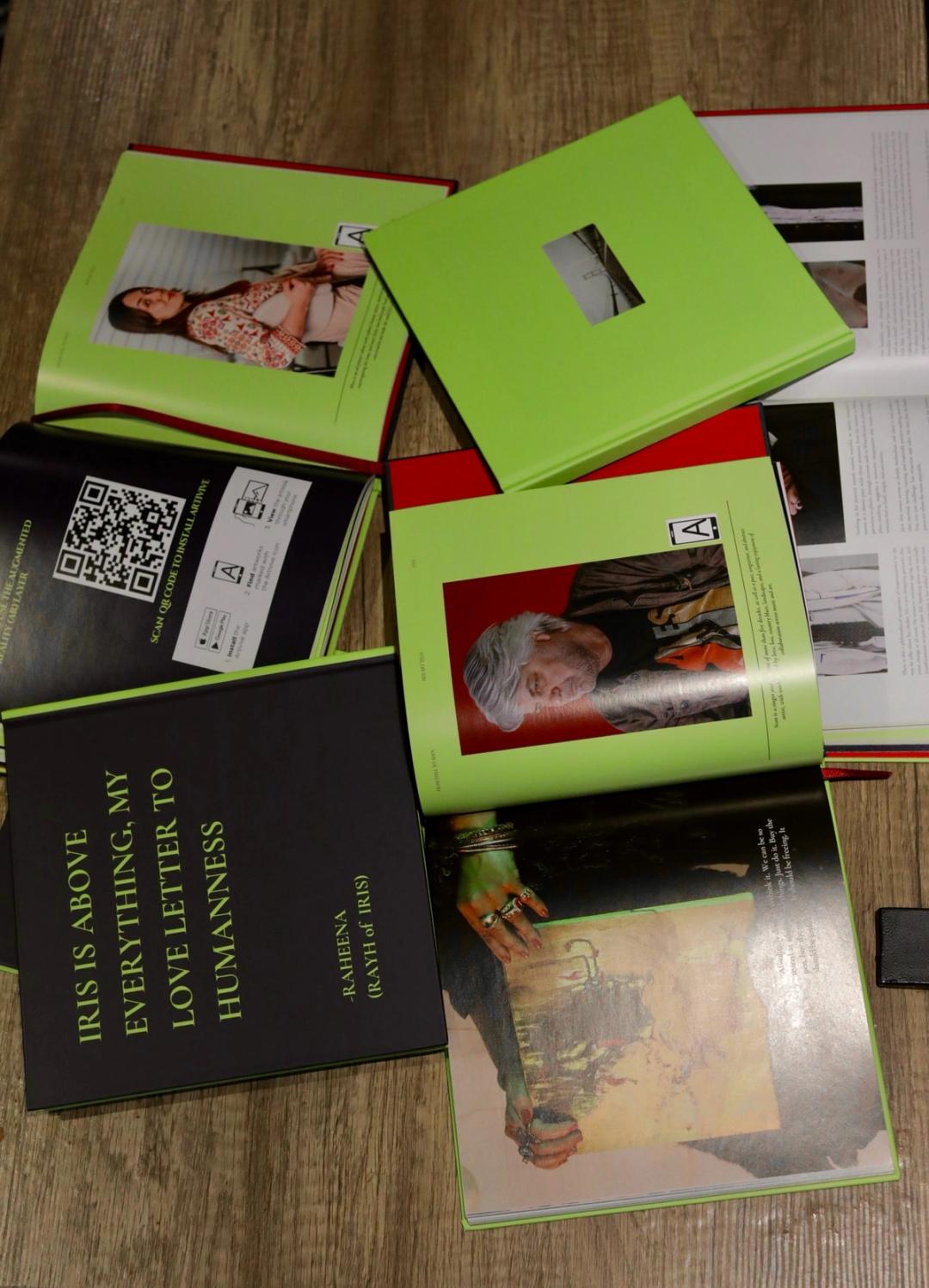
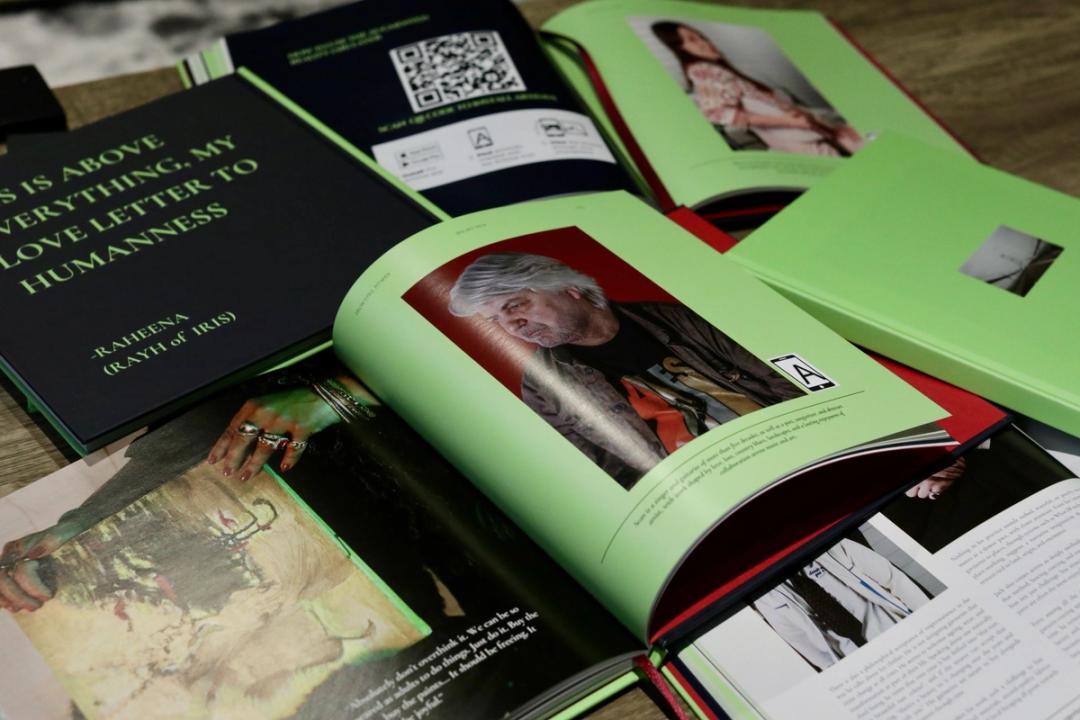
- An augmented reality (AR) photobook
- Who’s in it
- Fourteen creatives from Hull and East Yorkshire
- Made by
- Rayh (Raheena Fitumi Mohammed), artist, photographer and founder of IRIS (+ collaborators, see acknowledgements)
- Edition
- First edition prototype, 2026. Printed in the UK
- What moves
- One portrait of each creative, seen through the free Artivive app
- Without a phone
- Written reflections from each conversation sit beside the portraits
- Showcase
- 12 April 2026. The ticketed event sold out
- Reach
- Thousands of digital impressions and AR engagements
- Part of
- From Still to Seen, an R&D project prototyping storytelling tools with photography, sound and AR
- Supported by
- Innovate UK and DCMS, through the Create Growth Programme
From the diary
hull, march 2026
The book is finished.
Fourteen people who make things: songs, novels, masks, portraits, puppets, oil paintings, yoga classes, picture books, clothes dyed with brambles.
It isn’t the whole of anyone.
I spent time with each of them. A portrait and a conversation. Then I wrote down what I saw, as honestly as I could.
It isn’t the whole of anyone. How could it be? It’s one short meeting, seen from where I was sitting.
Some of the photographs move. I’ll get to that. First, how it started.
Before any of this
My mother made our living room in Abuja feel like a gallery. My first encounter with a camera was through my dad. Now, in our small flat in Hull, I’m surrounded by photographs again.
I’ve never thought of pictures as decoration. A photograph says we were here. We loved. We made something of our lives.
I believe in the urge to make things, too. It’s one of the ways people reach past just surviving. So I went looking for people who make things, to see how much of them a photograph could hold.
A photograph says we were here.
january 2026
I put out a call.
Creatives could sit for a portrait, join a workshop in creative practice, community storytelling or augmented reality, or help test the IRIS Storytelling Toolkit.
The book is one part of something bigger. From Still to Seen is also a research and development project, supported by Innovate UK and DCMS through the Create Growth Programme. I’m prototyping storytelling tools that bring together photography, sound and augmented reality.
Replies came in through January and February. Fourteen of the people who wrote back are in this book.
Shoot days
A portrait and a conversation, on camera.
I carried some questions in with me. Who are you? How are you, really? What do you make, and what feeds it? What of you will stay in the work you leave behind?
Other questions only showed up once we were talking.
What of you will stay in the work you leave behind?
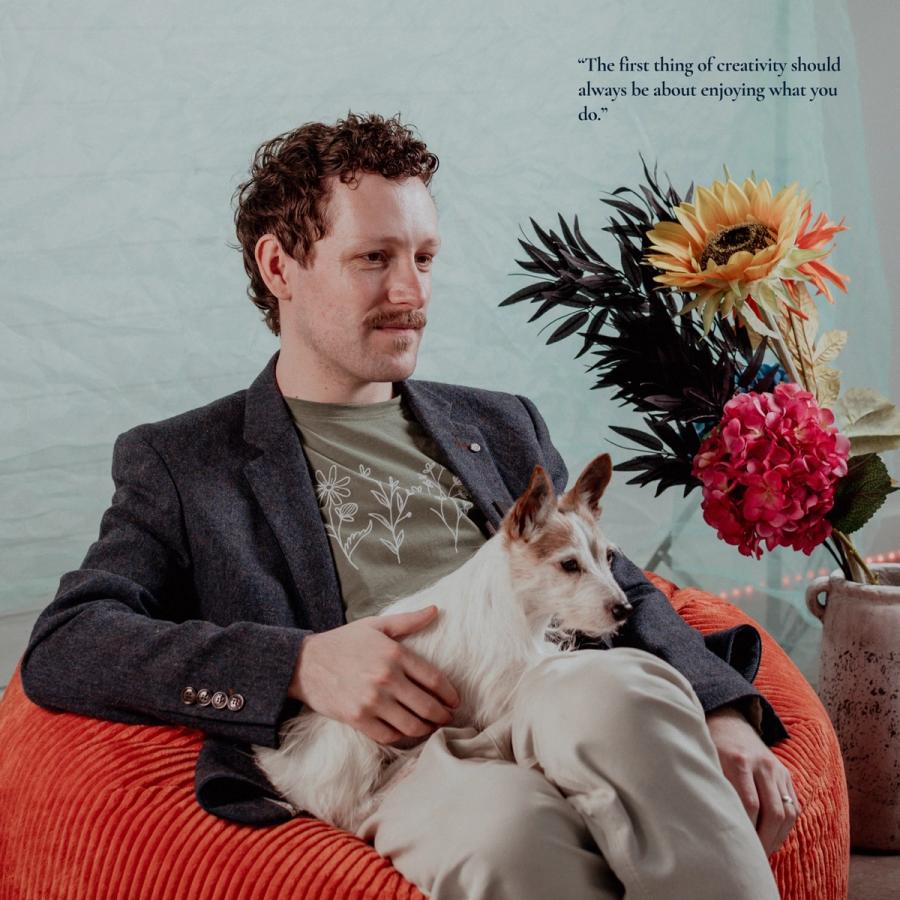
I tried to ask everyone the same things. It didn’t always hold. Ze kept apologising for rambling. Andromeda caught themselves mid-rant. Olly, Chris’s Jack Russell, wanted to sunbathe, got bored, then demanded attention.
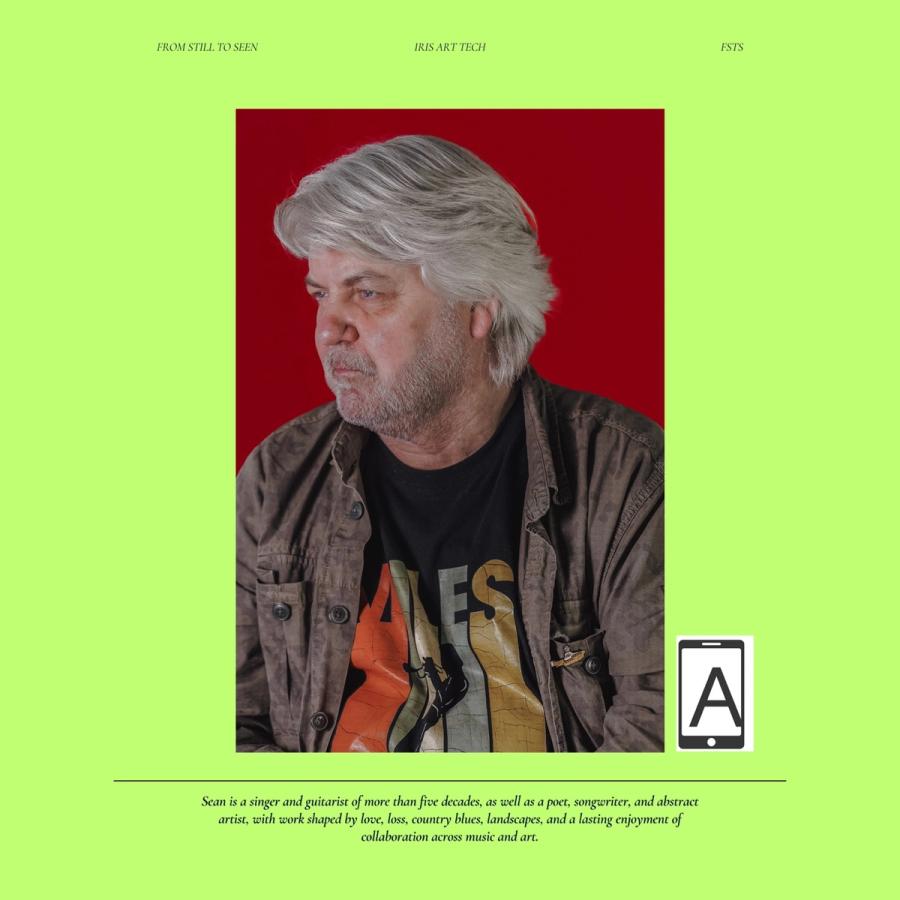
Sean sang “Way Back Home”, the song he wrote for his friend Charlie Fuggle after Charlie died. It overtook him. It overtook all of us.
Those are the moments I kept.
Traces
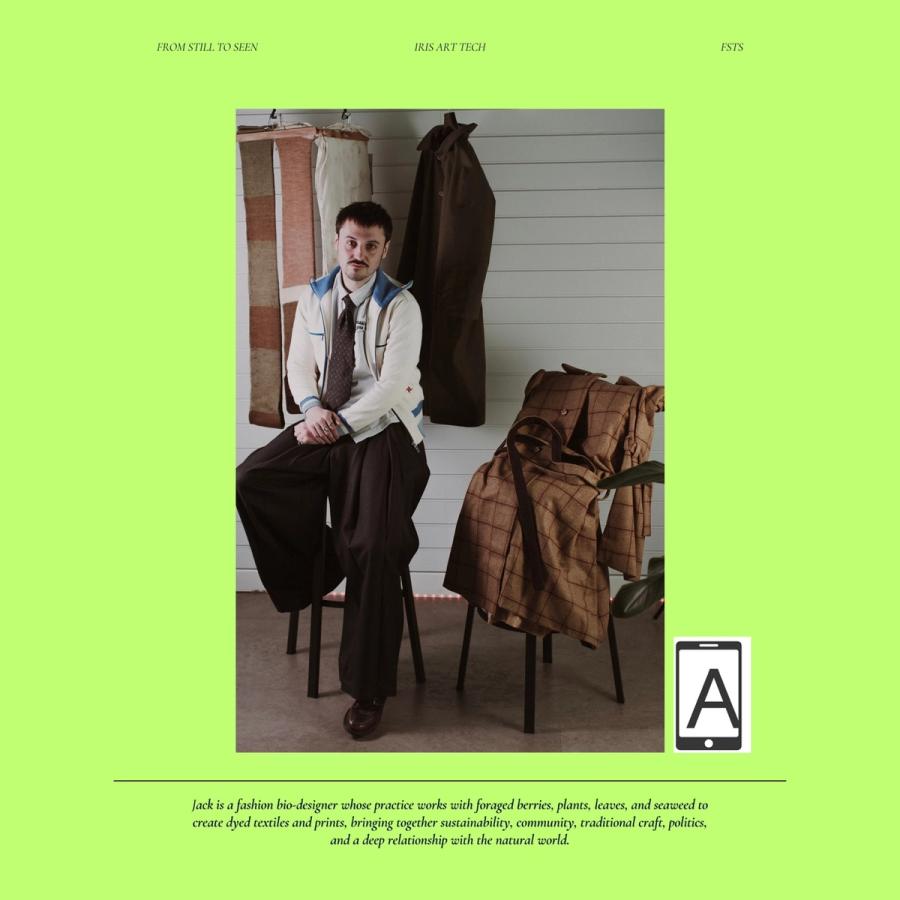
Jack told me about gansey jumpers: the patterns associated with fishing communities, and the stories of those patterns helping identify where a fisherman belonged if he was lost at sea.
That stayed with me. The question I had been asking everyone, knitted into wool.
What of us stays in the things we make?
A question about seasons
I asked what season they were in.
- Andromedaspring, after a winter of fear.
- Jodiecoming into spring, after “a really long winter”.
- Laraspring, though not summer yet.
- Ruththe very start of spring. “It’s really electric.”
- Zewinter, the kind where something is still happening underground. “…but I’m seeing the light a little bit.”
Still, and about to be seen. I think that’s what this book is. The thaw.
The same advice, five times
Five of them gave me the same advice in different words.
- Chris“Whatever your creative passion is, do it. Do it with both hands and just really own it.”
- Efia“Just do it. Do it. Find your people.”
- Teddy Lucine“Buy the pen, buy the paints.”
- Dylan“Go for it… You’ll learn it.”
- Mica“It doesn’t have to be perfect, just bring it to 70% and that’s enough.”
If this book does one thing, I hope it gets someone to consume less and create more.
For whoever comes after us
I asked what they would tell a future civilisation, rising from the ruins of ours.
Teddy said love and faith. She called it “very corny, very Miss World entry”, then stood by it.
- Lewis“Be kinder to each other… and also believe in each other.”
- Ze“There’s this thing called music, right? And maybe you can start from there.”
- Dylan“Good luck, bro… Definitely. Good luck.”
Why some of the pictures move
I don’t believe a portrait has to stop at the edge of the paper.
It started as curiosity: could I make a still image move? It became a way of letting a portrait carry more of a person than one frame allows. A voice. A gesture. A little more of the story, told by the person who lived it.
Before this book came PPE, the Post-Pandemic Exhibition, in 2024, and my work on HAIR at Ferens Art Gallery. Different rooms, the same question: how can a picture, a bit of technology and a story bring us closer to someone?
One portrait of each creative carries an augmented reality layer. Viewed through the Artivive app, it opens into motion and sound. Written reflections sit alongside the photographs, so the book still works with your phone in your pocket.
april 2026
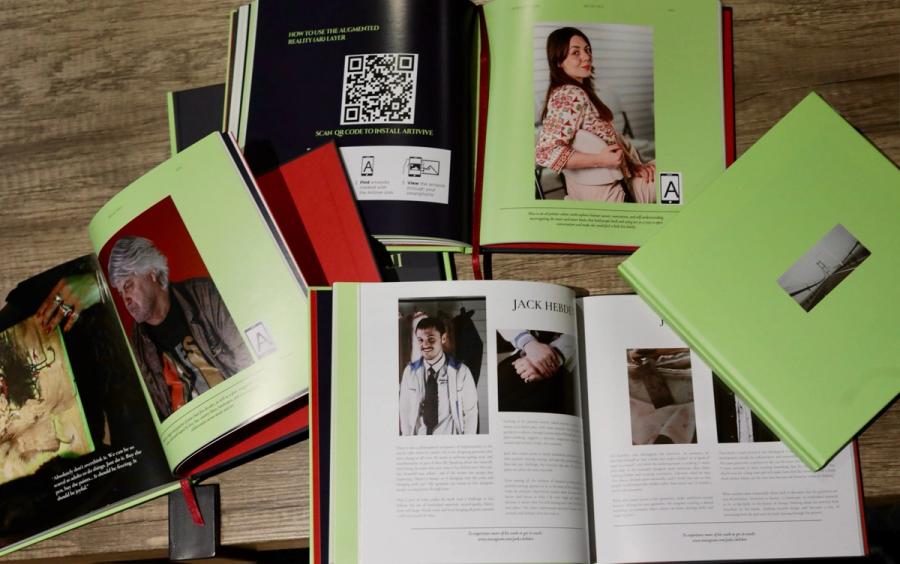
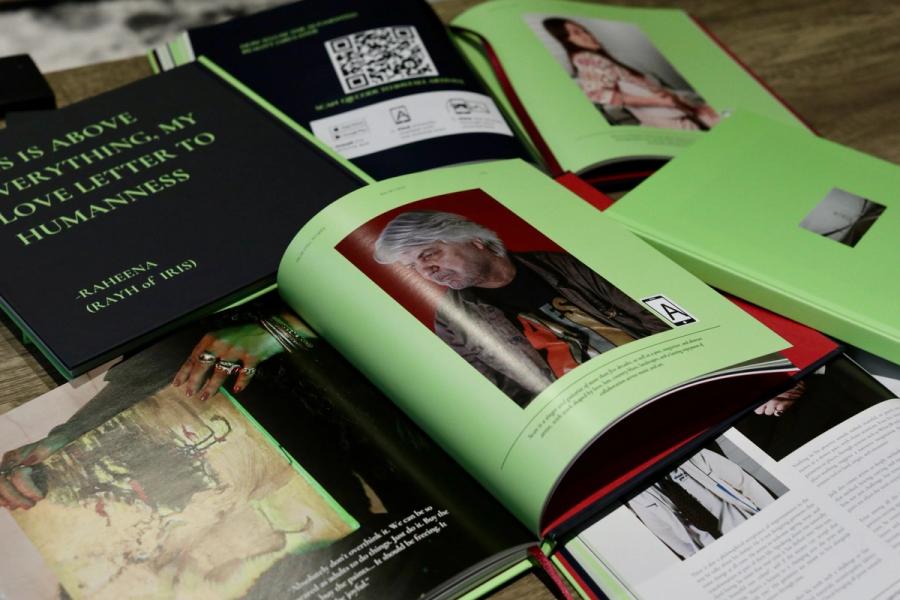
The showcase.
The book was finished in March. In April, it was seen.
Many of the fourteen were meeting each other for the first time. Guests held their phones over the pages and the portraits started to move. People who had never met found they had plenty to say to each other.
Chris said the highlight for him was “seeing the joy in the room of the participants excited to meet one and other”. Jess, a guest, said it made people open up, “even with complete strangers”.
People I met
In the order they appear in the book.
AR portraitIn the photobook, the photo comes alive when a phone is held up to it. Here, they wake one at a time automatically. Press play to hear it. With the Artivive app, a portrait wakes from a screen too: how to scan it.
 AR portrait
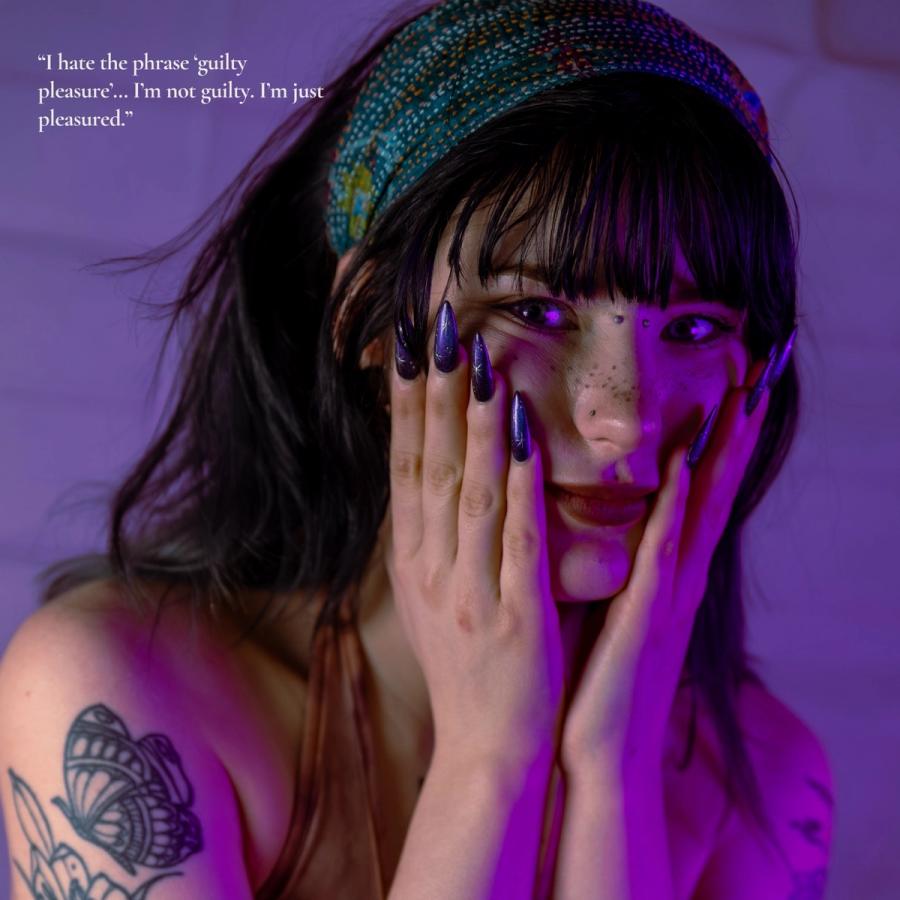
Andromeda (Bizarre Fae)
Makes music as Bizarre Fae, much of it from anger at systems that dehumanise women and marginalised people. Reads CIA documents they hate reading and reads them anyway. Showed me their nails with real delight.
“I hate the phrase ‘guilty pleasure’… I’m not guilty. I’m just pleasured.”
 AR portrait
Chris Turnbull
Writes crime, historical novels and children’s books, and won’t stay in one lane. His Jack Russell, Olly, stars in the children’s books and comes along to meet young readers. The thought of being judged made publication “quite scary”. Chris only puts out what he’s proud of.
“The first thing of creativity should always be about enjoying what you do.”
 AR portrait
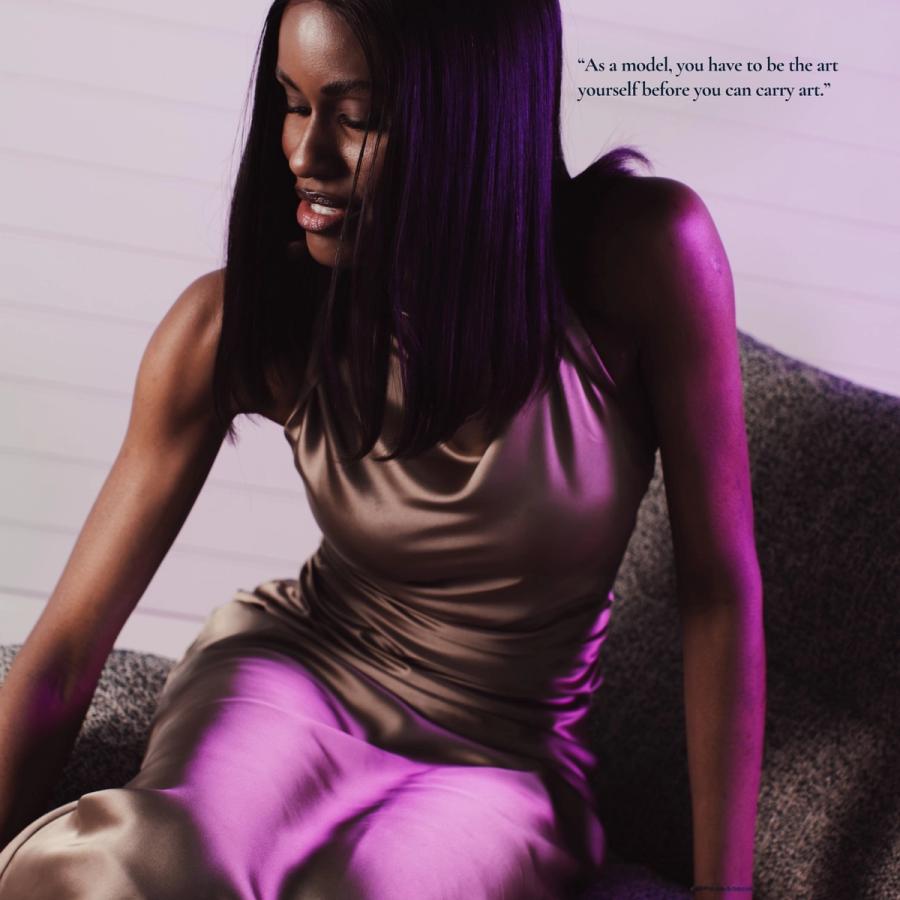
Clarion
From Delta State to Lagos to the UK. At a GTBank Fashion Week casting in Lagos, among more than a thousand girls, she was the only one asked to walk again, “like you own this place”. She often makes her work around three in the morning, while the house sleeps.
“As a model, you have to be the art yourself before you can carry art.”
 AR portrait
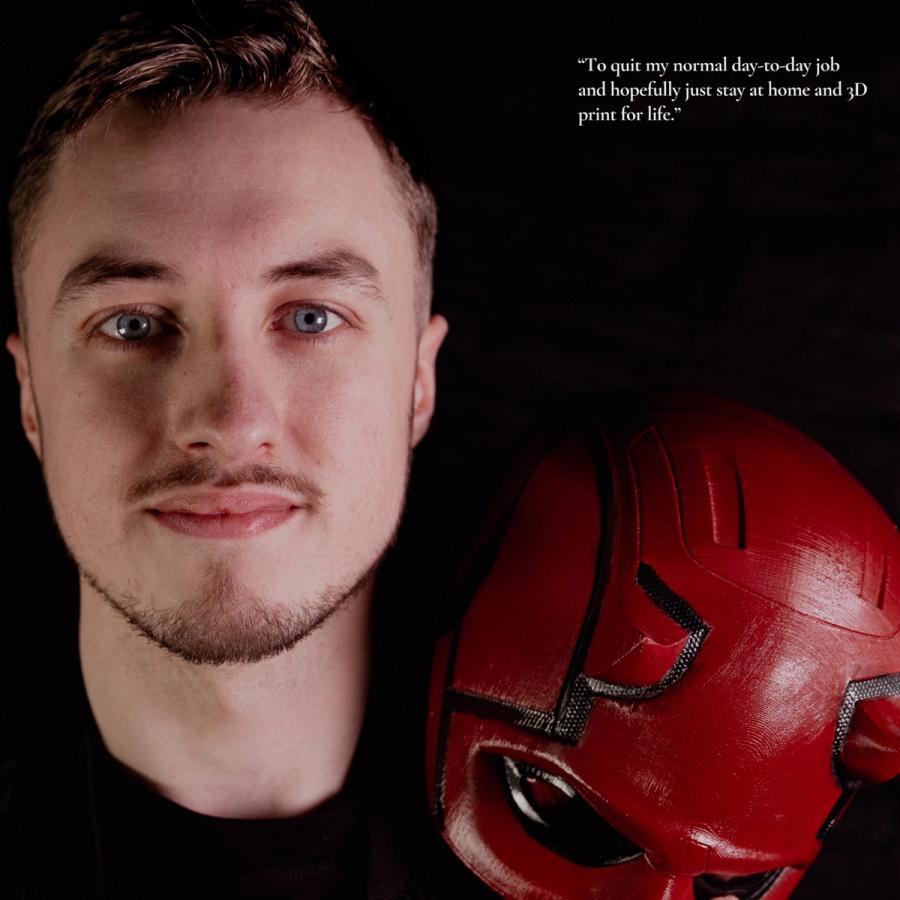
Dylan Plummer
Taught himself 3D printing after a friend nudged him towards it. Now runs Gen 3D, making masks, film props and commissions, including a memorial poodle for someone whose dog had died. Calls his Daredevil mask “a bit nerdy”.
“To quit my normal day-to-day job and hopefully just stay at home and 3D print for life.”
 AR portrait
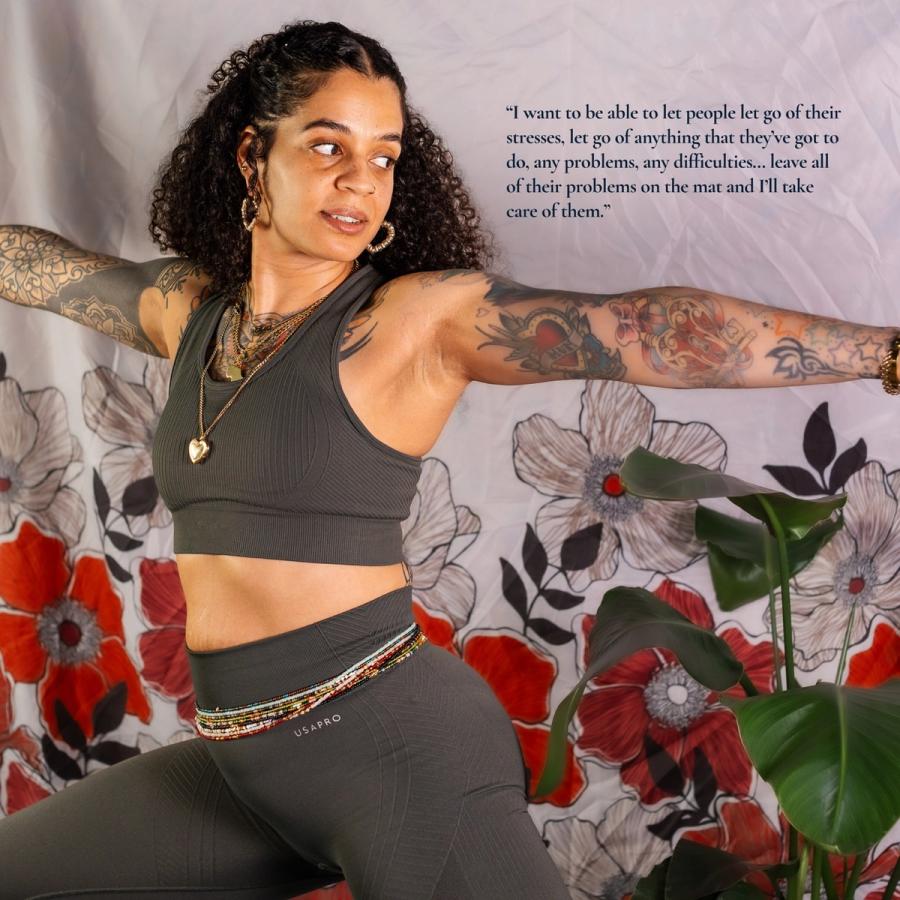
Efia Rose
Training to teach yoga in a city where she knows very few Black yoga teachers. Drawn to Kemetic yoga and the roots she feels have been whitewashed. Wants Black music in every class: “Got to have a good playlist.”
“I want to be able to let people let go of their stresses… leave all of their problems on the mat and I’ll take care of them.”
- AR portrait
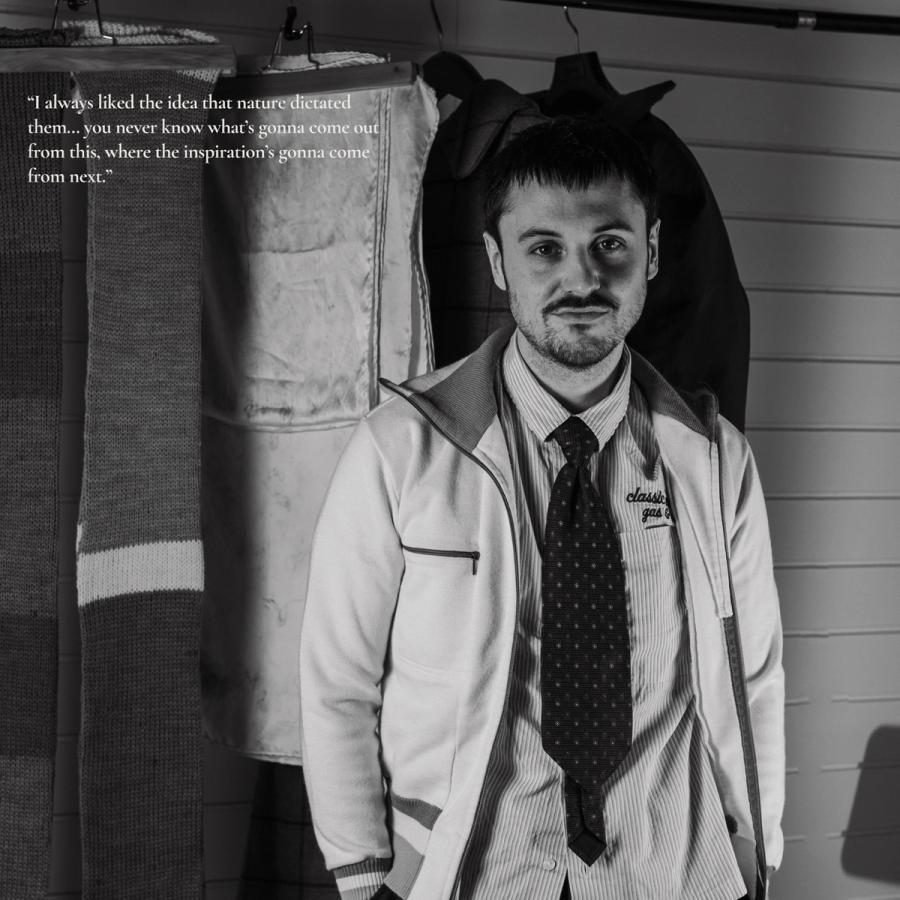
Jack Hebden
Forages brambles, nettles, seaweed, leaves and flowers, then dyes and prints cloth with them. Trained in tailoring at London College of Fashion and on Savile Row. Calls himself “just a bloke that makes clothes”. Wants his clothes to change with the people who wear them.
“I always liked the idea that nature dictated them… you never know what’s gonna come out from this.”
 AR portrait
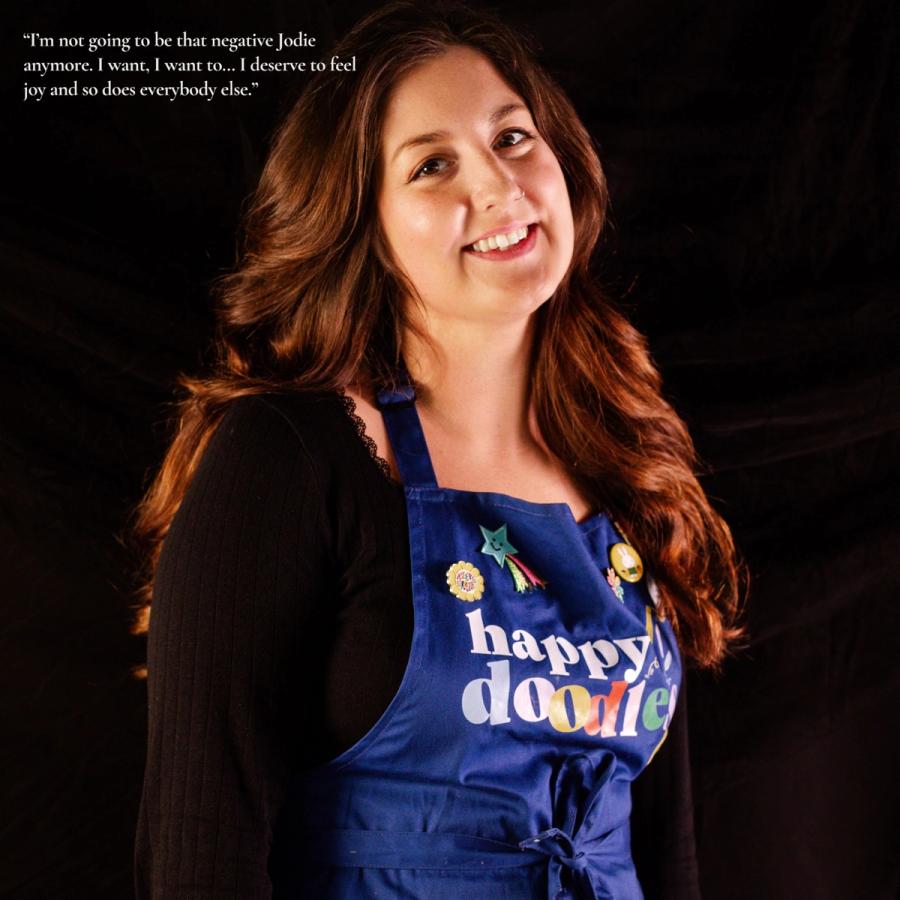
Jodie Smith
Wrote her debut, Bipolar Blob, to help her daughter understand her condition. It became an international resource. Happy Doodles grew from art workshops into an emotional wellbeing programme. Jodie calls it “basically art for emotions”: children start doodling, and the words follow.
“I’m not going to be that negative Jodie anymore. I want, I want to… I deserve to feel joy and so does everybody else.”
 AR portrait
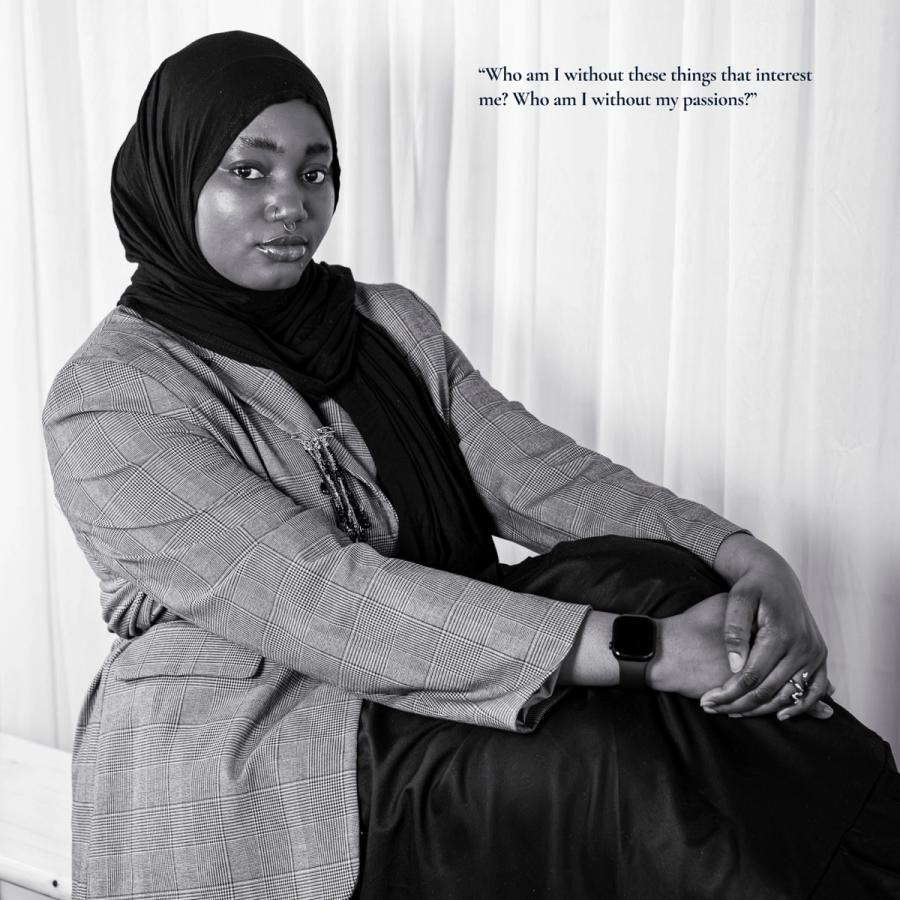
Olohuntosin (Lara)
Wrote on walls as a child and co-wrote a book with her primary school teacher. Survival in a new country pushed writing aside for a long time. At work, she stopped using the “White-friendly” pronunciation of her name: “that’s not my name”. When her Substack reached a hundred subscribers, she baked a cake.
“Who am I without these things that interest me? Who am I without my passions?”
 AR portrait
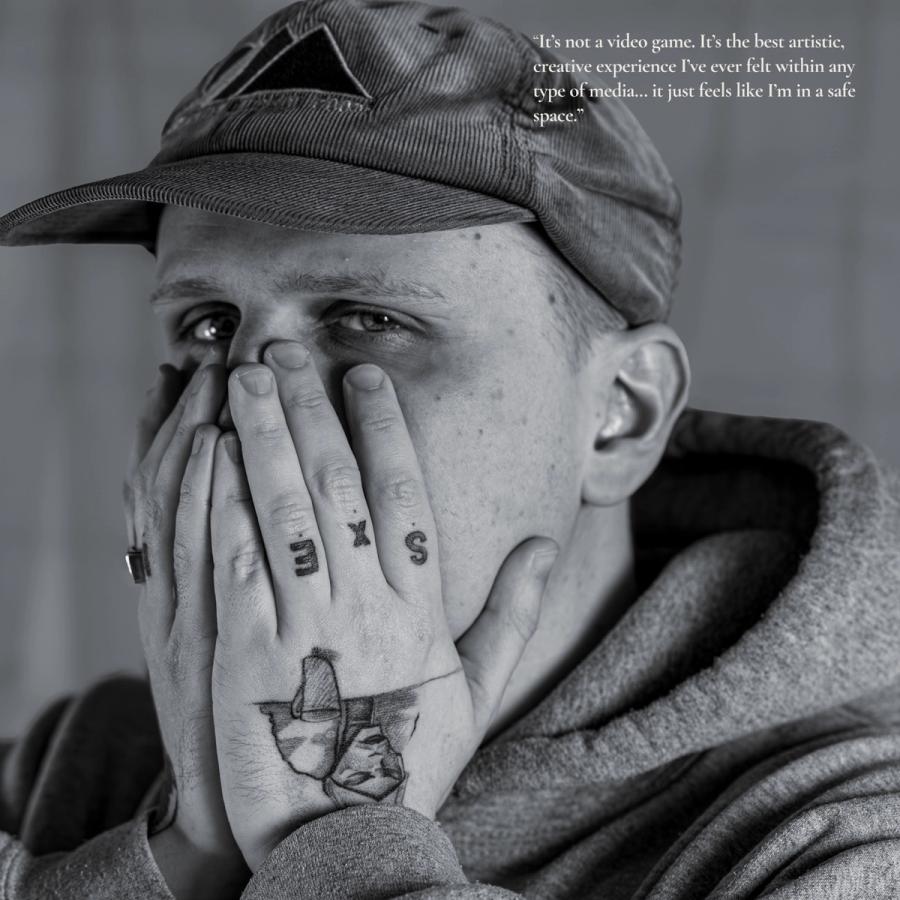
Lewis
Runs Three Questions, asking everyone he photographs the same three questions. Bought his camera with money his late grandfather left him. “I feel like this found me.” Calls himself “just a lad in Hull”.
On Disco Elysium“It’s not a video game. It’s the best artistic, creative experience I’ve ever felt within any type of media… it just feels like I’m in a safe space.”
 AR portrait
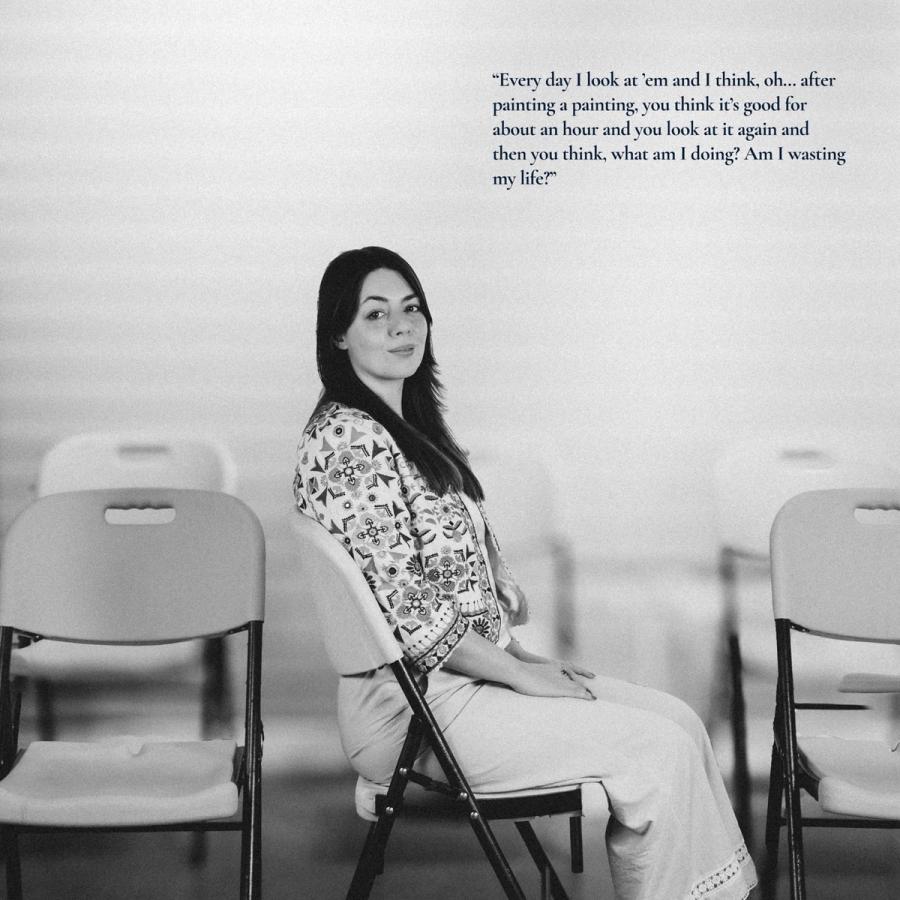
Mica Khan
Self-taught, and fed by Renaissance painting and conversations with her taxi passengers. Painted eyes into Escapism that frightened her as she worked. Someone once joked after seeing her paintings, that she might need therapy. She enjoyed that.
“…after painting a painting, you think it’s good for about an hour and you look at it again and then you think, what am I doing? Am I wasting my life?”
 AR portrait
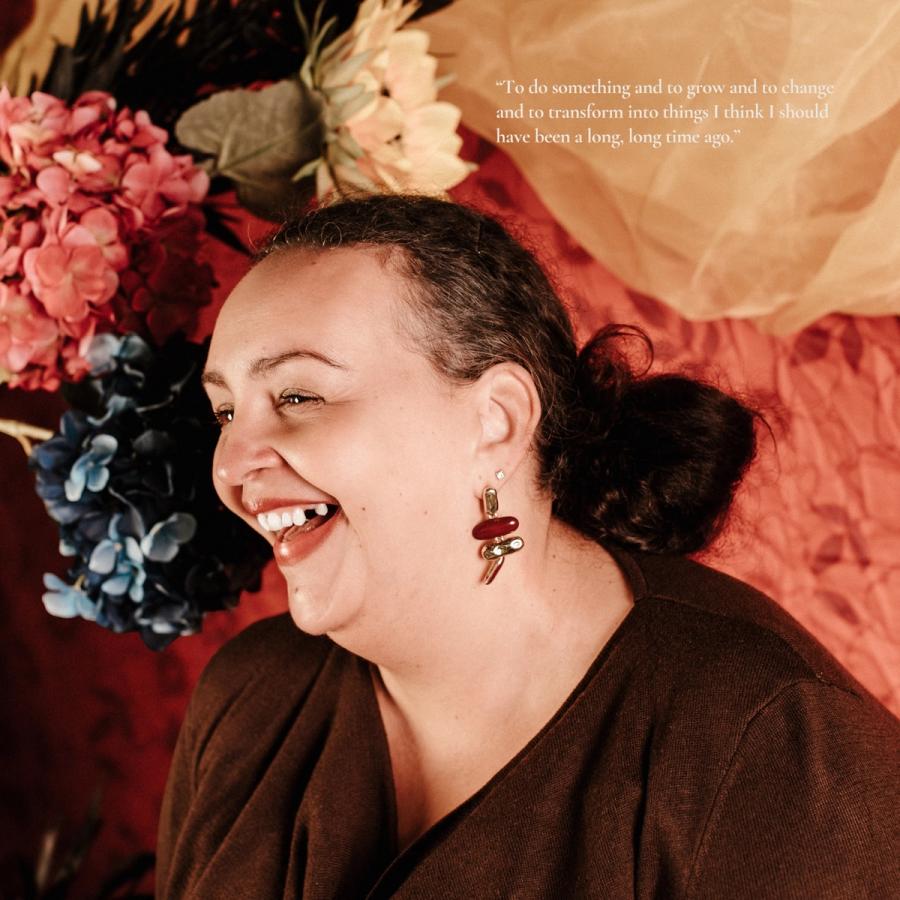
Ruth Toynton
Sings neo-soul with jazz running through it, inspired by Jill Scott and Erykah Badu. Often doesn’t know what a song is about until she sings it back. Grew up with a voice everyone noticed and nobody helped her grow. Founded The Musician’s Green Room, a support group for musicians, and admits she runs it for herself too.
“To do something and to grow and to change and to transform into things I think I should have been a long, long time ago.”
 AR portrait
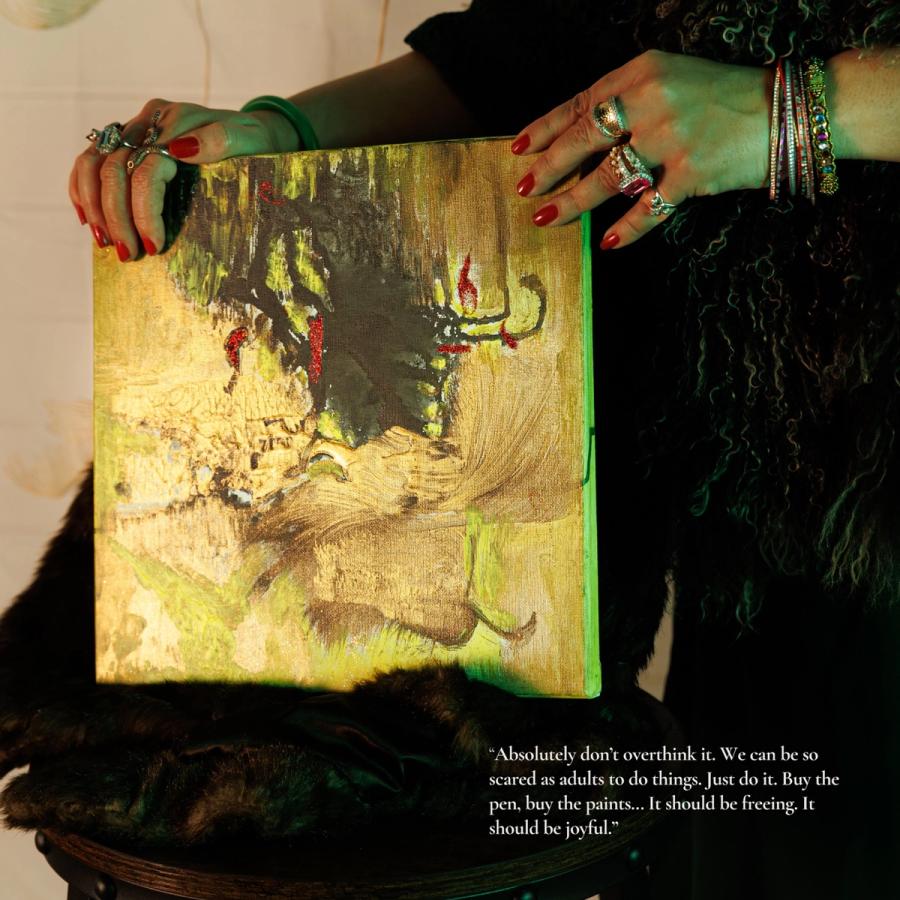
Teddy Lucine
Paints at the kitchen table, brushes out beside the cooking. Painted Othello and Desdemona as birds. Makes textured, scented work so people with visual impairments can read a painting. Women will always be at the centre of her work.
“Sometimes ordinary people that don’t have the stories can be the most intriguing.”
- AR portrait
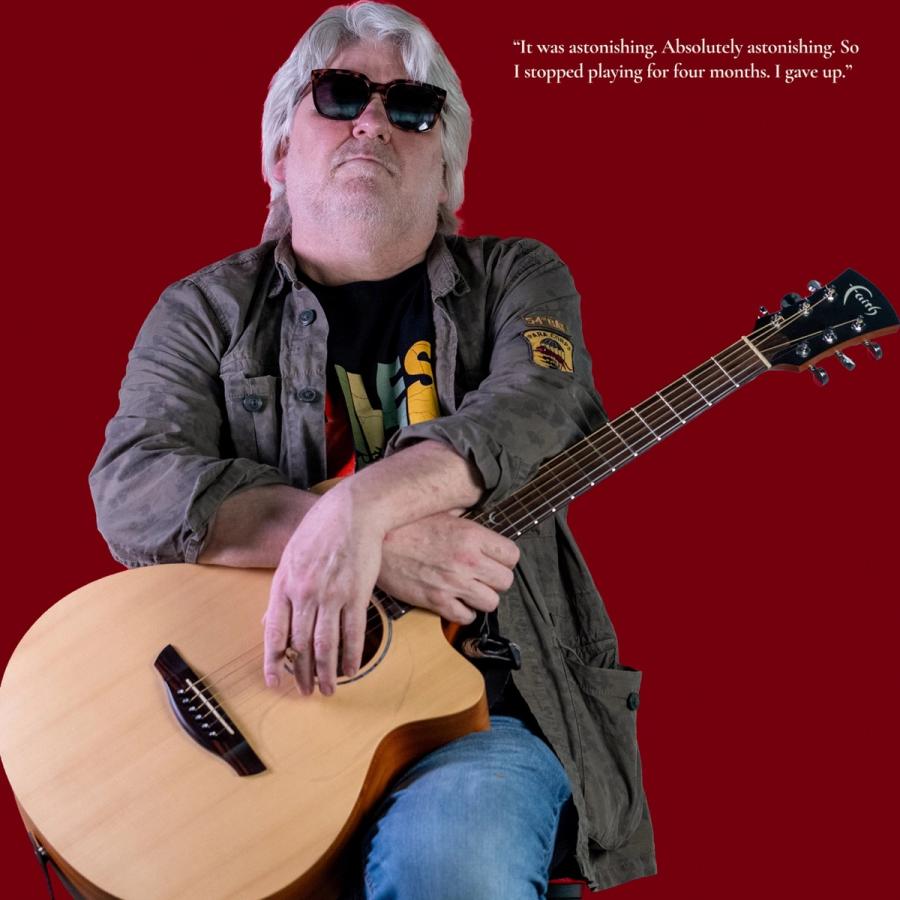
Sean McTiernan
Grew up with records in a tiny East Hull terraced house. His father died when he was twelve, and his big brother taught him guitar. Turns shopping lists left in supermarkets into art. Thinks art should be affordable for everyone.
At sixteen, he saw John Martyn play.
“It was astonishing. Absolutely astonishing. So I stopped playing for four months. I gave up.”
 AR portrait
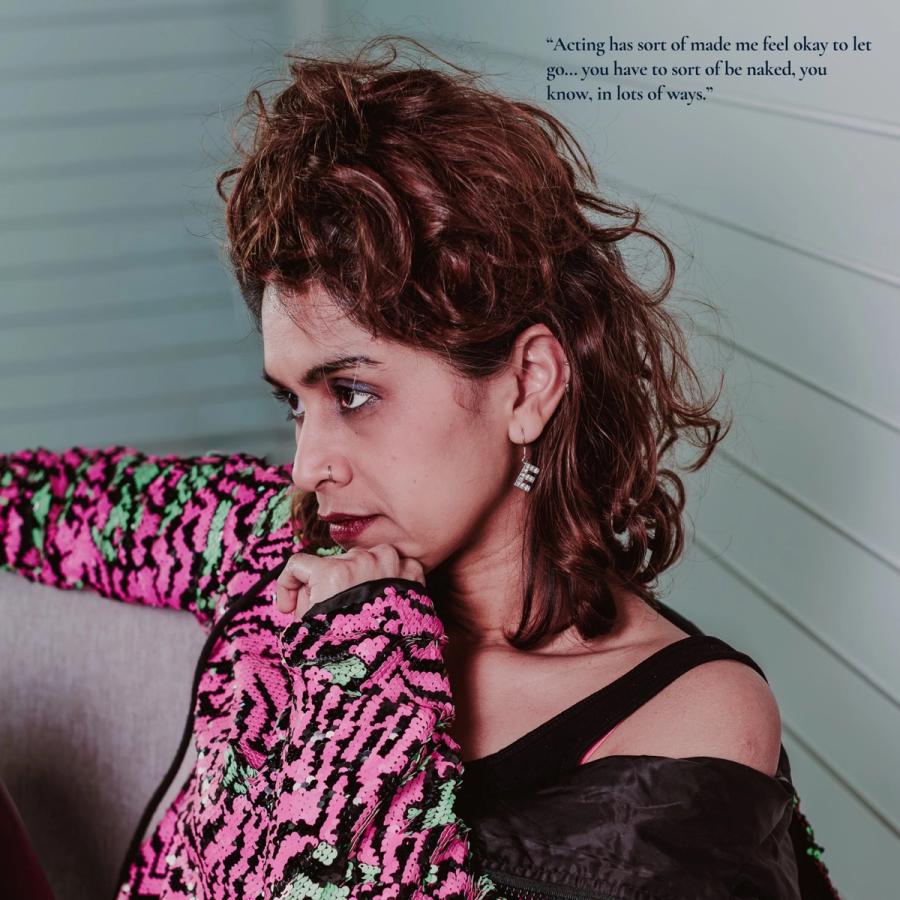
Ze Rebelle
Studied audio engineering in Malaysia and Australia, made three albums, and has performed in London, Brazil, Australia and the US. Now calls herself an “actor singer”, still trying the words on. A French producer has her writing more songs in Malay.
“My lyrics… it’s a bit like my diary, I suppose.”
There is a sense with Andromeda of someone undoing the habit of self-minimisation and finding their way back to a more truthful way of being. What comes through most strongly is that their creativity is not a hobby, accessory, or aesthetic pose. It is bound up with selfhood and with the long, difficult process of learning not to silence themselves. They speak about a past shaped by mental health struggle, and about art as the thing that offered shape, hope, and a reason to keep going when those things were otherwise difficult to hold onto.
The honest way Andromeda describes the movement from silence to authenticity immediately endears one to their story. Once a loud teenager, they learned to shrink themselves, particularly in spaces where speaking openly about feminism, power, or injustice made them feel exposed or unwelcome. Now, that earlier self-consciousness has turned into a clearer philosophy. “Stop trying to silence yourself” becomes both advice and a kind of personal testimony. So does their insistence that “living loud is definitely one of the biggest things anybody can do.” In Andromeda’s telling, the pressure to become smaller is never just personal. It is social, political, and emotional all at once. “The people who wanted me to shrink were just afraid to let themselves be big” they reflect, and it lands with the force of someone who has had to learn that lesson from the inside.
Their creativity feels instinctive, porous, and politically awake. Music and making are not sealed off from the world but are in constant conversation with it. Their songs emerge from visceral anger at systems that dehumanise women and marginalised people, from fear about the erosion of compassion, and from the moral exhaustion of paying attention in a world that often rewards apathy. The political is more than an abstract posture here. It is lived experience. These views shaped for example, in response to Roe v. Wade, the phrase “My body is not your political playground”, and the lyric of theirs they are most proud of, “This isn’t political, it’s a war on life”, all reveal an artist whose politics are inseparable from bodily reality and emotional truth. They speak too about the frustration of being treated as “just a little girl” in political conversation, as though youth or femininity should cancel out insight. That dismissal clearly stayed with them and now appears as fuel in the work.
What also makes Andromeda compelling is that the political is never the only register. Alongside the rage is tenderness, humour, and a very recognisable human strangeness. They show off their nails with delight. They catch themselves mid-rant. They admit, half-amused and half-appalled, to obsessively reading CIA classified documents because they want to understand what is happening beneath the surface of the world. “I hate reading them, but I read them all the time,” they say, voice heavy with humour. The willingness to remain odd, warm, and unvarnished keeps the work from ever feeling didactic.
Another strand running through their practice is a yearning to reconnect with what modern life seems to sever. Their upcoming music explores the distance between humanity and nature, and the uneasy split between our social selves and the real, living animal world beyond us.
That search gives the work a wider philosophical atmosphere. It is protest but also about recovery, about asking what gets lost when life becomes over-mediated, over-curated, over-managed, and emotionally numb. Their critique of capitalism, propaganda, and manufactured outrage sits alongside a longing for something more grounded and instinctive.
They worry that the world is “priming us to be really apathetic”, that compassion is being eroded, and that even phrases like “love thy neighbour” are being hollowed out or weaponised. Yet they have not surrendered to despair. There is still hope in the way they speak about real human connection, about queer visibility, and about the progress they have witnessed in LGBTQ+ life compared with their own childhood as a queer person raised by a lesbian mother. That refusal to give in to hopelessness, even while looking so directly at what is damaged, reminds me of ‘A Brief for the Defense’ by Jack Gilbert, with its insistence on joy in the presence of despair.
That balance between exhaustion and moral insistence feels central to who Andromeda is. They are clearly someone who knows what compassion fatigue feels like and who understands the temptation to switch off yet cannot quite do so because awareness carries its own responsibility. Even their lighter remarks seem to hold that same deeper ethic. “I hate the phrase ‘guilty pleasure’… I’m not guilty. I’m just pleasured.” It is a funny line, but it also reveals something larger: a refusal of shame, a resistance to moral policing, and a determination to meet joy without apology.
Their current creative season, they say, is spring, after a winter of fear and self-censorship. That image feels exactly right. There is thaw, and now there is colour returning. What remains most memorable is that their work seems to sit somewhere between protest, confession, and renewal. In an age of careful branding and algorithmic self-performance, Andromeda’s refusal of false polish feels part of the art itself. They are politically alert, playful about their own weirdness, and deeply serious about what it means to stay human. If their story teaches anything, it is that art can be salvation, that authenticity can be a form of resistance, and that sometimes the most radical thing a person can do is stop shrinking.
Andromeda, From Still to Seen
Chris comes through as someone whose work is powered by gentleness, wit, and a very real respect for joy. There is also a grounded clarity to him, the kind that makes you trust both the playfulness and the seriousness of what he is doing. He writes because he loves story, because he is curious, because his imagination keeps moving, and because different forms seem to allow different parts of him to speak. He has spent more than a decade publishing across historical fiction, crime, young adult work, and children’s books, yet he never sounds invested in presenting himself as grand or literary for its own sake. What lingers instead is affection. Affection for readers, for storytelling, for the silliness and possibility of invention, and above all for Olly, the Jack Russell terrier who wandered from ordinary life into the centre of his children’s book universe.
Chris says something I find interesting; he tells me with candour that he never really wanted to be published in the first place because “the idea of putting it out there in the world where people can judge it and have an opinion on it is quite scary.” It makes clear that his confidence is not the absence of vulnerability, but the decision to keep making despite it. He understands that creating and sharing work are not uncomplicated acts. They require a willingness to be read, interpreted, and sometimes misunderstood. Yet he also knows that if he is going to put something into the world, it has to be something he genuinely believes in. “I would never publish a book because other people expect me to publish something,” he says. “I have to make sure that I’m putting something out there that I’m truly proud of and not doing it just for the sake of it.”
That sense of integrity runs through the Olly books. What could easily have remained a charming novelty, a beloved dog turned into a children’s character, has become something much richer. Olly may be mischievous, funny, and full of character, but the books carry more than just canine adventure. They hold subtle messages about kindness, environmental care, anti-bullying, and representation, all folded gently into the story rather than announced with a heavy hand.
Chris understands that children’s books can widen a child’s world without lecturing them. Two dads can simply exist in the story because they exist in life. A beach clean-up can become part of an adventure because environmental responsibility belongs to ordinary living. This insistence on normalisation is one of the strongest parts of his work. “What the LGBTQ community want essentially is just to be normalised,” he says, and that principle seems to animate the way he writes for younger readers. By allowing inclusion to be unremarkable, it makes it more powerful.
What deepens the portrait further is the sense that Chris does not believe creatives should be trapped by other people’s categories. He writes across genres because that is where his interests take him. He resists the expectation to stay in one lane, to become one thing for ease of marketing or identity. It is a matter of fact: a person can write crime, children’s books, young adult fiction, and historical novels if that is where their imagination leads. In this sense, his career carries an argument for creative freedom. His partner’s reaction to some of his newer work, asking where on earth it had come from, only reinforces the sense that Chris continues to surprise even those closest to him.
There is also a great deal of warmth in the human details around him. His relationship with Olly feels affectionate, playful, and lived-in. The dog wanting to sunbathe, getting bored, demanding attention, all of these little moments give the interview a charm that mirrors the books themselves. Chris sounds genuinely delighted by his companion, and that delight spills naturally into the work. So too does the joy of reading aloud. You can hear, even in description, that he comes alive in those moments, whether sharing a children’s story or speaking about meeting young readers.
Underneath all of this is a philosophy of creativity that is disarmingly simple and deeply persuasive. “The first thing of creativity should always be about enjoying what you do.” Joy is foundational in Chris’ world. This is reflected in his advice to others: “Whatever your creative passion is, do it. Do it with both hands and just really own it.” Across from him, I start to see someone who knows that fear will always hover around making, but also knows that delight, curiosity, and sincerity are what make the risk worth taking.
What remains most compelling about Chris is that he manages to be funny without becoming glib, thoughtful without becoming solemn, and principled without becoming rigid. His work believes in kindness, in representation that does not require preachy performance and in stories that meet people where they are. In a culture that often mistakes loudness for importance, Chris’ voice feels steady, humane, and sure of what matters. He writes with affection, creates with care, and seems to understand instinctively that joy, when taken seriously, can be one of the most generous things an artist offers.
Chris, From Still to Seen
I sit with Clarion at the studio on a chilly Sunday afternoon and within 10 minutes of our conversation I notice there is a way she speaks, as if from the threshold between self-doubt and self-possession. She is still actively growing into the words creative and model, still learning how to wear those identities without apology, despite having clearly embodied them for years. Her story moves through shame, awkwardness, comparison, and the long labour of self-acceptance. Being teased for her body as a girl, feeling the need to cover up, doubting her own right to take up space, all of that sits behind the woman who also now knows she is unmistakable.
What comes through most clearly is the tension between visibility and invisibility. Clarion knows what it is to question whether she is too much. She also knows, more and more with time, that what makes her stand out is not something to apologise for. “I’m still growing into fully claiming that name, that word, creative, but I know it’s something that has always been with me,” she says. It captures both her humility and her becoming. She is learning to recognise what has been there all along. “I feel like I’m still now, and then I’m going to be seen very, very, very soon,” she adds, and there is something moving in that phrasing. It carries both present uncertainty and future certainty in the same breath.
Her creativity seems to live in presentation, styling, movement, and the precise charge of presence. Clarion’s philosophy on modelling goes beyond just being beautiful, it is as an active artistic act. “As a model, you have to be the art yourself before you can carry art,” she says. She speaks of the model as a canvas, mind you not a blank one. “You’re a canvas, and then there are some things that somebody else will not be able to carry.” It suggests her body, her face, her energy, and the way she wears something are part of the work itself.
There is, too, a long emotional journey beneath that confidence. Clarion speaks candidly about shame, particularly around her body. “I was ashamed of my skinny self… And now growing up I’m like, nah, I have a very beautiful body.” This, to me, feels like one of the deepest arcs in her story. The body that once made her a target becomes, over time, part of what makes her unforgettable. The same is true of the features that once exposed her to ridicule. Rather than smoothing herself into acceptability, she has slowly come to understand her distinctiveness as power. “You can easily pick me. Not because I’m tall. Yes, I’m tall, but then you can easily pick out that, ah, that’s Clarion.” She says, “You cannot say, oh, I saw somebody that looks like me, because I know I’m very unique.”
What also makes Clarion especially compelling is the paradox of her nature. She is visibly striking, made for public-facing work, and yet deeply introverted. Her creativity relies on silence, privacy, and solitude. She creates late at night, often around three in the morning, when everyone in the house is asleep. Her artistry seems to require some stillness. Living with family, with her sister and children around her, adds an intimate domestic backdrop to that story. In my imaginations I see Clarion creating in the middle of ordinary life, stealing quiet hours to hear herself think.
The interview also contains lovely, revealing moments where her self-doubt struggles against the obviousness of her gifts. Her panic about needing to bring “something creative” despite clearly being creative. The years of friends encouraging her to return to content creation, while she resists because visibility itself feels fraught. The moment someone asks her to style their birthday outfit and something in her understands, perhaps for the first time in a new way, that what she and her skills do has value, so much value.
That uniqueness was not always easy to inhabit. One of the most powerful stories in her interview is the GTBank Fashion Week casting in Lagos. She walks into a room full of over a thousand girls, all beautiful, all seemingly more assured, and suddenly comparison floods in. It is a recognisable moment of self-doubt, but in her case it becomes a turning point.
After not getting it right the first time, she is singled out and told, “You’re the only person I’m going to let walk again. I want you to go back and walk like you own this place.” It is hard not to feel the force of that memory. It carries humiliation, grace, second chances, and revelation.
There is also a wider social and political resonance in her story. Clarion’s journey critiques narrow beauty standards and the body politics that make girls ashamed of the very qualities that later become their power. It also gestures towards questions of access, mobility, and ambition. Her movement from Delta State to Lagos and eventually to the UK suggests a life shaped by migration, effort, and reinvention. Her recollections of Lagos fashion spaces, where some people already seemed chosen or favoured, hint at the gatekeeping that often sits behind glamorous industries. At the same time, her story challenges the assumption that public-facing creativity belongs only to extroverts. Clarion’s life and work insist that silence, introspection, and privacy can coexist with striking visibility.
What remains most memorable about her is the sense that confidence, for Clarion, is both performance and truth. Sometimes you walk like you own the place before you fully feel that you do. Sometimes the body learns it first, and the self follows later. She understands that claiming oneself is not a one-off act but a repeated practice. “Don’t shrink yourself for anybody. Don’t shrink yourself for anybody. Own yourself. Own who you are, and the world would be a better place if you do.” It feels like the distilled wisdom of someone who has lived through the cost of making herself smaller and is no longer willing to pay it. Clarion does not simply occupy space. She has learned, slowly and beautifully, to believe that it was hers all along.
Clarion, From Still to Seen
Dylan gives the impression of someone who stumbled into his practice and then built a life around it, one print, one experiment, one order at a time. What is striking is how little ego there is in the way he talks about what he does. He runs Gen 3D, sells through Etsy and Instagram, takes custom commissions, uses AI and his own programming skills to support the work, and is clearly committed to the craft; yet he still speaks like somebody figuring it out as he goes. That humility is part of his charm. He talks about learning, about trying, and about the gap between not being naturally strong on the art side and persisting anyway. “If I can do it, anyone can do it,” he says, and the line captures both his openness and his refusal to mystify the process.
There is a determination to Dylan that becomes more interesting the longer he speaks. He does not present himself as someone who always knew this was his path. In fact, part of what makes him compelling is the sense that the passion arrived after some resistance. He was encouraged towards 3D printing by a friend, did not immediately take to the idea, and then found himself unexpectedly absorbed by it. That shift from reluctance to genuine fulfilment gives the work an honesty that is hard to fake. He sounds like somebody who found a rhythm through doing, who discovered that curiosity could become skill if he kept showing up to it long enough. Even now, with a growing business and increasing confidence, he remains refreshingly unromantic about expertise. “I don’t think I will ever know everything,” he admits with a grin.
His practice sits in an intriguing space between fandom, function, and feeling. Yes, there are film-inspired objects, masks, props, and the kind of delightfully fun pieces that attract people who love pop culture and want to hold some part of it in their hands. His self-conscious aside that the Daredevil mask is “a bit nerdy” is oddly endearing, because it reveals that even while making these objects with real pride, he has not lost the ordinary self-awareness of someone who knows how enthusiasm can sound to others. But what broadens the portrait considerably is the fact that not all his work lives in that register of “fun”. There is also the memorial poodle commissioned by someone whose dog had died, and the presence of that piece changes everything. It reveals that Dylan is sometimes helping people materialise memory, grief, or attachment. The emotional intelligence with which he discusses that commission suggests that he understands, perhaps more than he lets on, that making can hold far more than novelty.
What is especially appealing is the way Dylan embodies a kind of democratised creativity. His journey from complete novice to working 3D printing business owner within a relatively short period says something about access to technology, but also about mindset. He does not carry the attitude that you need permission to begin, or that mastery must come before action. Quite the opposite. “Go for it… You’ll learn it.” That seems to be his whole philosophy, both for himself and for anyone else tempted to try something new. The use of AI in his process fits this same practical spirit. To him it is not some grand ideological issue. It is a tool that helps. He uses it alongside his own programming skills and experimentation, neither threatened by it nor evangelical about it. In conversation, it gives the impression that he is of a generation of makers who are less interested in purity and more interested in possibility.
Dylan himself says there is “a lot of meaning, fun stuff and yeah, and adult stuff” in the work, and that slightly awkward phrasing tells you a great deal about him. He is matter of fact about the strange range of commissions that come his way, including the more adult requests, but he never sounds crass about it. Instead, he sounds grounded. A person asks for a thing, and he figures out how to make the thing.
There is also the pragmatic way he speaks about the business side of it. There is no fantasy that creativity exists outside economics. He knows Christmas can be a slow period because “everyone runs out of money then, don’t they?”. He is building something creative in the middle of ordinary economic pressures.
There is also a wider longing underneath his work. It is concrete and deeply recognisable. “To quit my normal day-to-day job and hopefully just stay at home and 3D print for life.” There is something almost disarming in how straightforward that ambition is. Yet the more you think about it, the more radical it becomes. It is a dream about autonomy, about self-direction, about escaping the structures of conventional work and building a life organised around making. That aspiration connects him to a much broader contemporary hunger among younger creatives and small business owners, the desire to live more fully on one’s own terms.
Dylan’s personality emerges most clearly in the small, unpolished moments. The slight awkwardness around adult commissions. The modesty about his own knowledge. The honest admission that he was not naturally good at the art side but kept going anyway. The uncomplicated, almost charmingly unceremonious message he offers to the future: “Good luck, bro… Definitely. Good luck.” That line is funny, it is also revealing. He is simply himself. And that self feels grounded, sincere, and oddly reassuring.
Dylan, From Still to Seen
Efia speaks about yoga with the steadiness of someone who has experienced it not merely as a discipline, but as a way back to herself. What comes through first is sincerity. Her path into yoga began in recovery after surgery, with a friend inviting her to a session that became more than a one-off encounter. Over time, what began as physical support deepened into something spiritual, emotional, and cultural. She does not describe yoga as only movement or flexibility. She describes it as a place of peace, connection, return, and recognition. “It’s everything,” she says, and the speed and certainty of that answer tells you how integrated the practice is in her life. It is where she goes in stress, joy, uncertainty, and reflection. It is both refuge and reset, sanctuary and structure.
What makes Efia especially compelling is that the peace she offers does not feel vague or ornamental. She wants people to arrive and let go, to put down whatever they have been carrying, to exhale properly, and to feel held for a while. “I want to be able to let people let go of their stresses, let go of anything that they’ve got to do, any problems, any difficulties… leave all of their problems on the mat and I’ll take care of them.” There is something both beautifully maternal and disciplined in this. She takes the responsibility of holding space seriously.
That tenderness is made even more powerful by the clarity with which she understands her own presence in the wellness world. Efia’s Blackness, cultural awareness, and way of moving through the world are not separate from her practice. They are central to it. She refuses the faux neutrality that so often defines mainstream wellness spaces, where histories are flattened and identities are treated as distractions rather than truths. “Being myself. My authenticity… to be unapologetically Black as well and not feel like I have to fit into a certain space to do the things that I want to do.” That line says a great deal. It is personal, but it is also structural. It points to the fact that certain spaces have long been coded as White, and that simply showing up fully as yourself within them can become a form of gentle resistance.
Her reflections on representation are delivered with calm, yet they carry force. The fact that she knows very few Black yoga teachers in the area is significant. It reveals how narrow wellness spaces can still be, even while presenting themselves as universal. Efia does not respond to that narrowness by withdrawing. Instead, she seems intent on widening the room. She offers a presence that says peace, spirituality, embodiment, and softness belong to Black people too, and not only as an afterthought.
Part of what makes Efia feel so trustworthy is that she does not posture as ethereal or unreachable, (even though she is ethereal). There are ordinary moments in the conversation, passing references to phones and emails, small reminders that she is balancing the sacred and the everyday like anyone else. Even her thoughtful pause when asked who she is not for reveals something important. She does not offer a glib answer, she genuinely reflects.
That same spirit can be felt in the details of how she teaches. One of the loveliest moments in the interview comes when she talks about music. “I definitely celebrate Black music in my class. Always. Got to have a good playlist.” It is such a joyful line, that carries a whole worldview. She wants to create and curate a room where people do not need to leave themselves behind in order to heal.
There is also a thoughtful seriousness in the way she speaks about lineage. Her interest in Kemetic yoga points to something larger than curiosity. It suggests a desire to reconnect body, meaning, and history, and to reach beyond the whitewashed versions of yoga that often dominate public imagination. “I feel like it’s been whitewashed a little, and I feel like it’s really important to get back to those kinds of roots.” Again, she says this in her signature calm manner, but not without conviction. The comment carries political intelligence. She is asking, as I understand our conversation, questions about what has been lost, who has been centred, and what it might mean to recover a richer and more honest sense of practice.
What emerges over the course of her reflections is a sense of embodied peace. Even when discussing race, exclusion, or the narrowing of yoga’s histories, she remains centred. The steadiness in her voice mirrors the steadiness she hopes to offer others.
There is a wider social tenderness in her philosophy too. When she speaks about the release she wants people to feel, there is an implicit belief that everyone deserves that kind of care. That peace should not be rationed. That comfort, safety, and belonging are not luxuries. Her advice to others entering spaces that may feel unfamiliar or unwelcoming is “Just do it. Do it. Find your people. You know, you could walk into my class and find friends, you find comfort, safety.”
In Efia’s hands, yoga becomes more than practice. It becomes an offering. What she is building feels at once intimate and expansive. She brings together care, spiritual presence, and a refusal to disappear inside spaces not built with her in mind.
She offers through Efia Rose Yoga something radical: a way back to the self that feels both ancient and urgently needed.
Efia, From Still to Seen
Jack’s work feels made of weather, memory, and touch. His journey into clothing began through a kind of redirection. What might have remained a story of disappointment became, instead, one of discovery. After health conditions forced him away from early athletic ambitions, he found himself drawn towards art and then, almost accidentally, towards fashion, simply because the art studio was next door to the fashion room at his college.
Struggling to find garments that suited his frame at the time, he taught himself more about menswear construction and, over time, built a relationship with tailoring that would eventually take him to London College of Fashion and Saville Row. He studied bespoke tailoring and later menswear design, developing a strong technical fluency. What makes Jack especially compelling, though, is that technique never appears detached from feeling. The making is precise, yes, but it is also thoughtful and full of regard for what clothes can carry.
Jack’s emotional gravity is nowhere clearer than in his fascination with East Coast gansey jumpers. He describes how “Each jumper has a different pattern on it… not only for the fishermen to look at whilst he was out at sea for weeks on end to remind him of his loved ones, but on a more sombre note, it was also to look at when someone went overboard… then they would be able to figure out which port he was from.” It is such a striking piece of history, and it clearly influenced his understanding of clothing. This way of thinking gives his own work unusual depth, grounding it in something older and more meaningful than fashion’s usual appetite for novelty.
His practice now operates like a steady conversation between human skill and the natural world. He forages berries, roadside brambles, nettles, seaweed, leaves, and flowers. He contact prints, naturally dyes, and allows chance to remain part of the process. “I always liked the idea that nature dictated them… you never know what’s gonna come out from this, where the inspiration’s gonna come from next.” Jack does not sound like someone interested in total control. He sounds more like someone collaborating with material, weather, time, and landscape. The final garments are shaped by intention and the behaviour of the material he gathers. Even his wry mention of freezer ice as “snow” reveals a kind of practical inventiveness, someone who sees possibility where others might only see inconvenience.
Nothing in his practice sounds rushed, wasteful, or purely extractive. It moves at a slower pace, with closer attention. Even his interest in linking garments to places, through systems such as What3Words or other forms of place-marking, suggests a narrative imagination that wants clothing to remain tied to land, origin, and encounter.
Jack also comes across as deeply methodical, and there is real comfort in that method. Sewing, cutting, and especially pattern-making seem to offer him not just challenge, but structure and calm. He says that the hardest parts are often the most enjoyable.
Even among all the richness of botanical printing and dye processes, pattern-cutting appears to sit at the heart of his satisfaction. At the same time, he remains impressively modest about his own skill. “I think I get better and better at what I do every single day, which is really good, because it means that I’m still learning and I don’t feel like I’ve got to the best place.” He values improvement precisely because it means he has not arrived, and perhaps does not want to.
There is also a philosophical acceptance of impermanence in the way he talks about his clothes. He is not designing garments that resist change at all costs. He seems to welcome ageing, wear, and transformation as part of their life. Speaking about one naturally dyed lining, he notes that over time it has shifted into “this rust, this beautiful rust colour”, and if the wearer can accept that happening, “there’s a beauty to it changing over the years and changing with you.” His garments are meant to live alongside people as companions through time.
This is part of what makes his work such a challenge to fast fashion. His use of overlooked materials, second-quality fabrics from mill shops, British wool, and local foraging all point towards a different model of value.
His humility runs throughout the interview. At moments, he describes himself as “just a bloke that makes clothes” or “a speck of sand on a beach”, and while the understatement is striking, it never feels false. It sits naturally alongside more ambitious ideas about making clothes and creating community. Likewise, when he says, “I’ve always dressed quite outwardly, and I think that was so that people would notice the clothes rather than notice me”, it reveals a lovely self-awareness.
What also comes across is his generosity. Jack’s ambitions extend beyond refining his own garments. He imagines creating a shared workshop environment where others can learn, develop skills, and make together.
That desire is both practical and ideological. It suggests a belief that creative development should be collaborative and accessible, not gatekept or elitist. The same generosity is present in the care he wants the wearer to feel. He says, “I want someone to leave wearing something that fits them perfectly, that they’ll wear for a long time and will make them feel like them, because I think those clothes always are the ones that become the favourite items of clothing.”
What remains most memorable about Jack is the sense that his garments are acts of attention. Attention to history, to landscape, to overlooked material, to fit, to the body, to the beauty of change. Nothing about his practice feels detached. In his hands, clothing exceeds design and becomes a way of honouring both the past and the body moving through the present.
Jack, From Still to Seen
Jodie comes across as someone who has endured enough darkness to recognise the urgency of small lights. She speaks with the clarity of someone who has known instability, carried herself through it, and emerged with a sharper understanding of what people, especially children, actually need. Her project, Happy Doodles, is based on a simple idea: that doodling can help children say what they cannot yet quite articulate. The more she talks about it though, the more expansive it becomes. This is beyond an arts activity for schools. It is a framework for emotional literacy, a bridge between overwhelmed children and overstretched systems, and a response to the painful fact that creativity is often the first thing cut precisely where it is most needed.
What makes Jodie’s work especially powerful is that it grows directly from lived experience rather than detached theory. She speaks openly about financial instability, near homelessness, and what she describes as a long, dark internal season. “I’m coming into spring… You just had a really long winter, like a cold, dark, depressive winter”. This sense of renewal feels central to the emotional architecture of the work she now offers others.
There is a profound shift in self-worth at the heart of her interview. Jodie describes journalling as a turning point, a way of seeing patterns in herself and understanding how negative her internal world had become. Out of that process came a decision that feels almost like a manifesto; “I’m not going to be that negative Jodie anymore. I want, I want to… I deserve to feel joy and so does everybody else”. Her movement towards joy is inseparable from her belief that other people deserve it too. Personal transformation becomes a social ethic. That is why her work feels so full of empathy. Her suffering has not turned her inward, but instead has widened her capacity to care.
Happy Doodles itself rests on a creative truth that Jodie understands instinctively: visual expression can access what verbal language cannot. “They struggle to share with anybody how they’re feeling. But as soon as they start doodling, words come with it.” With that one sentence, she captures the whole methodology, as I understand it. The doodle is an opening. It gives form to what is still inarticulate. It creates a path into speech. Her phrase for it, “It’s basically art for emotions”, is so plain it almost hides how profound it is. She has found a way to translate a concept like art therapy into a simple, accessible, low-barrier practice that children can actually participate in. The elegance of the idea lies in its simplicity, in not needing artistic confidence, specialist language, or a formal diagnosis. It simply asks for a mark on paper and trusts that imagination may follow.
What emerges from those marks is often far more serious than adults might like to admit. Jodie speaks about children describing themselves as depressed, saying they do not fit in, or feeling as though their voices are not heard. There is something devastating in that, precisely because these are primary-age children. They are young, and yet already carrying forms of distress that many adults struggle to name. This is part of what gives her work such urgency. She is not interested in waiting until a child reaches crisis point. She wants to intervene earlier, more preventatively. “It can help them not need longer-term support,” she says, and behind that line is an honest, powerful critique of the systems currently in place. Too often, help only arrives after things have worsened. Jodie is trying to offer something before that point, something that might nurture resilience rather than simply respond to breakdown.
That systemic awareness is evident all through the interview. Jodie understands the educational landscape clearly enough to know where the gaps are and why they persist. “Creativity is the first thing that gets cut in schools, and the budgets are really low, so I’m trying to be the one in the middle that can offer the support to schools.” She is trying to bridge what currently does not connect. Her frustration with a system that cuts creativity while simultaneously presiding over children’s worsening emotional wellbeing feels entirely justified. The pressure on Year 5 and Year 6 pupils, especially around SATs and school performance, hovers behind her reflections. These are children being asked to perform academically while often lacking the emotional space to process what they feel.
And yet, for all that seriousness, Jodie never sounds detached from the people in front of her. She sounds maternal, practical, and collaborative. One of the loveliest things about her approach is that she does not want to impose meaning from above. Her work with a local primary school, where children are helping to create a picture book based on their emotions, reveals a genuine respect for children’s inner lives and imaginative authority. Expression belongs to many kinds of people, at all stages of life. Her daughter, too, sits at the centre of the story. The age group she works with is not arbitrary. It connects to her experience of motherhood and to wanting to create something fitting for children moving through similar worlds.
What remains most striking about Jodie is that she has turned personal adversity into a form of scaffolding for other people. In an era of stretched public services and reactive mental health systems, Happy Doodles is radical in its accessibility. Paper, pens, prompts, attention. That is part of its beauty.
Jodie’s work is full of resilience, but perhaps even more than that, it is full of belief. Belief that children can speak if given the right route. Belief that emotions do not have to remain hidden. Belief that joy is not frivolous. Belief that healing can begin with something as small as a doodle. If spring is indeed returning for her, it feels fitting that she is now making tools that help others find their way towards it too.
Jodie, From Still to Seen
Lara’s story carries the ache of becoming estranged from yourself and the discipline of refusing to stay estranged forever. She identifies first and foremost as a writer, though she also paints and bakes, and the writing seems less like a career label than a core fact of being. Childhood memories of writing on walls, creating performances for imaginary audiences, and even co-writing a book with her primary school teacher suggest that creativity was always there: it was present from the start. But migration altered the terrain dramatically. Coming to the UK with creative ambitions only to be met by visa restrictions, economic pressure, workplace microaggressions, and the relentless demands of survival created a profound disconnect. What she describes is the deadening that comes from living too long in the survival self, far away from the part of you that makes life feel habitable.
That sense of displacement runs through everything she says. The immigrant experience, in her account, is emotional and existential. Survival can demand so much that the very things that make a person feel like themselves begin to fall away. Reading stopped. Writing stopped. Curiosity dulled. Identity thinned out. What remains is function. It is one of the most painful truths in her interview; that a person can keep working, keep coping, keep appearing capable, and still feel themselves slipping out of reach. She speaks to that erosion with unusual accuracy, “Who am I without these things that interest me? Who am I without my passions?”. It is a devastating question, because it reveals the very real fear that maybe it was never simply a creative block. That it was perhaps the loss of recognisability of herself.
What is remarkable about Lara is that she never turns this into self-mythology. She is not interested in labelling herself as the suffering artist. In fact, she rejects that framework outright. “We don’t have to be tortured artists, right? We don’t have to be sad to make good art. You don’t have to be depressed to make good art.” What follows, though, is even more incisive. She is clear that capitalism sometimes creates conditions in which the people most capable of making meaningful work are often least able to afford the time or stability needed to make it. That tension gives the interview much of its political force. She refuses both the romanticisation of suffering and the fantasy that artists can simply transcend material realities through willpower alone.
Throughout our conversation, I found the exactness of her thinking profoundly compelling. She notices politics inside the smallest details. A perfect example is the decision, while working in customer service, to stop introducing herself using the “White-friendly” pronunciation of Lara. That small moment becomes a site of revelation. She realises that she is already trading so much by living where she lives and surviving how she must. To surrender her name as well would be too much. “I already am trading my dreams by being here. I’m not going to trade myself, and that’s not my name”. Hearing this in real time felt like the moral centre of the whole interview. It captures the split between authentic self and survival self with painful clarity. It also shows how naming, pronunciation, and everyday accommodation can become political acts. She understands self-betrayal as something that happens in tiny decisions made over and over again.
Lara’s intelligence is one of the most vivid things about her. She describes herself as nerdy, someone who gets excited by random phenomena and chases people down the road to tell them what she has learned, even when they are visibly trying to avoid the conversation.
There is something wonderfully alive in that image. It reveals that beneath the displacement and suppression, her curiosity never entirely died. The same is true of the way she speaks about study and craft. Her MA in Creative Writing clearly mattered. She talks about bombarding her supervisor with questions, buying textbooks, and refusing to settle after one weak piece of work. Her diamond simile is revealing here. Raw talent, she says, is like an uncut stone. It may hold potential, but it still needs polish, refinement, and labour. There is a tenderness in the way her recovery unfolds. She describes herself as being in spring, no longer in the frozen despair of winter, but not yet in full summer bloom either. That metaphor fits the whole interview: movement without full arrival, good days alongside days of “taking to the bed like a Victorian sick child”, a phrase that is funny and sad in equal measure. She sees herself clearly, even at her lowest, and understands that progress is non-linear. Beginning again does not banish fear.
That fear remains very real. One of the most affecting things she shares is her terror of reaching for creativity and finding it gone. Every return to the page becomes an act of courage. The voice she uses to push herself forward is blunt, raw, and oddly funny: “Stop being a little b***h and just take the dive.” Yet that harshness sits alongside gentler acts of self-preservation. She carries a book inscribed with the reminder that she is creative and must not let fear lead her. She bakes a cake for one hundred Substack subscribers because it matters to honour what has returned. When a friend reframes that number as one hundred people in a room, she lets the achievement become real.
The Substack itself, From Rock Bottom with Love, feels crucial to her resurrection. Her essays work as both private salvage and public offering, turning personal anguish into recognition and making other people feel less alone inside their own fractures.
There is also real hope in the way she speaks about creativity. She returns often to the idea that it does not disappear simply because it has lain dormant. “You are creative. Whether or not you’re actually creating, you’re still a creative, like it’s not going anywhere. And when you are ready, when you reach for it again, it’s going to be there.” The line is profound to me because it comes from someone who genuinely feared the opposite. So does her insistence that ignoring your deepest creative pull eventually hollows you out: “When you are drawn to something and you know deep down that’s your primary core, the more you ignore it, the deader you feel inside.” It is one of the clearest descriptions of creative estrangement I have ever encountered.
What remains most memorable about Lara is the combination of fragility and ferocity in her voice. She is vulnerable without being vague, politically alert without becoming abstract, funny without ever losing seriousness.
She understands that immigration, race, names, class, depression, and capitalism all shape the possibility of creative life. She also understands that surrendering to those pressures entirely would mean losing the self she is trying to recover. Her work emerges from that conflict. It carries displacement, grief, love, precision, and a fierce refusal to disappear politely. She is neither interested in vapid art nor vapid survival.
Olohuntosin, From Still to Seen
Lewis makes portraits with purpose. In him, I sense someone who wants to meet people where they actually are, not where they know how to present themselves. His work, especially Three Questions, seems to come from a very personal place of trauma, struggle, and loss, but it is not trapped there. Instead, he has turned that private pain into a structure that allows other people to speak, sometimes briefly, sometimes deeply, about what has shaped them. What makes him distinctive is that he seems genuinely moved by people in the very direct sense of feeling that a short encounter can hold real intimacy. He describes talking to people through the camera and feeling as though he has known them much longer than he has. That porousness is central to the work.
The origins of Three Questions matter because they explain why the project feels as emotionally charged as it does. Lewis is open about the fact that it emerged from an unhappy and unsettled period in his own life. “It came from a place that I was not full circle for a while and I wasn’t happy myself. And then I created this thing through a lot of, I would say, my own trauma and my own inner struggle and loss.” That admission gives the work its emotional honesty. The project is reciprocal rather than extractive. It is very clear to me that Lewis isn’t asking people to reveal themselves for the sake of content. He is finding answers through them too, using the process as a kind of mutual reckoning.
This is where one of the key tensions in his work becomes visible: loneliness and connection existing side by side. Lewis seems deeply aware of how brief encounters can still become profound. “It really does feel like I’ve known ’em for a very long time, in such a short span of time, and I create something for ’em, something from him.” There is something beautiful in the way he speaks about strangers, as though a compressed exchange can still hold something way larger. Three Questions seems to create exactly that kind of space. It gives people permission to answer at length or in fragments, to offer something light or something devastating. The structure is simple, but what it allows can be immense.
One of the most moving moments in the interview is his recollection of a teenage boy who disclosed suicidal thoughts. What lingers is Lewis’ immediate concern for the boy’s future. He notices the young man’s brightness, his moral clarity, and the sadness of someone like that wanting to disappear. “This kid’s got a bright future, ’cause he had such a nice strong moral standing… hearing stuff like that again, it always quite, you know, it brings you back to your ground”. That instinct says a great deal about Lewis. He is attentive to vulnerability but not exploitative of it. He understands that pain and promise can coexist in a person. More than that, he seems to feel a real responsibility to honour what his sitters entrusts to him.
There is grief threaded through his story too, and it attaches itself to the tools of his practice. His camera, bought with inheritance money from his late grandfather, is clearly more than equipment. “I feel like this found me. So now I’m just constantly creating with it. And I dunno if I’d ever get rid of it because it just doesn’t feel right to”. That emotional attachment makes perfect sense in the context of his work. Photography, for Lewis, is a continuation. The money came from death, and the camera became a way of making life-affirming work. There is something deeply poignant in that transformation. Loss becomes tool. Tool becomes connection. Connection becomes akin to healing.
His influences sharpen the portrait further. Lewis speaks with real feeling about Disco Elysium as the most powerful artistic experience he has had in any medium. “It’s not a video game. It’s the best artistic, creative experience I’ve ever felt within any type of media… it just feels like I’m in a safe space”. That seriousness is endearing and revealing. He is unafraid to sound earnest. He is drawn to work that offers emotional depth, strangeness, philosophy, and refuge, and it makes sense that those same values would shape his own practice.
Three Questions contributes to a broader normalisation of difficult conversations around mental health, especially where men and younger people are concerned. It also resists the flattened, performative vulnerability of social media culture.
Lewis makes a distinction between how platform and presence resonates. At one point, he clarifies that he does not mean an Instagram platform at all. He means “just meeting my camera in real life with someone.” That line says everything about what motivates him: real encounters.
Lewis does not sound obsessed with planning, career ladders, or prestige. In fact, he more or less rejects those notions. “Where I’d be happy and where I’d be, oh, this is still great, is just keeping doing it. Like, being allowed to keep on making…” He wants to continue. He wants to keep meeting people, keep photographing, keep making room for honesty. Even his self-description as “just a lad in Hull” carries that refusal of grandiosity. Yet it also contains classed and regional texture. He speaks from somewhere specific, without trying to polish it away.
Sobriety, too, appears in the interview. We do not discuss it too much on camera, but it matters. Shared sobriety becomes one more way Lewis recognises himself in another person.
His final message to the future is striking in its simplicity. “Be kinder to each other. I’d say be kinder to each other and also believe in each other.” In a fragmented world, he is arguing for mutual faith.
What remains most memorable about Lewis is that he makes portraiture feel like witness rather than capture. His work is shaped by trauma, yes, but also by empathy, sobriety, grief, and an uncommon willingness to stay close to what is real.
Lewis, From Still to Seen
When I meet Mica, I am immediately struck positively by both her style and her work. Her practice is ingrained in human behaviour, in the strange mechanics of desire and motivation, and in the possibility that if we understand what drives us, we might live a little more freely inside ourselves. She is self-taught, technically curious, and clearly nourished by art history, particularly the psychological and compositional intelligence of Renaissance painting. Yet there is no academic stiffness in the way she talks about her work. She also drives a taxi, speaks to all sorts of people, listens, notices, and absorbs. Those conversations feed the paintings as much as formal influences do. What results is a practice that feels both intellectually probing and emotionally raw.
What comes through very clearly is that freedom sits at the centre of her thinking. Running through the interview is a tension between liberation and confinement, between the wish to live expansively and the many cages; social, emotional, bodily, and psychological, that hold people in place. Her work seems to emerge from that tension. She talks about wanting to understand ourselves better so that we can “release any kind of boundaries we put on ourselves, so we feel comfortable being who we are”. Painting as a form of excavation, a way of getting inside difficult emotions and translating them into something visible enough to think with.
There is a very particular honesty in the way Mica describes that process. That willingness to sit with discomfort, fear, and psychological intensity seems central to her work. Her painting Escapism, with its red square of bodily claustrophobia and eyes that frightened even her while she painted them, gives a vivid sense of the territory she is willing to enter. “I wanted the kind of red to represent the kind of fleshy fleshiness of being stuck in our bodies,” she says, and it is such an unusual, visceral phrase that it captures the whole emotional atmosphere of the piece.
And yet Mica does not come across as theatrical about darkness. What makes her work compelling is that the intensity is balanced by real practicality, humour, and self-awareness. She is frank about the self-doubt that shadows making. One hour a painting feels brilliant, the next it feels like evidence of a wasted life. “Every day I look at ’em and I think, oh… after painting a painting, you think it’s good for about an hour and you look at it again and then you think, what am I doing? Am I wasting my life?”. Despite multiple exhibitions and evident skill, imposter syndrome remains present. She has, however, built ways of working with it; the most memorable being her “70% rule”. “It’s perfectionism. You have to kind of go by the 70% rule. It doesn’t have to be perfect, just bring it to 70% and that’s enough.” It reads to me like a permission slip to stop polishing yourself to death.
There are also small moments that reveal her personality beautifully. The amused pride when somebody sees her work and jokes that she might need therapy. The fact that she is not offended by that, but seems to enjoy the recognition of her own intensity. The way she speaks about liking how she thinks, even when that thinking can startle other people. All of it adds up to someone who is refreshingly uninterested in smoothing out her edges.
For all the philosophical seriousness of her paintings, she retains something direct and tactile in how she speaks about art. She is somebody who likes using her hands, looking closely, thinking deeply, and making things that can hold that depth without becoming inaccessible.
Mica repeatedly resists the idea that art belongs only to artists. “Everyone has, you know, we all are creators. It’s literally what we do. We’re using our hands in this world and we put things together. When we’re cooking, we’re creating.” That generous impulse is grounded in her worldview. She sees creativity in dressing, cooking, making, arranging, living. That makes her practice feel unusually open. Even when her paintings go to psychologically dark places, they remain connected to ordinary human processes rather than abstract artistic performance.
What remains most memorable about Mica is that she makes painting feel like a way of thinking through freedom.
Freedom as practice, as emotional labour, as a gradual dismantling of the inner structures that keep people trapped. Her work is full of doubt, but also courage. Full of darkness, but not defeat.
Full of psychological intensity, but never entirely without humour. She paints because she is obsessed with understanding why people are the way they are, including herself. She paints because feeling deeply can become less lonely when it is made visible. And she paints because, for all the cages that exist, she still seems to believe that something in us wants to break towards openness.
Mica, From Still to Seen
Ruth’s interview holds the emotional weather of someone entering herself more fully after a long season of neglect. She makes Neo-soul with jazz and old-soul inflections, drawing inspiration from artists such as Jill Scott and Erykah Badu, and what she admires in them is telling. She admires the ability for performance to remain alive, responsive, and shaped by feeling in the moment. That same openness seems to sit at the heart of Ruth’s own songwriting. She often does not fully know what she has written until she sings it back to herself later, which makes her work feel less like a planned statement and more like emotional excavation. “I sometimes don’t realise what I’ve written about until I sing it back or I read it back and then think, oh, okay, that’s what that was about.”
What gives Ruth’s story its poignancy is the sense of delayed blossoming that runs through it. She grew up in an environment where her gifts were noticed but not nurtured, where her musicality was visible to everyone around her and yet not protected or developed. “Everybody around me knew I could sing. Everybody around me knew I was musical but didn’t help me to achieve that or sort of achieve anything. There were other things going on in the house that were more important than what I wanted or what I sort of needed”. It is a devastating thing to hear, particularly because it is so plainly said.
Still, the interview is not defined by loss alone. What comes through equally strongly is reclamation. Ruth is returning to something that always belonged to her, but is doing so with the weight and wisdom of lived experience. “Now that I am this old, with this confidence and this amount of experience, it’s sort of all coming through.” There is the ache of time, certainly, the sense of what might have happened earlier under different circumstances, but there is also power in the fact that what is emerging now is enriched by everything she has survived.
That depth is audible in the way she talks about honesty. Ruth writes from what she feels on a given day, and it is this immediacy that seems to create her impact. “I write about what I feel on that particular day, so I think that is what comes through, that honesty”. What is interesting is that this honesty does not feel performed. In fact, one of the strongest patterns in our conversation is that she often does not recognise the power of what she has made until other people reflect it back to her. That lag between expression and recognition makes her work feel especially sincere.
Community also sits at the core of her story. It appears first in the memory of university, where being surrounded by like-minded musicians was transformative, and later in the devastation of losing that environment when the course ended. But most importantly, it appears in what she has built since. The Musician’s Green Room, the support group she founded, is one of the clearest expressions of who she is. It is a service to others and a way of creating the kind of artistic ecosystem she herself needed and still needs. She admits as much. She runs it for herself as well. Her philosophy of checking in on other creatives in the hope that someone might check in on her too reveals a very practical and reciprocal understanding of care.
Mental health is woven carefully through the interview, and one of the most nuanced aspects of her reflections is the way she describes coming off antidepressants. She talks about working creatively with her “full personality” for the first time in a long while, and that phrasing is striking. It is part of why this period feels to her like metamorphosis rather than simple continuation.
This is part of why her discomfort with praise feels so affecting. When people tell her she is inspiring, she appears startled by it, almost disoriented. There is a humility in the way she repeatedly undercuts her own wisdom with an “oh God” or admits she does not know what she is about to say, only to say something beautiful anyway. That pattern gives the interview a tenderness on its own. When told that her openness helps others show up for themselves, she responds in a way that suggests being seen positively still feels unfamiliar. She says she is learning to lean into it, because it is a nice thing to hear, and because after so many difficult experiences she wants to let the good in as well.
Her seasonal metaphor is one of the most resonant in the entire interview. Ruth describes herself as being at the beginning of spring. The phrase feels exact. There is expectancy, electricity, and vulnerability in the image. “It’s that feeling of excitement and growth and sort of change, and it’s really electric”. That description contains the whole emotional register of where she stands. She is in movement. She is not settled, and perhaps that is the point. Her story resists the cultural idea that by a certain age a woman should have arrived, stabilised, stopped shifting. Ruth seems to reject that script. Instead, she speaks as someone who feels a deep need “to do something and to grow and to change and to transform into things I think I should have been a long, long time ago.” The urgency of that sentence is heartbreaking and powerful.
What remains most memorable about Ruth is the combination of strength and warmth in her. She knows what it is to have been overlooked, delayed, and emotionally sidelined. She knows what it is to be uncomfortable with your own impact. She knows what it is to be trying not to burn out while still feeling called to more. And yet, none of that has made her cynical. Her work remains so honest. “Finding yourself is always worth it. You are always worth the investment”. Ruth is finding her way back to herself. She is creating songs, spaces, and connections that make such a return feel possible for other people too.
Ruth, From Still to Seen
Teddy very clearly keeps her studio inside ordinary life. She is a painter, puppeteer, playwright, and poet, yet painting appears to hold a special kind of freedom for her, because it is the place where overthinking loosens its grip. Writing matters too, especially because it lets her say things she sometimes finds difficult to express aloud. “I find it hard to speak sometimes, which a lot of people find hard to believe. But, um, I feel like I can put my emotions into poetry”. That contradiction feels very true to her. She is articulate, warm, and clearly expressive, yet still someone for whom language can arrive more honestly through art than through ordinary speech.
What comes through strongly is how deeply Teddy’s creativity is bound with connection. She speaks openly about the isolation of being an artist, but also about the beauty of sharing work and discovering that it has moved somebody. “Being an artist can be quite isolating… But then to share your work and for people to comment on how it affects them, if it moves them, that’s a really beautiful thing”. Her place within Hull’s creative community clearly matters to her. It is a generous, mutually sustaining circle where artists show up for one another and draw energy from each other’s work, and from my own experience, Teddy is very much at the heart of that.
At the same time, there is a lovely domestic intimacy to the way she makes. Her kitchen table doubles as a studio. Cooking can be interrupted by brushes and paints laid out nearby. This is not the mythology of the artist in some rarefied, separate chamber. This is creativity intertwined with ordinary living, through the house, through the day, through family. That quality makes her practice feel warm and inhabited. It also connects to one of the most important emotional threads in the interview: the sacredness of the ordinary. Teddy is drawn to neighbours, daughters, mothers, sisters, and women whose stories are often passed over. “Sometimes ordinary people that don’t have the stories can be the most intriguing”.
Her relationship to women as subjects and sources of inspiration is foundational. She says women will always be at the centre of her work, whether women she knows, women from history, or women around the world who do not have a voice. There is something deeply political in that commitment, even if she carries it with softness rather than rhetoric: a reminder that everyday women, not just museum-canonised figures, are worthy of attention, depth, and artistic care. That ethos is visible in the way she speaks about her daughter too. Her immediate answer when asked what she is most proud of reveals that her daughter is at the very heart of her emotional world.
There is also real joy in her philosophy of making. She is refreshingly anti-precious about art. “Absolutely don’t overthink it. We can be so scared as adults to do things. Just do it. Buy the pen, buy the paints… It should be freeing. It should be joyful”. Teddy clearly understands that adults often become paralysed by self-consciousness, by the fear of getting it wrong, by the pressure to be good before beginning. Her advice cuts straight through that anxiety. She wants people to start, to play, to follow the material, to trust that making does not have to begin with mastery.
Her childhood seems to offer clues to this expansive way of seeing. She speaks of a mother who took her to museums, galleries, and stately homes, of being drawn to visual things from an early age, and of asking for a pen almost immediately upon entering the cinema. “I suppose I see art in everything, and from a very young age I’ve always been really attracted to visual things”. She does see art everywhere, and the breadth of attention helps explain why her creative identity spills across media. Painting, poetry, puppetry, playwriting, all of them are, after all, different routes through the same perceptive and emotionally attentive mind.
Love, in fact, feels like one of the great organising principles of Teddy’s practice. One of the most memorable pieces she discusses is her painting inspired by Othello, in which she represents Othello and Desdemona as birds. “It’s sort of like the tragedy about to unfold, but the love that was once there. I’m quite romantic”.
Teddy’s emotional sincerity is part of what makes her work so accessible. “If there’s no heart and love and message in it, to me it’s pointless.” This is why her textured and scented work for visually impaired audiences feels so deeply aligned with everything else she says. “When people can read a painting without being able to see, that’s super moving”. There is a radical generosity in that. It pushes back against the assumption that art is only for certain bodies or ways of perceiving. Her work insists that art is for everyone, and that accessibility is not secondary to meaning but part of it.
Even the lighter moments in the interview reveal something important. Her self-aware joke that her final answer sounds like a “very corny, very Miss World entry” is wonderful precisely because she says it and then stands by the answer anyway. There is humility in that, but also conviction. When asked what she would tell a future civilisation rising from the ruins of ours, she does not reach for grandeur, knowledge, or achievement. She says love and faith. “Love, love is so important. It just gets rid of so many barriers and problems in life… Without love and faith, life can be a little bit meaningless”.
What remains most memorable about Teddy Lucine, is the way she holds seriousness and softness together. She truly believes in, and contributes to community, women’s stories, accessibility, and to the emotional truth of the ordinary. She believes art should be freeing, generous, and full of heart. She believes in encouragement and in beauty that does not exclude. And she seems to move through the world with the kind of attentiveness that turns kitchen tables into studios, Othello and Desdemona into birds, and everyday life into material worth honouring.
Teddy, From Still to Seen
I meet Sean and I like him instantly. Sean feels like somebody for whom art is as natural as breathing and as necessary as memory. Music has been in his life since childhood, and the way he tells it makes that history feel tactile. The records in a tiny East Hull terraced house. The Beatles threading through youth. Albums played over and over on a small plastic record player. A brother bringing records back from Germany. “I can’t remember a time when there wasn’t music in my life,” he says, and you believe him immediately. One of the most moving threads in his story is the way grief and music become bound together early on. His father dies when he is twelve, and it is his older brother who teaches him guitar in the aftermath. “My father died when I was 12. So I think my big brother was looking after me, giving me something to do, trying to occupy me. It worked”. There is something devastating and beautiful in that plainness. The guitar becomes both memorial and medicine, a way of surviving loss without necessarily having to explain it. Later, when other griefs arrive, the pattern repeats. Music remains the place where sorrow can be carried, reshaped, and spoken. In that sense, Sean’s life in art feels less like a series of separate practices and more like one long conversation with loss, love, and continuation.
That conversation deepens in his recollection of seeing John Martyn as a teenager. There is a lovely trace of swagger in the story at first; the confidence of a sixteen-year-old who thinks he is already getting pretty good, and then total awe. John steps on stage, starts playing, and at first Sean cannot work out where the sound is coming from because it seems to be coming from everywhere at once. “It was astonishing. Absolutely astonishing. So I stopped playing for four months. I gave up.” He returns to the instrument, of course, but now with the knowledge that music can open far wider than he imagined.
That openness runs through the whole of his artistic life. Sean’s tastes move easily from Muddy Waters and Elmore James to Hendrix, from country blues to Puccini to Goldie Lookin Chain, and beyond to Nu jazz. He seems to encounter art with appetite rather than hierarchy, and that graciousness of attention is part of what makes him so compelling. Even the records that formed him early still carry weight in the telling: The Rock Machine Turns You On and This Is Soul, two albums he says defined him. His music, visual art, poetry, and songwriting all seem to feed one another. He hears crossovers instinctively.
Sean, for all his jovial and friendly nature, is fully capable of anger, especially where politics and collective failure are concerned. His mixed-media work Petrified Nation, made during lockdown, portrays this clearly. The piece, built from broken glass, tin cans, and layered materials that resemble skin, becomes a searing response to pandemic fear and governmental absence. “Where’s the Prime Minister? Where is he? We’re all in crisis. Where is he?”. The question retains its force because it is rooted not in performance, but in lived bewilderment and fury. Sean understood the pandemic not only as policy failure but as bodily terror, and Petrified Nation seems to hold exactly that. “It’s almost like a layer of skin, the whole thing. And as the whole pandemic thing was about… Are you gonna die? Are you gonna get sick?”.
There is humour threaded through even these heavier stories, which is one of the things that makes Sean so vividly himself. He jokes that he was “forced to” drink the lager needed to get the right shade of tin. He mentions repeatedly supergluing his fingers together. He notices the words “vegan lube” on found shopping lists. He wonders if his scarf might be “a good prop”. It humanises the whole portrait. To Sean, seriousness and wit are clearly not enemies.
His visual art is driven by the same instinct that animates the music: a hunger for the human. The shopping list works are perhaps the clearest example. What sounds at first like an eccentric idea turns, in his telling, into something profound. He collects discarded lists from supermarkets and turns them into artworks. “It’s a portion of someone’s life… It’s kind of interesting because that’s a little bit of their life that’s important to them”. That democratising instinct extends to his view of art itself. Sean is refreshingly resistant to exclusivity. “My idea of art is it should be affordable… everyone should have access to art”. He says this and lives it. He sells small pieces cheaply. He gives things away. He wants people to own work.
Another moving aspect of the interview is his friendship with Charlie Fuggle. Charlie was a friend, collaborator, blues enthusiast, and harmonica player who became central to Sean’s emotional and musical life. When Charlie dies, Sean writes “Way Back Home” for him, and in performing it for us, he is overtaken by feeling. We all are really. This is where Sean’s music becomes most obviously a form of continuity and of keeping love alive after death. Love, in fact, may be the deepest thing in the whole portrait. Love of music. Love of friends. Love of brothers. Love of strangers. Love of his son.
When asked what he is most proud of, Sean does not hesitate before arriving at his son. “Most proud of my son, I think.” The love with which he speaks about Finn, his life in Southampton, his engagement to Chris, his happiness, carries a kind of protective warmth that sits beautifully alongside everything else. What remains most memorable about Sean is the way he turns everything, grief, humour, found objects, blues, opera, anger, memory, into relation. He creates across forms, but the underlying impulse is always recognisable: to notice, honour, and connect. He has lived enough to know that ordinary things can carry the full weight of human life, and he is generous enough to keep showing that to other people.
Sean, From Still to Seen
Ze comes across as an artist in the middle of a profound interior shift. Once primarily a musician, now increasingly drawn into acting, she describes herself as an “actor singer”, and that slight awkwardness of phrasing feels significant. It tells you she is naming herself anew, trying on a version of identity that is still becoming real in the mouth. Her past in music is substantial: audio engineering studies in Malaysia and Australia, three albums, collaborations across Europe, performances in London, Brazil, Australia, and the United States. Yet, what interests her now is not simply what she has done, but what has changed.
One of the clearest themes in her interview is transformation. The person she describes in her twenties was angry, and rightly so. Her early music carried that anger, shaped by the constraints of conservative Malaysian society and by the fight to wear what she wanted, think what she wanted, and be who she wanted to be. “I was quite an angry 20-year-old… my music was a lot of anger as well”. There is honesty and perspective in the way she looks back. She understands now that the anger belonged to a context, to a life in which self-expression itself felt contested. “I’ve had to fight to just be who I wanna be… what I wanna wear, think what I want to think”.
This anger has not disappeared so much as changed form. Motherhood appears as the primary catalyst for that shift. “Becoming a parent yourself, you understand them a lot better”. Another of the interview’s most striking qualities is the way Ze understands freedom as contextual. In the UK, she says, she can “chill” because so much of what she once had to fight for is simply normal. But that normalisation creates its own kind of isolation. When freedom is ordinary to the people around you, they often cannot recognise what it cost you to reach it. “People who are from the UK, I don’t think they understand a lot of the things that we, who are from Asia, as artists from Asia, have to fight for”. The very freedoms she had to fight for become unremarkable elsewhere, which is liberating, certainly, but also strangely alienating.
Working with a French producer who encourages her to write more songs in Malay has unexpectedly deepened her appreciation of her own roots. It is a beautiful irony. Distance has made some things clearer. What may once have felt ordinary is now being re-encountered as richness. This is one of the reasons her interview feels so layered. She speaks from the complicated middle ground of migration, where restriction and belonging can coexist, where critique and tenderness towards home can occupy the same body.
There is also real warmth and humour in the interview, which stops it ever becoming too solemn. Her repeated apologies for drifting off, for rambling, for losing her train of thought, make her so endearing. “I’m pretty bad with myself. Just blah, blah, blah, blah”. Those moments show me someone much more comfortable performing art than submitting to formal self-analysis. Her modesty comes through again when she is asked what she would tell a future civilisation and immediately protests that she is terrible at these kinds of questions. Yet when the answer comes, it is perfect: “There’s this thing called music, right? And maybe you can start from there”. It is funny, but it is also deeply telling. However much her forms evolve, she still believes music is one of the essential routes into being human.
Her music and acting now seem to hold two different but related forms of truth. Music remains deeply personal to her. “My lyrics… it’s a bit like my diary, I suppose”. Acting, by contrast, has opened another kind of vulnerability. “Acting has sort of made me feel okay to let go… you have to sort of be naked, you know, in lots of ways”. That line is one of the most revealing in the interview. It suggests that performance for Ze is no longer only about persona or protection. Acting has required her to strip something away and to be seen more plainly.
Her reflections on Madonna reveal something important here too. Ze does not admire her merely for celebrity or spectacle. She admires the ways Madonna helped open space for women’s freedom, especially sexual and creative freedom. “Let’s not forget we wouldn’t have a lot of [artists]…” That remark is funny and sharp and reveals how historically minded she is about women’s rebellion. She sees present freedoms as built on earlier fights.
Her current season, she says, is winter. More the kind of winter where something is still happening underground. “Winter… you’re like underground and you’re kinda like fighting your way through it… but I’m seeing the light a little bit”. It is a beautiful metaphor because it contains both exhaustion and emergence.
What remains most memorable about Ze is the way she holds contradiction without trying to flatten it. She is softening. She is nostalgic for parts of her musical life but unwilling to stay where she has already been. She is freer now, yet more aware of what freedom cost. She is becoming more visible to herself at the same time as she lets go of some of the masks that once helped her survive. Through all of it, one principle seems to remain intact: “Keeping true to myself, I think. And not selling out”. Ze’s work, whether in music or acting, feels shaped by that ethic. She is still becoming, still shedding, still reaching, but always in the direction of something more truthful.
Ze, From Still to Seen
How to see it move
The book uses Artivive for now. If that changes, I’ll share the new way in here and on Instagram at @irisxfitumi.
The voices of From Still to Seen, to listen to- 1Download the free Artivive app.
- 2Open the app and allow camera access.
- 3Hold your phone or tablet over a portrait marked with the A symbol.
- 4Watch it move.
AR portraitIt works from a screen too: with Artivive open, hold your phone up to a page of the book above. Get the app: App Store · Google Play.
Continue the conversation.
Share your creative journey
Every portrait here began with a conversation. Carry it on: your words come straight to me, and nothing is shared without your say-so.
Acknowledgements
To the fourteen people in this book, for your time, for trusting me, and for letting me look.
To Innovate UK and DCMS, for making room to experiment.
To Oggy, for editing the words. To Stephanie, for the muscle on shoot days. To Oghomwen, for managing me in work and in life. To Teddy Lucine, for rallying the troops. To Black Heritage of Hull, for giving me a sense of belonging in this city.
To my mother, for turning our home into a gallery, and to my dad, for my first encounter with a camera.
And to you, for reading this far.
- From Still to Seen (FSTS)
- An augmented reality photobook by Rayh (Raheena Fitumi Mohammed) for IRIS.
- Concept and creative direction
- Rayh
- Text edited by
- Oggy
- AR layer delivered with
- Artivive
- Supported by
- Innovate UK and DCMS, through the Create Growth Programme
First edition prototype, 2026. Printed in the United Kingdom. © Fitumi Ltd trading as IRIS, 2026
“Born alone, die alone. How about in the meantime we do it together?”