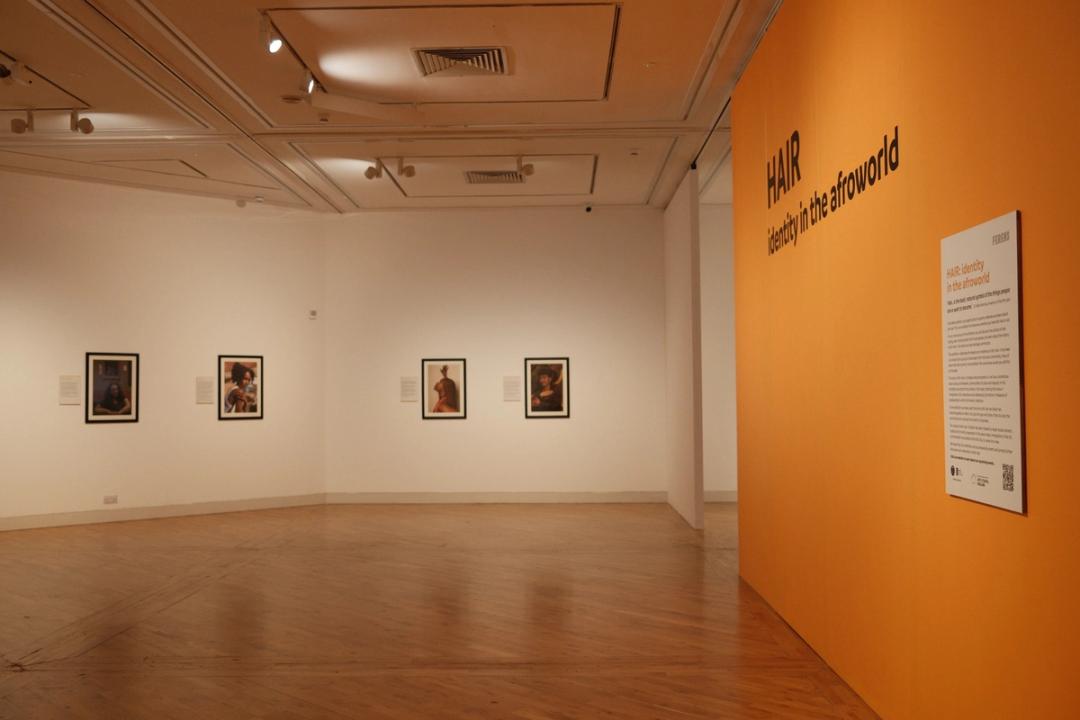
HAIR: Identity in the Afroworld
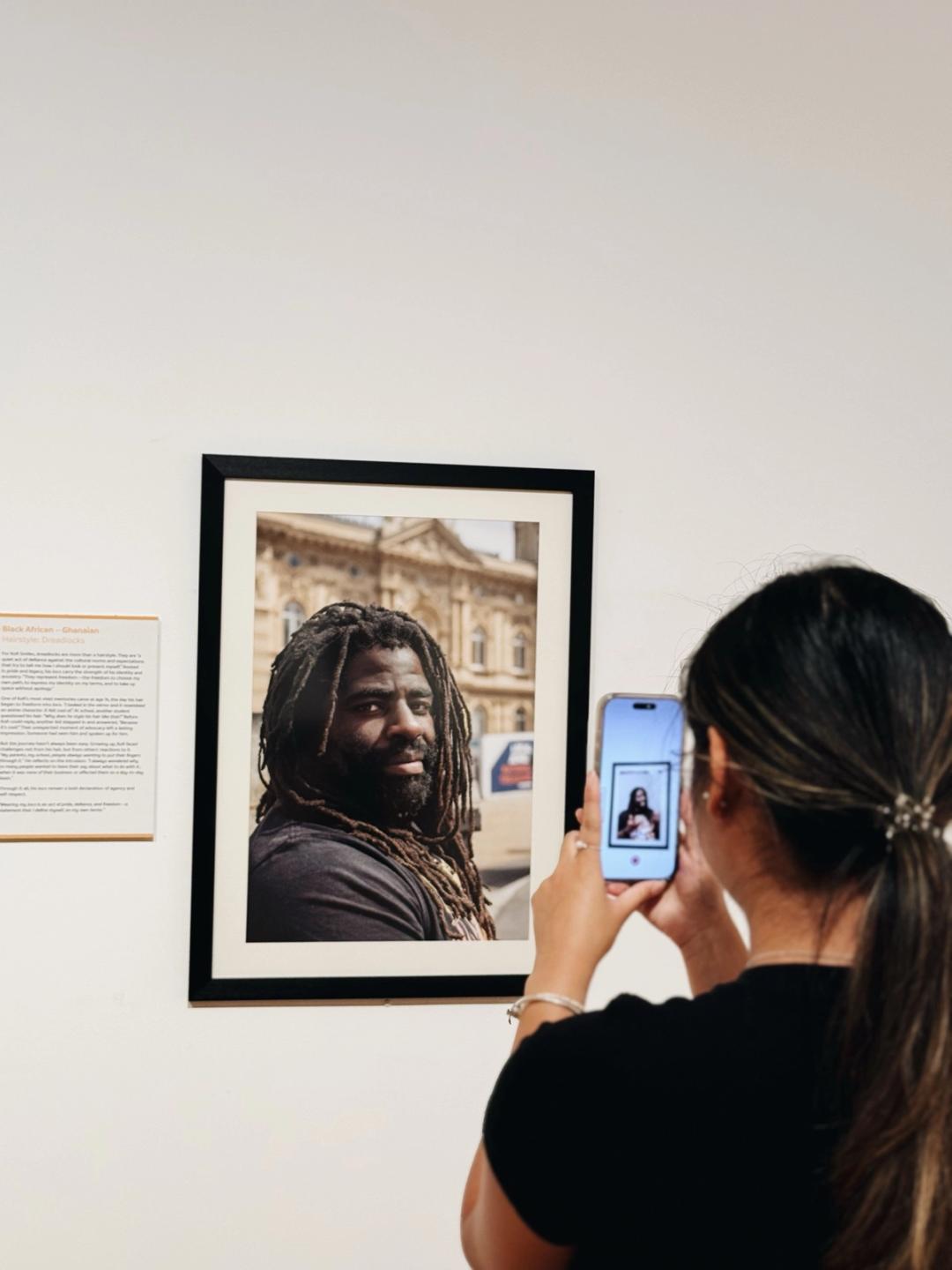
Ten people from Hull’s Black and mixed heritage communities, and the stories their hair holds. Portraits commissioned for Ferens Art Gallery. Hold up your phone and each one tells you the rest in their own words.
“Your hair is you. Feed it, love it, love you.”
Listen
Voices from HAIR, one after another. The waveform beside the pageat the bottom of the screen fills as you scroll: clicktap it anywhere to listen.
About HAIR
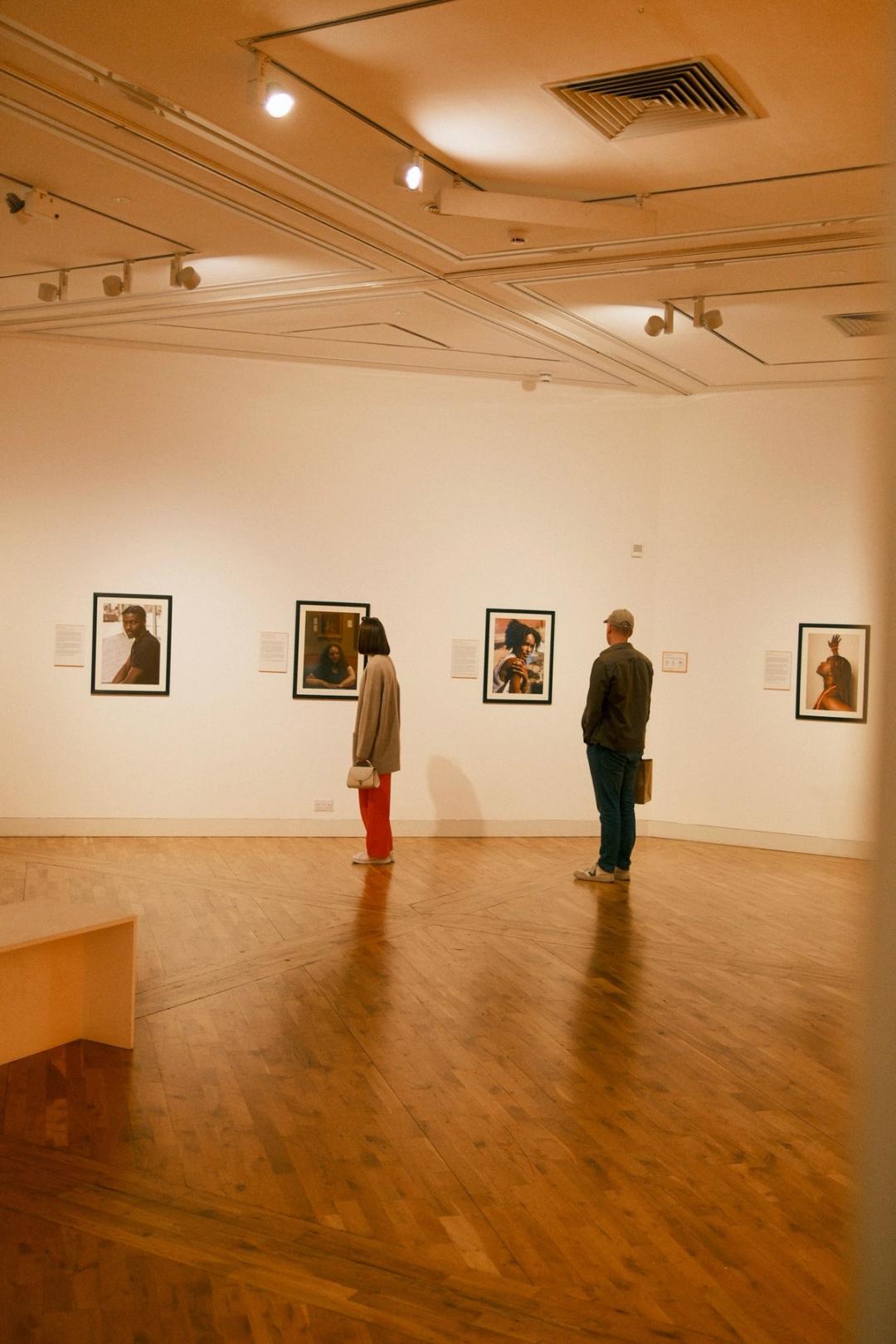
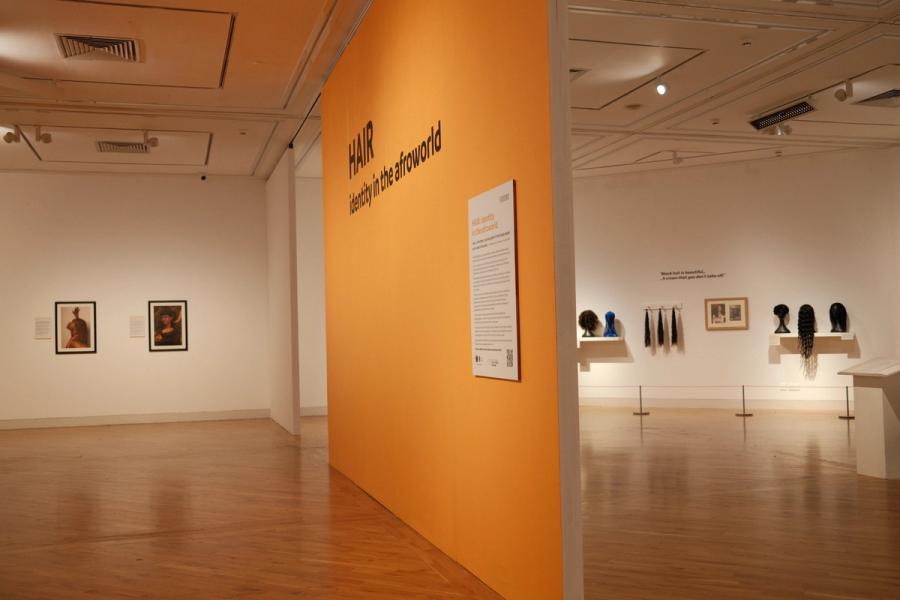
HAIR: Identity in the Afroworld is an immersive exhibition exploring Black hair as a powerful form of identity, artistry and cultural legacy. Created by volunteers at Ferens Art Gallery, Hull, HAIR features Augmented Reality-enhanced portraits of local Black residents, commissioned from artist Rayh (Raheena Fitumi Mohammed).
Every sitter photographed for the project lives in Hull, with each portrait offering a personal glimpse into the richness and diversity of Black hair culture within the city. These portraits speak to history, identity and pride, and to beauty as resistance. This is not a catalogue of hairstyles, but a reflection of real people and real lives, as layered and complex as the styles themselves.
“For many of us, hair is tied to memories,” says Rayh. “Sitting between someone’s legs for hours, the smell of grease, the Sunday rituals. It’s where bonding happens. It’s where wisdom is passed down. Each portrait carries not just a person, but generations of care, invention and survival.”
“There’s something incredibly powerful in telling someone who’s been othered or overlooked that they’re worth documenting, celebrating and preserving. I think that’s sacred. And it takes real courage to be seen, so I’m deeply grateful to everyone who shared themselves with me.”
As a Black, Nigerian British artist and frontline healthcare worker, Rayh’s practice is rooted in lived experience. Her response to the world’s ugliness is always beauty. She believes beauty, and the capacity for it, is limitless and should feel accessible to all. You don’t need to understand photography or AR to engage with the work, just come with an open heart.
Wall label
- What it is
- Ten photographic portraits with augmented reality (AR), commissioned for the exhibition HAIR: Identity in the Afroworld
- Where
- Ferens Art Gallery, Hull
- When
- 6 June to 17 August 2025
- Commissioned by
- Ferens Art Gallery and the HAIR community curators
- The exhibition
- Created by volunteers at Ferens Art Gallery, exploring Black hair as identity, artistry and cultural legacy. Free entry
- Who’s in it
- Ten people from Hull’s Black and mixed heritage communities, all living in Hull
- Inside each portrait
- A short film of the sitter and their hair story, in their own words, with the words on screen
- Made by
- Rayh (Raheena Fitumi Mohammed), artist, photographer and founder of IRIS
- Visitors
- 37,798, as recorded by Ferens Art Gallery
From the diary
Sunday rituals
When I think about hair, I think about the time we spend caring for one another. Sitting between someone’s legs for hours. The smell of hair grease. Sunday rituals. The conversations that happen while hands are busy.
It’s where bonding happens. It’s where wisdom gets passed down. So much of our history lives in these ordinary moments.
The commission
Volunteers and community curators at Ferens Art Gallery were making an exhibition about Black hair as identity, artistry and cultural legacy: HAIR: Identity in the Afroworld. They asked me to make portraits for it. This time, a gallery asked.
I chose to show the hairstyles through people. Ten people from Hull’s Black and mixed heritage communities, each photographed, each listened to. I also brought in augmented reality (AR), so their voices could sit alongside their portraits, and they could tell their stories in their own words.
Struggle can shape us, but it can’t tell the whole story of who we are.
I wanted people who might not often see themselves celebrated on gallery walls to walk into the Ferens and recognise their own beauty there. To honour their experiences while making room for their joy, their style and their everyday lives. Struggle can shape us, but it can’t tell the whole story of who we are.
april 2025
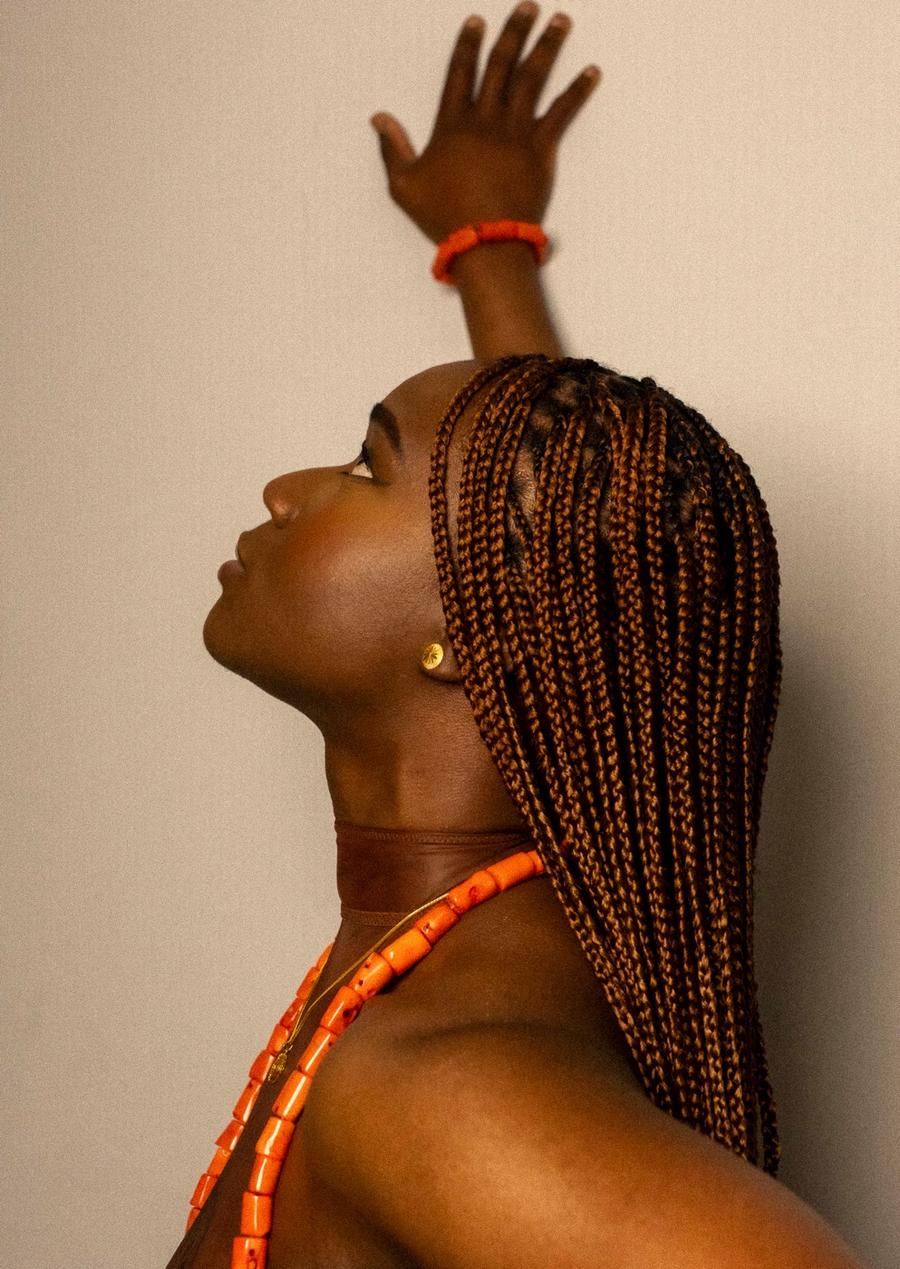
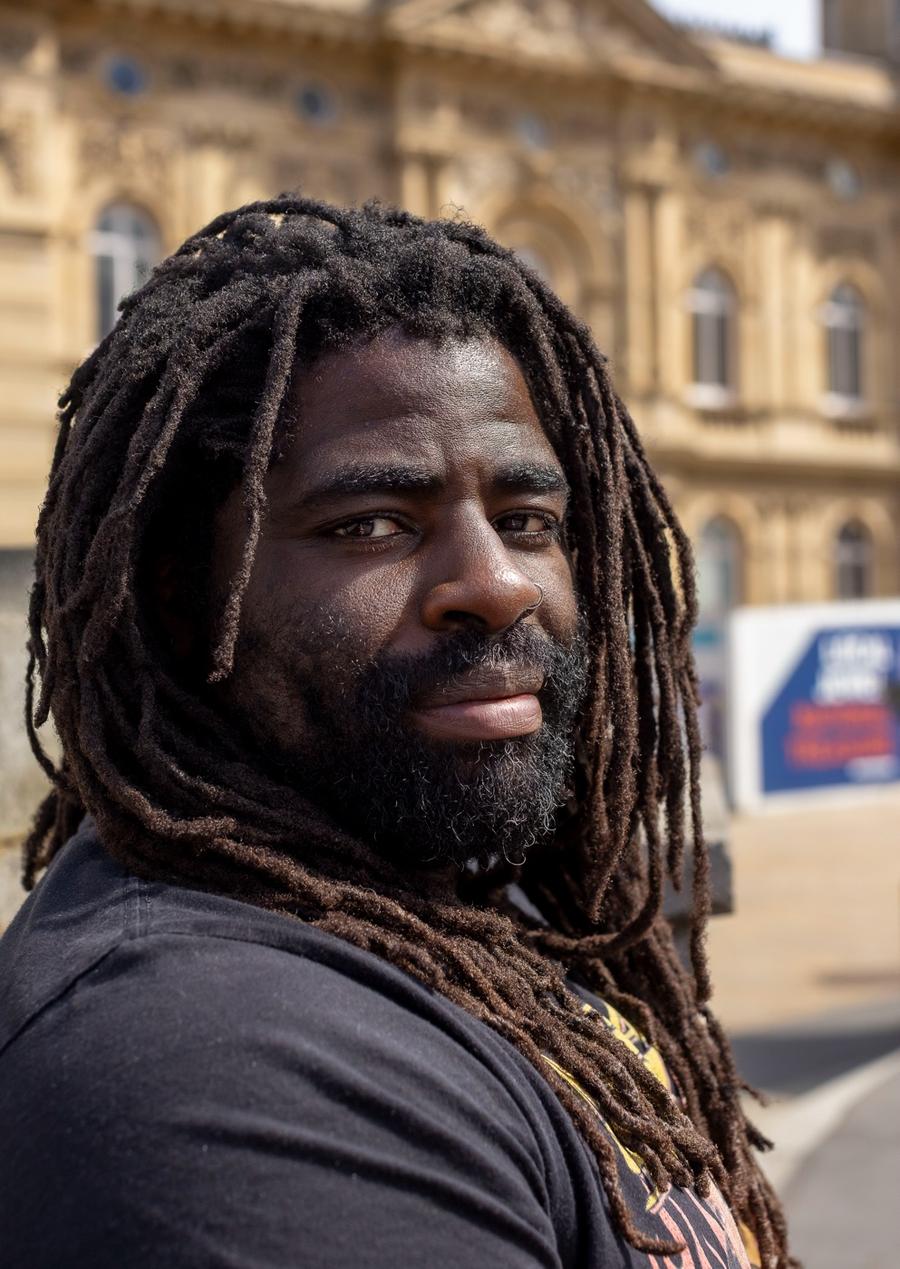
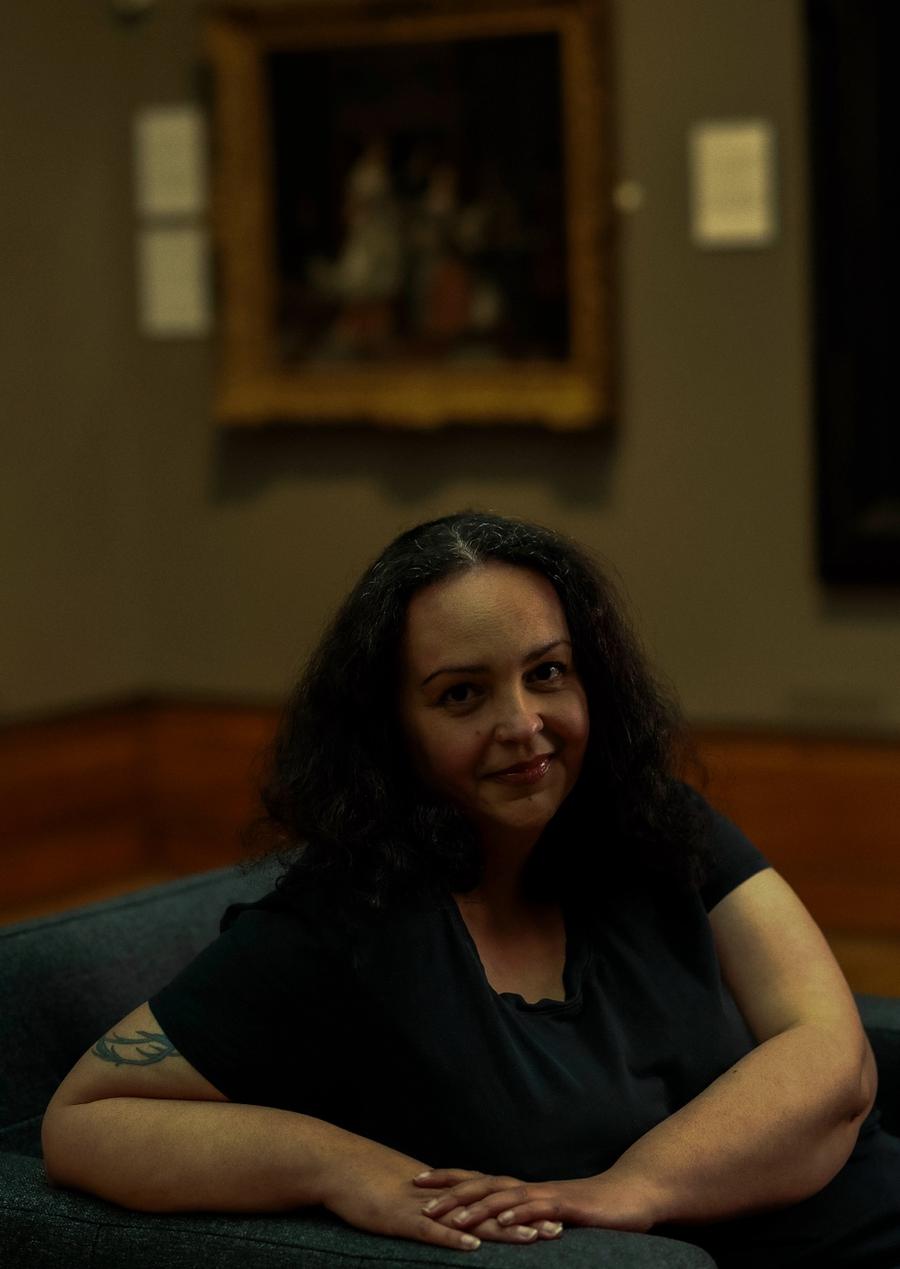
Eight sittings over three days.
Oggy first, one evening. At ten years old she was meant to go to the salon for cornrows. Instead she walked into a barber’s and had her hair cut into an afro. Even then, she knew her hair was hers to define.
The next four sittings. Kofi at lunchtime. At fourteen his hair began to lock on its own, and when he looked in the mirror it resembled an anime character. At school, another student asked, “Why does he style his hair like that?” Before Kofi could answer, a different kid said, “Because it’s cool!” Someone had seen him and spoken up for him. Now he describes his locs as the freedom to define himself.
Zivarna in the afternoon. When she was little, her family didn’t know what to do with her texture, and her gran called the result “a bit up, a bit down”. Relaxers burned her scalp, and that was treated as normal. Then came the big chop. “It was joyous and empowering. Just being me.”
Then Angelica, known to her friends’ parents as “the girl with the hair”, and Stevenson, who has worn cornrows, an afro and a jerry curl in his time. He keeps it very short now. “Not as much as it used to be,” he said, “but I’m grateful to have some.”
How often the boldness we’re looking for is already in us.
The day after, Ysabelle, Efia and Ruth.
Ysabelle remembered her mum or grandma tapping the comb on her knuckles when she reached for her head mid-plait. “It hurt at the time, but it makes me smile now.” The connection those rituals made still holds.
Efia grew up in Hull without a Black hairdresser. At thirteen she travelled to Leeds for her first salon appointment, and the stylist told her she had lovely hair. “It meant so much to me, coming from a Black woman. I felt seen.”
Hairdressers in the small town where Ruth grew up didn’t want to touch her hair. Now she wears it out and proud. During her shoot she said, “I want to be wild and free like my hair.”
I keep thinking about that. About recognising something in ourselves that we are still learning to live. How often the boldness we’re looking for is already in us. In Ruth’s case, literally.
may 2025
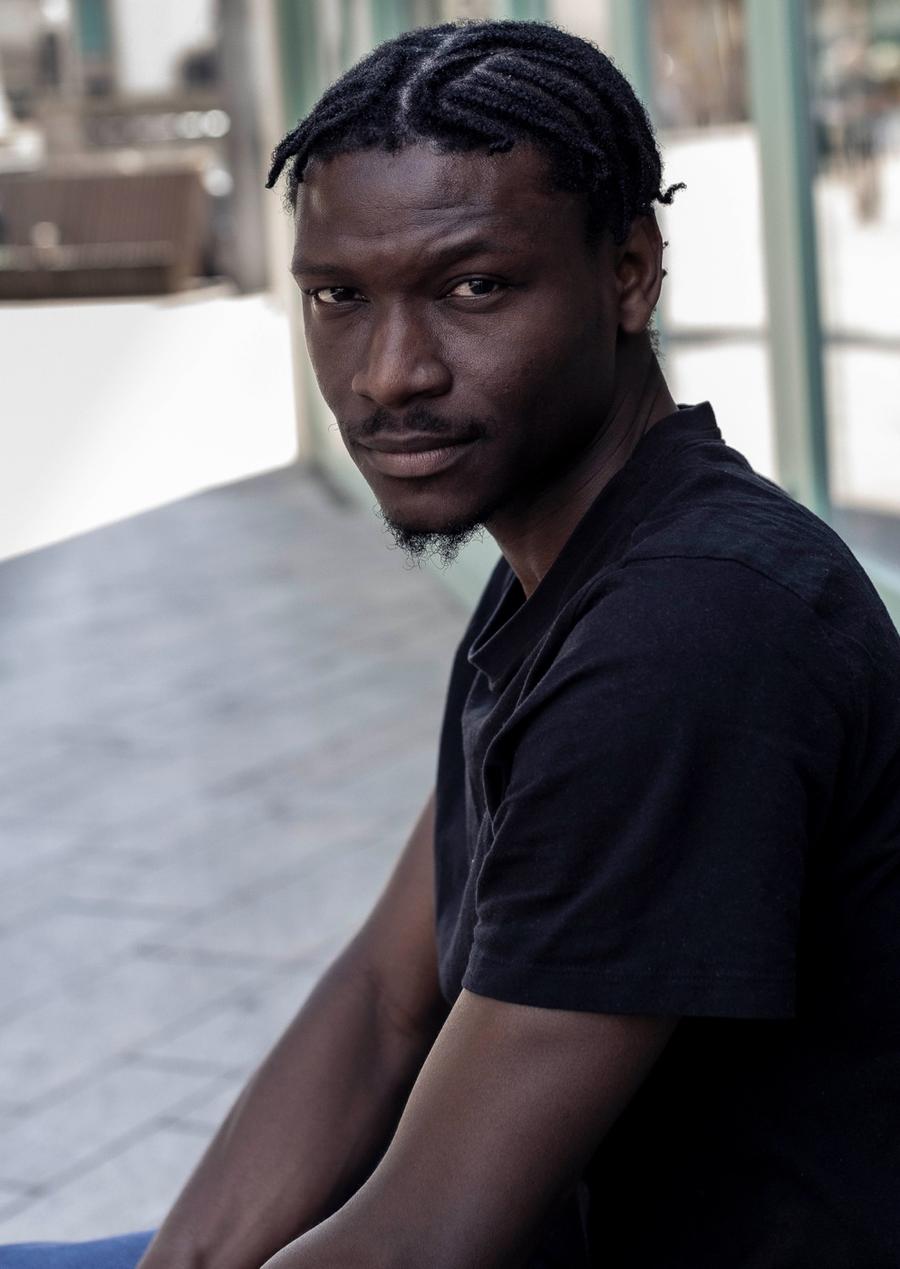
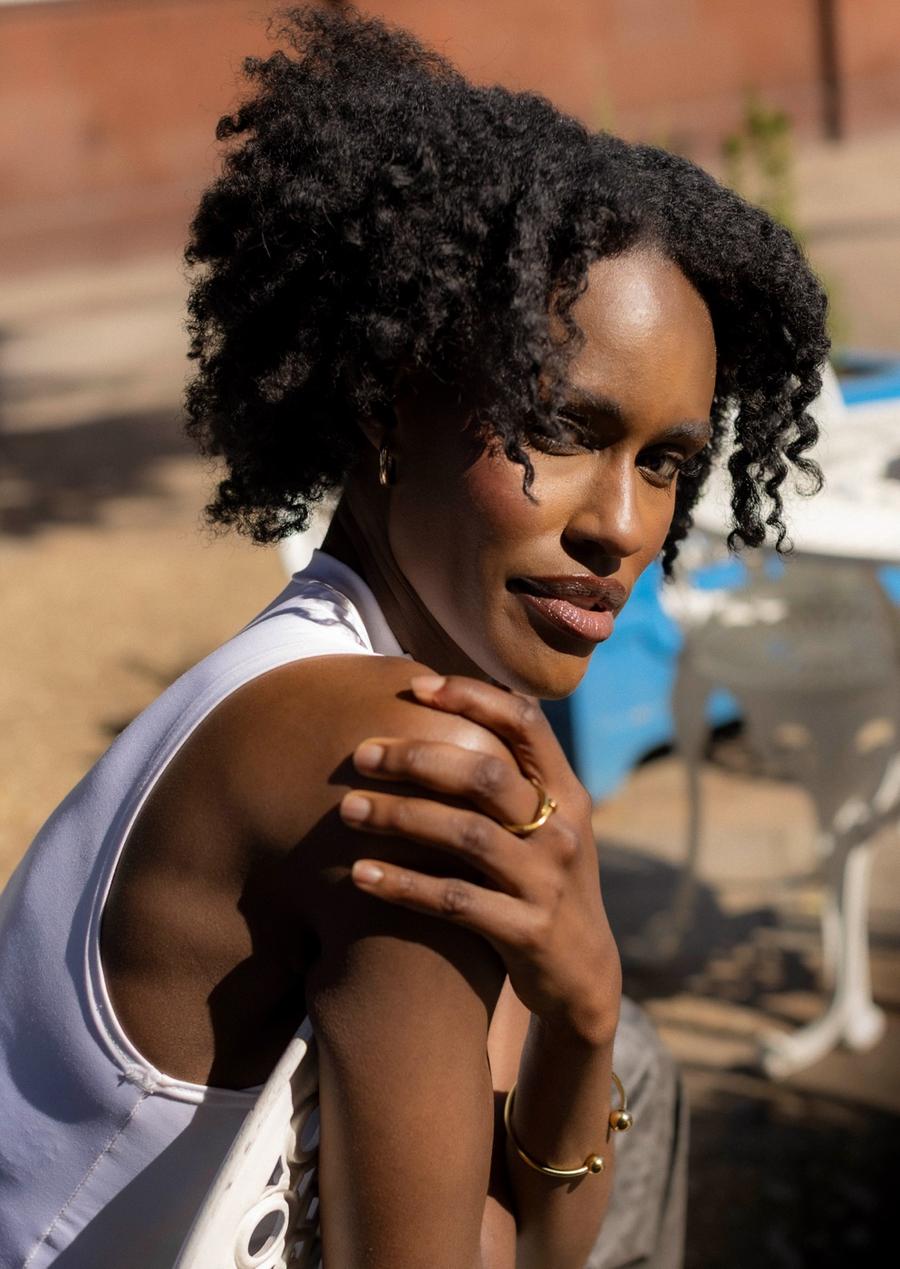
The last two. Sulaiman had to cut his hair in 2023. “It was very sad for me,” he said, “but I had to just do it.”
Clarion had not long moved to Hull from Nigeria. When people are curious about her hair, she doesn’t mind. “I actually find it a bit endearing,” she told me. “People are just curious.” Not everyone I photographed feels that way. Both are true.
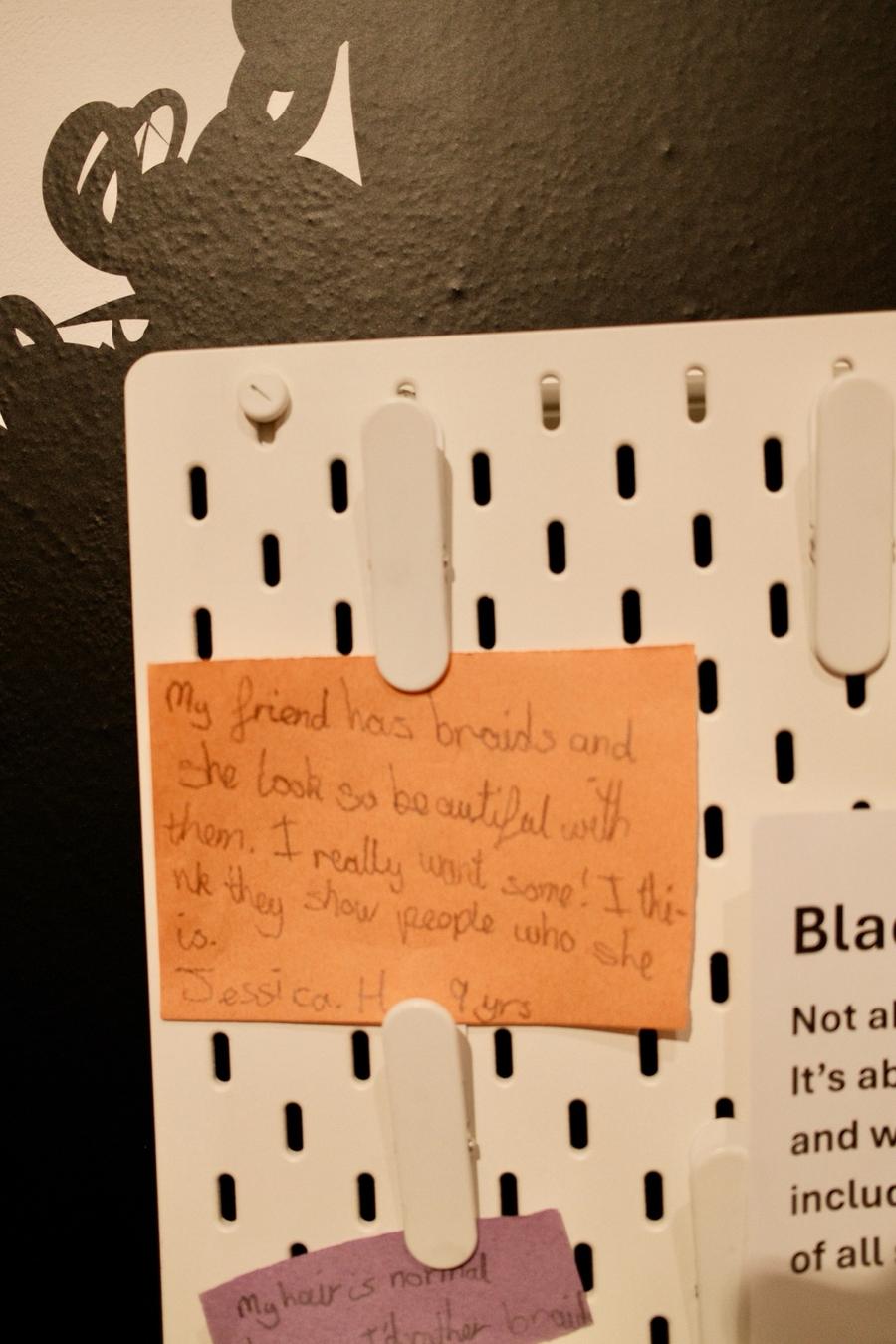
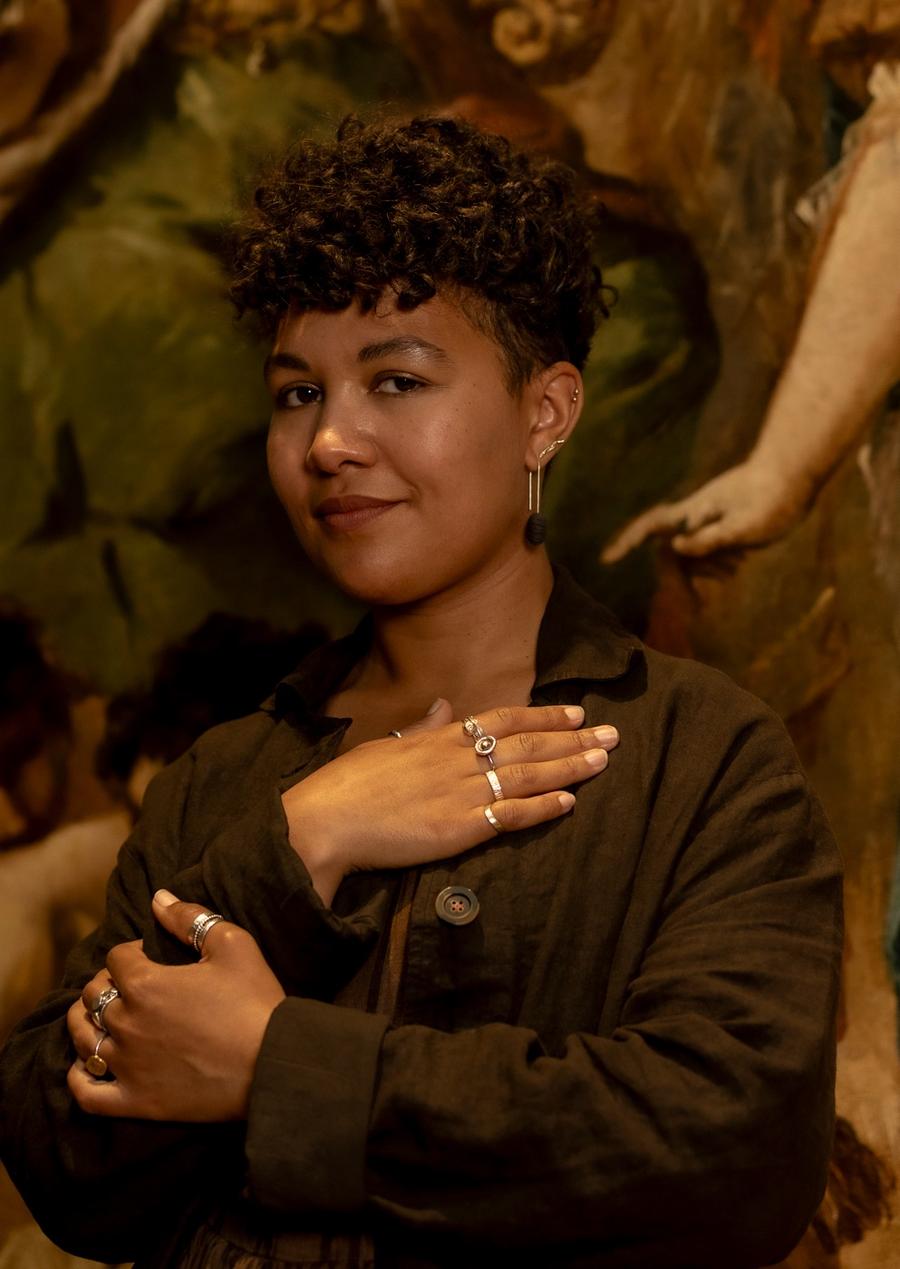
What I kept hearing
Our conversations moved between childhood memories, expectations and the freedom of deciding how to wear your hair.
Making beautiful portraits was part of the care.
There were memories of pressure to straighten, comments at school, and hands reaching out without permission. “You do not have permission to touch me,” Zivarna said. There was also pleasure, humour and pride, and I wanted all of it to come through in the work.
Making beautiful portraits was part of the care: giving each person the attention and space they deserved.
june 2025
The week of opening, I was still finishing the ten short films that live inside the portraits. The last one was done in the early hours.
A photograph can hold someone’s face, their hair, the way they carry themselves. It can’t hold their voice. So I gave each portrait a second layer. Hold your phone up to it on the wall and it opens into a short film of that person and their hair story, in their own words, with the words on screen.
There is something sacred to me about documenting someone who has felt overlooked. About making space for their beauty to be seen as they are, and their stories heard in their own words. Giving their voices a place within the portraits made AR a means of shared authorship: each person could help shape how they were represented.
You don’t need to understand photography or AR for any of this. Just come with an open heart.
There is something sacred to me about documenting someone who has felt overlooked.
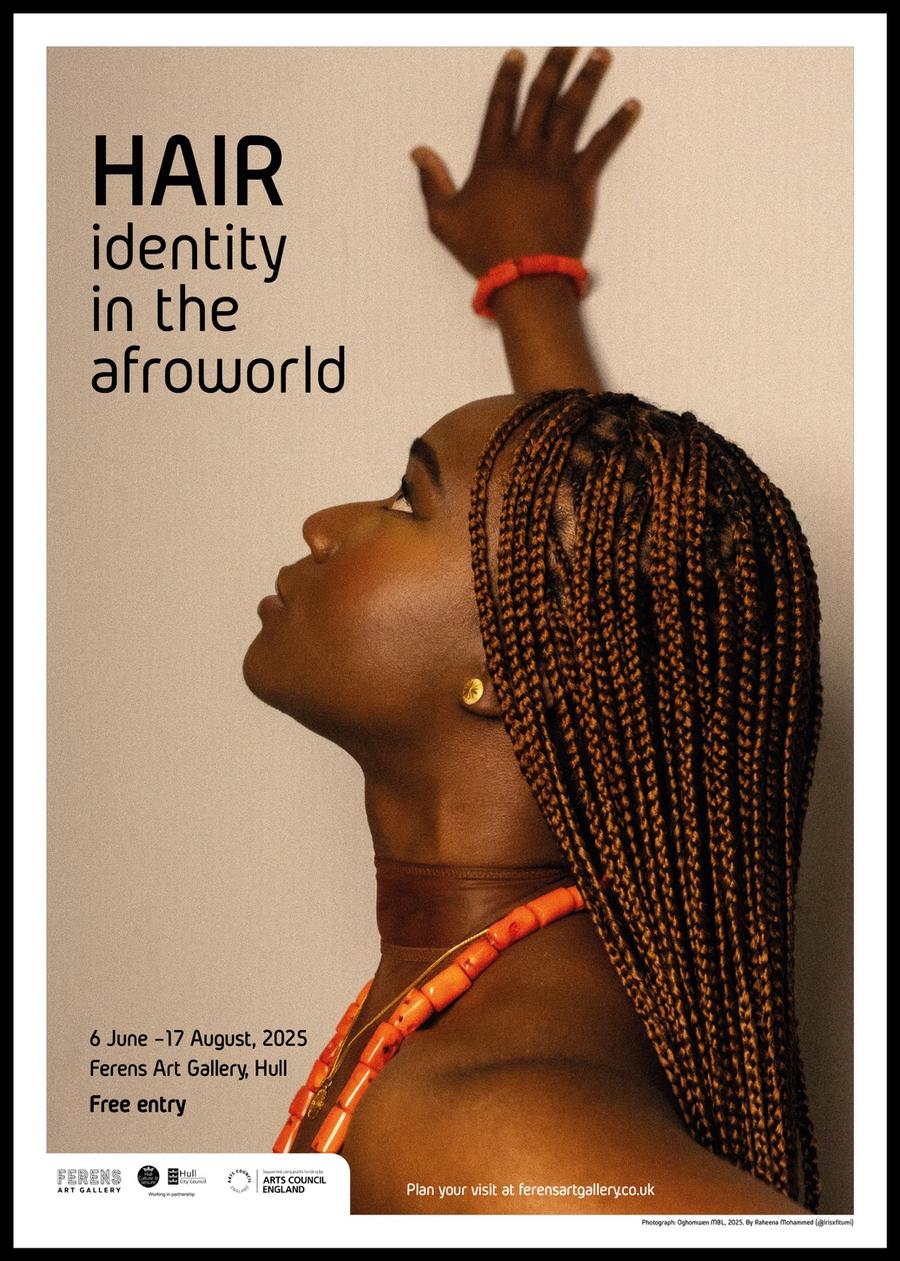
On 6 June, HAIR opens at the Ferens. Free to walk in. Oggy’s portrait is on the poster. Ten portraits on a gallery wall, of people who don’t often see themselves on one. People hold up their phones, and the portraits start to talk.
It ran until 17 August.
People I met
Ten people, all living in Hull. Hold up your phone to any portrait and they’ll tell you the rest themselves.
AR portraitIt comes alive when a phone is held up to it. Here, they wake one at a time automatically. Press play to hear it.
 AR portrait
Angelica Jarvis
She/her · Natural afro
At school she faced texturism, the judgement that says straight is better and natural is too much. She chose to wear her hair as it is.
“It’s a part of me that reflects my mixed heritage, which I am so proud to have.”
- AR portrait
Chukwuamaka (Clarion) James
She/her · Natural 4C afro
She didn’t want a big chop, so she grew out her relaxer slowly, carried through by braids and cornrows, then cut off the last relaxed ends and wore her short afro “with so much pride”. She wears wigs often too. “That’s the beauty of it.”
“A woman’s hair is her crown. It should be worn with pride and carried with grace.”
 AR portrait
Efia Rose Layden
She/her · Natural curly
Mixed Ghanaian and Irish heritage. Growing up in Hull, she rarely saw anyone who looked like her, and wanted straight hair like her friends. Now she wears it natural and curly, often protected in braids or twists.
“I want people to see the beauty in Black hair… Its roots. Its love. Its power. It’s beautiful.”
- AR portrait
Kofi Smiles
He/him · Dreadlocks
Ghanaian heritage. His locs are his answer to being told how to look. Growing up, the hard part wasn’t his hair. It was other people’s hands in it: “My parents, my school, people always wanting to put their fingers through it.”
“Wearing my locs is an act of pride, defiance, and freedom.”
- AR portrait
Oghomwen (Oggy) Onaghise
She/her · Knotless braids
Grew up in Nigeria, where chemical relaxers were everywhere, and stopped using them as a teenager. Learning to care for her 4C hair as an adult made her love it more.
“It’s a beautiful feeling, that freedom, without changing it to conform to other standards.”
- AR portrait
Ruth Toynton
She/her · Out and proud
South American and White mixed heritage. One of her most vivid memories is straightening her own hair for the first time and realising she could transform her own look. Of her hair today: “I think we’re friends now.”
“I volunteered for this project to capture the bold and wild nature of my hair. It helps me to be wild and bold in my day-to-day life.”
 AR portrait
Stevenson Jarvis
He/him · Very short
Antiguan heritage. He loves the versatility of afro hair, and every stage of his styling life, from bold to simple, has meant something.
“Our hair is a statement of our individuality.”
- AR portrait
Sulaiman Adeleye
He/him · Collapse Patẹwọ
“My hair is part of my personality,” he says. It’s how he shows up in the world and takes up space without saying a word. What bothers him is how many people feel entitled to an opinion about it.
“Humanity first, we are human before anything.”
 AR portrait
Ysabelle Wombwell
She/her · Afro
British Jamaican heritage. Growing up, she tried to make herself smaller, straightening her hair and shrinking it, and people still reached out and touched it without asking. Adulthood brought healing. “I now feel very lucky to have it.”
“My hair is much more than just a style. It’s connection to family, Black joy, and at times, defiance.”
- AR portrait
Zivarna Murphy
She/her · Natural, short back and sides
White British and Black Caribbean heritage. These days her curls and kinks change every day, and she loves that. “I get joy from my hair every day.”
“Embrace your natural self. You are beautiful, and don’t let anyone tell you otherwise.”
Antiguan / Burmese | Hairstyle: Afro (Natural)
For Angelica Jarvis, known as Angie, hair is a vital part of who she is. It is more than texture or appearance. It is identity. It is voice. It is pride.
Growing up with an Afro, Angie quickly became known for her natural hair. “A lot of my friends’ parents refer to me as ‘the girl with the hair’,” she shares. But behind that nickname is a deeper journey of navigating visibility, bias and eventually self-love.
At school, she faced texturism. The kind of judgement that tells young Black and mixed-race girls that straight is better, neat is safer, and natural is somehow too much. Angie chose something different. “I learnt to embrace my natural look instead of hiding myself, and the right people will appreciate that.”
Angie is shaping her own story. One rooted in the freedom to take up space exactly as she is.
“It’s a part of me that reflects my mixed heritage, which I am so proud to have.”
Angelica, HAIR
Black African | Hairstyle: Natural 4C Afro
For Chukwuamaka, known as Clarion, hair is pride in motion. Her natural 4C afro is not just style, it is statement. It is strength, beauty and heritage in its purest form. “It’s a powerful expression of who I am,” she says. “I love how naturally beautiful and versatile it can be.”
Originally from Nigeria, Chukwuamaka has only recently relocated to Hull, bringing with her a quiet confidence and an openness that shapes the way she sees the world and how the world sees her. Where many Black women feel discomfort or frustration when people express fascination with their hair, she doesn’t mind. “I actually find it a bit endearing,” she says. “People are just curious.” That generosity of spirit is reflected in the way she carries herself, with grace, ease and a little mischief.
Her journey to natural hair was a process. She didn’t want to do a big chop, so she transitioned slowly, letting her hair grow out while managing two textures. Protective styles like braids and cornrows carried her through. “Hairdressers would complain,” she remembers, “but I finally cut off the relaxed part and was left with a beautiful short afro that I rocked with so much pride.”
These days, she embraces all the options. While she loves her natural hair, she also wears wigs often. “They’re just easier sometimes, especially when I’m in a hurry,” she says. “And sometimes I just want a different look. That’s the beauty of it.”
Her only challenge? Getting her thick, full hair into a sleek bun. But it is a challenge she wears with a smile. There’s always a twist out or afro ready to rise in its place.
Chukwuamaka’s hair, like her presence, is full of joy, ease and choice.
“A woman’s hair is her crown. It should be worn with pride and carried with grace.”
Chukwuamaka, HAIR
Mixed Ghanaian / Irish | Hairstyle: Natural Curly
For Efia Rose, her hair is everything. It is identity, culture, statement, connection and beauty all at once. As a Black woman of mixed Ghanaian and Irish heritage, her relationship with her hair has been layered, evolving from longing to self-love.
Growing up in Hull, she rarely saw people who looked like her. She remembers always wanting straight hair like her friends and not knowing how to properly care for her natural curls. “It was a real challenge,” she says. But that changed with age and confidence. Learning how to care for her hair, experimenting with products, and discovering styles that offered curl definition helped her embrace her texture fully.
A turning point came when she was 13. Without access to a Black hairdresser in Hull, she travelled to Leeds for her first salon experience. Her hair was washed and deep-conditioned under a steamer by a stylist who not only knew how to handle her hair type but affirmed her beauty. “She told me I had lovely hair. It meant so much to me, coming from a Black woman. I felt seen.”
Today, Efia wears her hair natural and curly, often protected in braids or twists. She finds beauty in its versatility, in the rituals of care, and in the deep connection it provides to heritage and self-worth.
“I want people to see the beauty in black hair in all of its textures, curl patterns, lengths, colours, styles its roots, its love, its power, its beautiful.”
Efia, HAIR
Black African – Ghanaian | Hairstyle: Dreadlocks
For Kofi Smiles, dreadlocks are more than a hairstyle. They are “a quiet act of defiance against the cultural norms and expectations that try to tell me how I should look or present myself.” Rooted in pride and legacy, his locs carry the strength of his identity and ancestry. “They represent freedom—the freedom to choose my own path, to express my identity on my terms, and to take up space without apology.”
One of Kofi’s most vivid memories came at age 14, the day his hair began to freeform into locs. “I looked in the mirror and it resembled an anime character. It felt cool af.” At school, another student questioned his hair: “Why does he style his hair like that?” Before Kofi could reply, another kid stepped in and answered, “Because it’s cool!” That unexpected moment of advocacy left a lasting impression. Someone had seen him and spoken up for him.
But the journey hasn’t always been easy. Growing up, Kofi faced challenges not from his hair, but from others’ reactions to it. “My parents, my school, people always wanting to put their fingers through it.” He reflects on the intrusion: “I always wondered why so many people wanted to have their say about what to do with it… when it was none of their business or affected them on a day-to-day basis.”
Through it all, his locs remain a bold declaration of agency and self-respect.
“Wearing my locs is an act of pride, defiance, and freedom—a statement that I define myself, on my own terms.”
Kofi, HAIR
Black African | Hairstyle: Knotless Braids
For Oghomwen Onaghise, known as Oggy, hair is a major part of her identity. An evolving part of how she cares for herself and expresses who she is. “Being able to wear it differently and care for it is a big part of my physical aesthetic,” she explains. Her braids, like every style she has worn, carry layers of personal and cultural meaning.
One of her earliest hair memories is both bold and defining. At just 10 years old, she skipped a visit to the salon for cornrows and instead walked into a barber’s to cut her hair into an afro. Even at that age, she knew her hair was hers to define.
While living in Nigeria as a child, chemical relaxers were everywhere. Straightened hair was seen as the norm. But over time, Oggy began to question that expectation. “In my adulthood, learning new ways of caring for my type of Black hair – 4C hair – has made me appreciate my hair even more.” As she learned about the harmful effects of relaxers, she made the decision to stop using them as a teenager.
Today, Oggy embraces the full versatility of her natural hair. She styles it how she likes, in its truest form, without altering it to meet anyone else’s standards. That autonomy is powerful. “It’s a beautiful feeling, that freedom, without changing it to conform to other standards.”
“Your hair is you. Feed it, love it, love you.”
Oghomwen, HAIR
South American and White Mixed Heritage | Hairstyle: Out and Proud
For Ruth Toynton, hair has been both tension and triumph. A relationship that has taken time, care and patience to grow into something tender. “I think we’re friends now,” she says with a wry smile, describing the journey between her and her hair.
Growing up in a small town, hairdressers didn’t want to touch her hair. They didn’t know what to do with its texture. That early rejection stung, but it also planted something else: the determination to figure it out herself. One of her most vivid memories is of the first time she straightened her own hair. “I realised I could transform my own look,” she says. That moment held power. She saw herself in a new way, on her own terms.
Today, she wears her hair “out and proud.” It is wild, it is free, and it suits her. During her shoot, she said something that stayed with me: “I want to be wild and free like my hair.” And I thought, isn’t it beautiful how often, the boldness we’re looking for is already within us? In this case literally.
“I volunteered for this project to capture the bold and wild nature of my hair. It helps me to be wild and bold in my day-to-day life.”
Ruth, HAIR
Antiguan | Hairstyle: Very Short
For Stevenson Jarvis, hair is both memory and evolution. Over the years, he has worn it all. Cornrows, a proud afro, even a jerry curl. Now, he keeps it very short. It is low maintenance, but still meaningful. “Not as much as it used to be,” he says, “but I’m grateful to have some.”
His journey through styles reflects something deeper: the adaptability and strength found in afro hair. “I enjoy the versatility,” he says, a nod to years of change, choice and care.
Though hair may no longer define his appearance in the same way it once did, Stevenson recognises its role in expression and identity. Every stage of his styling life has carried a message. From boldness to simplicity, each has been valid.
Now, his story stands as a testament to legacy, ageing with pride and the enduring value of self-expression through hair, in every phase of life.
“Our hair is a statement of our individuality.”
Stevenson, HAIR
Black African | Hairstyle: Collapse Patẹwọ
For Sulaiman Adeleye, hair is not just something you wear, it is part of who you are. “My hair is part of my personality,” he says. It is how he expresses himself, how he shows up in the world, and how he quietly takes up space without having to say a word.
In 2023, Sulaiman made the difficult decision to cut his hair for medical reasons. “It was very sad for me,” he shares, “but I had to just do it.” The moment marked a turning point. Even though it was necessary, it carried a sense of loss. Hair, after all, had become a part of his identity.
Though he hasn’t faced direct challenges because of his hair, what bothers him is how often people feel entitled to have opinions about it. “Most think they can tell you what to do and not do with your hair, even when it doesn’t concern them,” he says. That pressure, that unsolicited judgement, speaks to a wider issue of control and expectation.
Sulaiman believes in something deeper. His values centre around dignity, respect and seeing each other for who we are. His portrait captures stillness and clarity. A declaration that self-expression belongs to the individual and no one else.
“Humanity first, we are human before anything.”
Sulaiman, HAIR
British Jamaican Heritage | Hairstyle: Afro
For Ysabelle Wombwell, hair is a thread of connection. To her mother. To her grandmother. To generations of Black women doing each other’s hair with care, rhythm and tradition. “It’s connection, joy, freedom and defiance,” she says. Her afro is a deeply personal inheritance.
She remembers the feeling of her mum or grandma tapping the comb on her knuckles when she tried to grab her head mid-plait. “It hurt at the time, but it makes me smile now. Those times feel special.” They are memories rooted in continuity, one generation passing something sacred to the next.
Growing up, however, she often tried to shrink herself to avoid unwanted attention. Straightening her hair. Making it smaller. Even then, she faced comments from strangers, had people reach out and touch her hair without consent, and was called names. These experiences left a mark. “It has led to a lot of anxiety around how people will treat me when I go out.”
But adulthood brought healing. Through years of care and self-reflection, Ysabelle learned to embrace her afro not as a burden but a blessing. “I now feel very lucky to have it.”
Her hair is no longer something to hide. It is an act of joy, of resistance, of lineage made visible.
“My hair is much more than just a style. It’s connection to family, Black joy, and at times, defiance.”
Ysabelle, HAIR
Mixed Ethnicity – White British and Black Caribbean | Hairstyle: Natural, Short Back and Sides
For Zivarna Murphy, hair is identity. Not just a surface-level expression, but a marker of personal growth, culture and defiance. “It’s been a journey to get to where I am today with my hair,” she says. “I feel so grateful to myself for embracing my natural curly, kinky hair.”
As a child, her family struggled to understand her hair texture. She remembers the detangling, the endless experiments with products and styles, and always ending up with what her gran called “a bit up, a bit down.” Relaxers were routine, and the resulting burns and sore scalp were accepted as necessary, an attempt to “tame” her hair into something more acceptable within British society.
But all of that changed with the big chop. Letting go of the relaxer became a turning point. “It was joyous and empowering. Just being me.” These days, she finds joy in how her curls and kinks shift daily, a celebration of change and authenticity. “I get joy from my hair every day.”
The journey hasn’t been without pain. Zivarna has endured negative comments from strangers, colleagues and even friends. She has had her hair touched without permission. “It’s absolutely not okay. That’s part of me. You do not have permission to touch me.”
And yet, joy persists. Compliments have come too. More importantly, self-acceptance has flourished.
“Embrace your natural self. You are beautiful, and don’t let anyone tell you otherwise.”
Zivarna, HAIR
How to hear them
The films were made for the portraits on the wall at the Ferens.
The voices of HAIR, to listen toContinue the conversation.
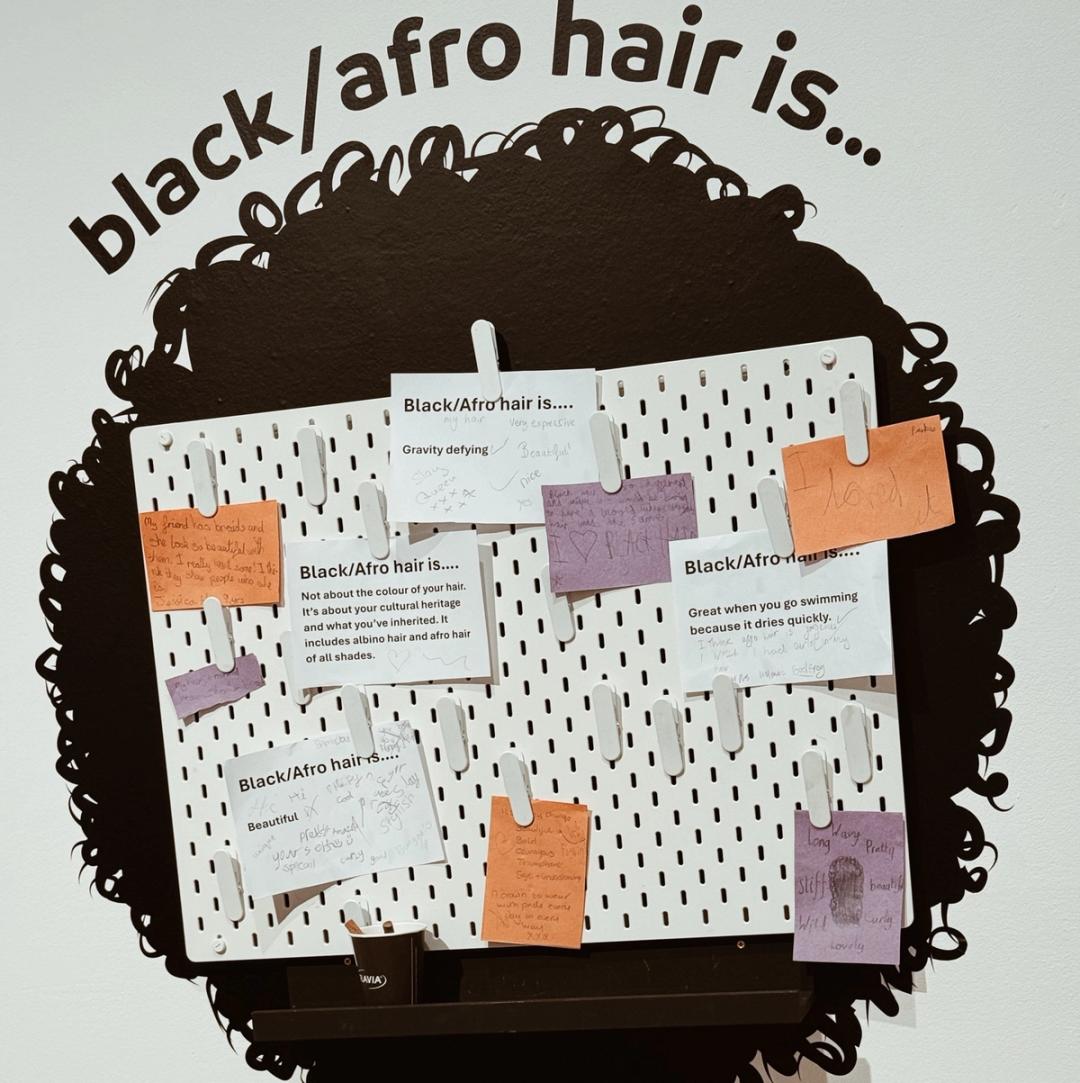
Share your hair story
Every portrait here began with a conversation. Carry it on: your words come straight to me, and nothing is shared without your say-so.
Acknowledgements
I’m grateful to everyone who trusted me with their story.
With thanks to Angelica, Clarion, Efia, Kofi, Oghomwen, Ruth, Stevenson, Sulaiman, Ysabelle and Zivarna. It takes real courage to be seen.
To the HAIR volunteers and community curators, and to Ferens Art Gallery, for asking.
To everyone who came, held up a phone, and listened.
- Artist
- Rayh (Raheena Fitumi Mohammed), IRIS
- Work
- Photographic portraits, personal stories and augmented reality
- Commissioned by
- Ferens Art Gallery and the HAIR community curators
- Exhibited
- 6 June to 17 August 2025, Ferens Art Gallery, Hull
- Exhibition
- Created by volunteers at Ferens Art Gallery. Supported using public funding by Arts Council England
- Sitters
- Angelica Jarvis, Chukwuamaka (Clarion) James, Efia Rose Layden, Kofi Smiles, Oghomwen Onaghise, Ruth Toynton, Stevenson Jarvis, Sulaiman Adeleye, Ysabelle Wombwell, Zivarna Murphy
© Fitumi Ltd trading as IRIS, 2025
“My response to the world’s ugliness is always beauty.”